
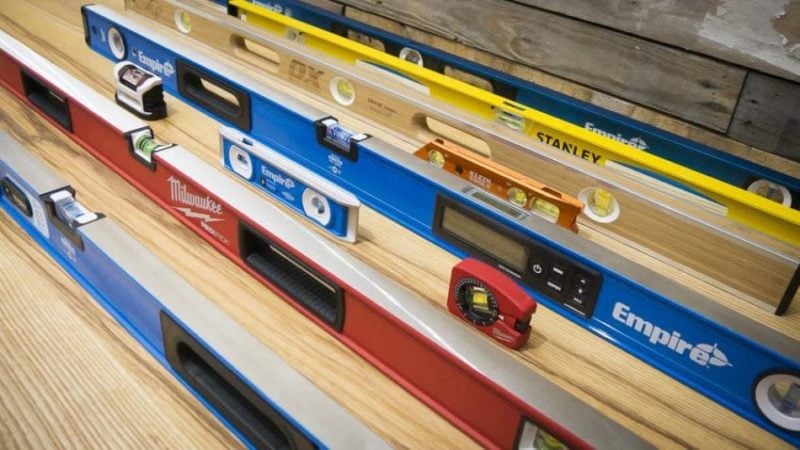
If you work in the industry, you probably own several types of levels used in construction. If you’re new to the job, though, the number of options can be a bit overwhelming. There are several classes of levels you can shoot for: cross-line laser levels and rotary laser levels to name a couple. But the vast majority you’ll find on the construction jobsite are spirit levels.
It’s not as simple as going to the store and picking the best bubble level. You need to know which type of construction level is right for you and the work you’re doing.
Types of I-Beam Levels
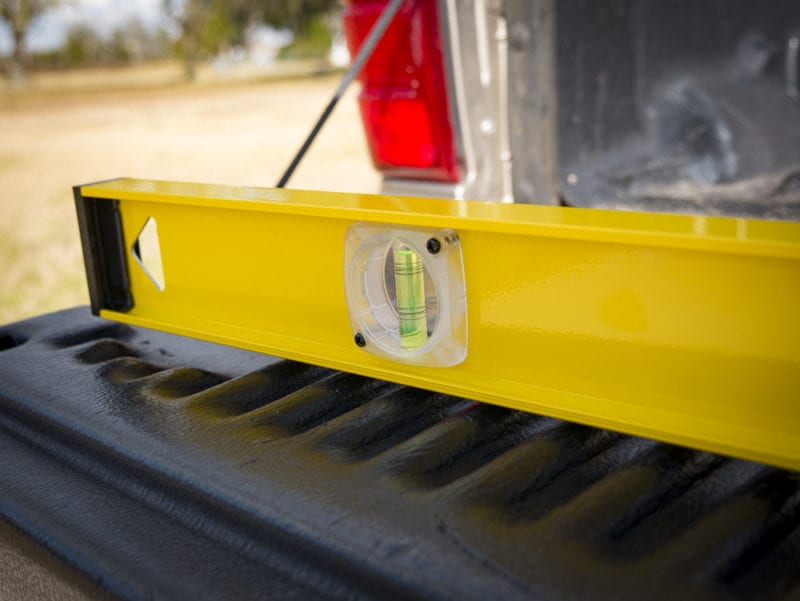
Of all the types of levels used in construction, the I-Beam might be the most common. I-Beam levels use an I shape for the structure to give it additional rigidity over a straight metal frame. Among the “standard” jobsite levels in the 24″ to 96″ range, these are some of the lightest because they use less material than box levels.
Box Levels Used in Construction
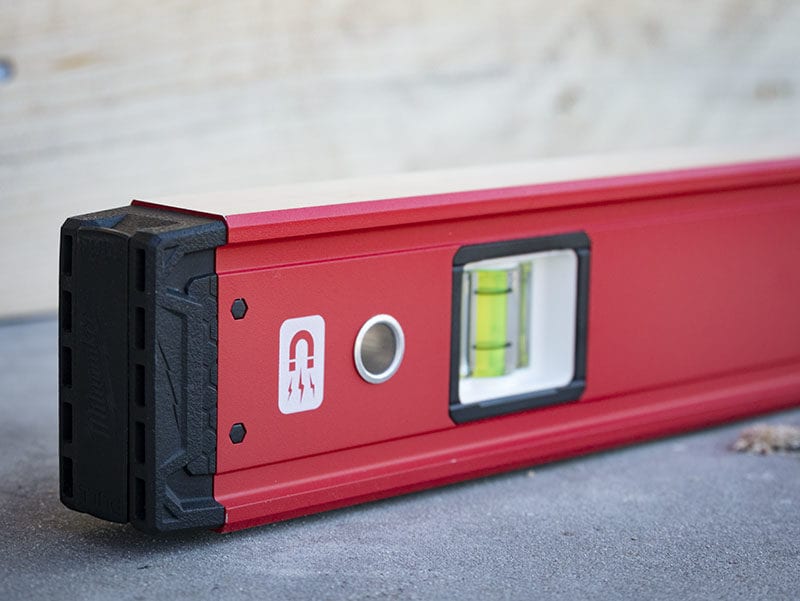
Box levels use a rectangular box shape for the frame and serve essentially the same purpose as I-beam levels. Their 4-point structure gives them a higher level of strength than I-beam models. This makes them popular on construction sites that demand rugged tools. However, these also tend to be a little more expensive. When you move to the premium class of box levels, you’ll see additional reinforcement like the “backbone” in the Milwaukee RedStick levels.
Digital Levels
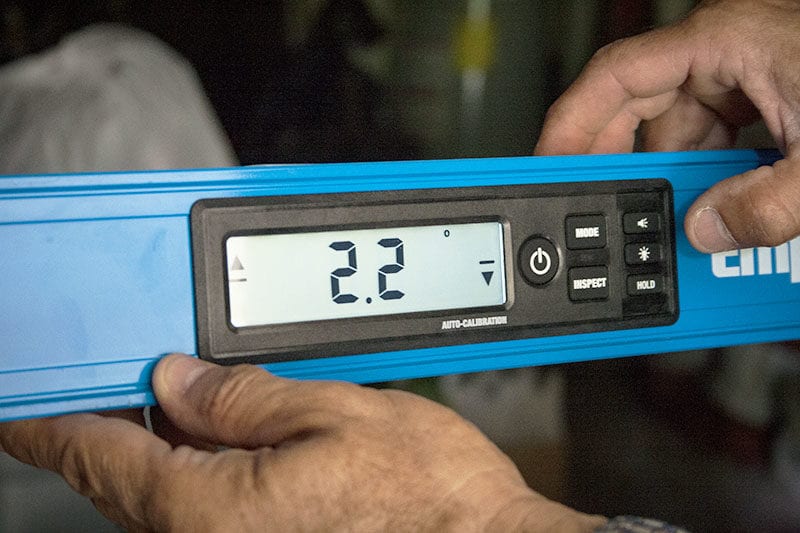
An emerging trend in the box level market comes in the form of digital level tools. In addition to level, plumb, and sometimes 45° vials, you also get a digital readout of the angle to verify when you’re at the perfect gradient or perfectly level.
This type of construction level gives you a visual indicator of which end needs to move to be level. Some also have an audible alert to let you know when you get there. While some digital levels need calibration, some of the newest auto-calibrate for you. We do recommend staying away from models that lack a vial altogether.
Mason’s Levels
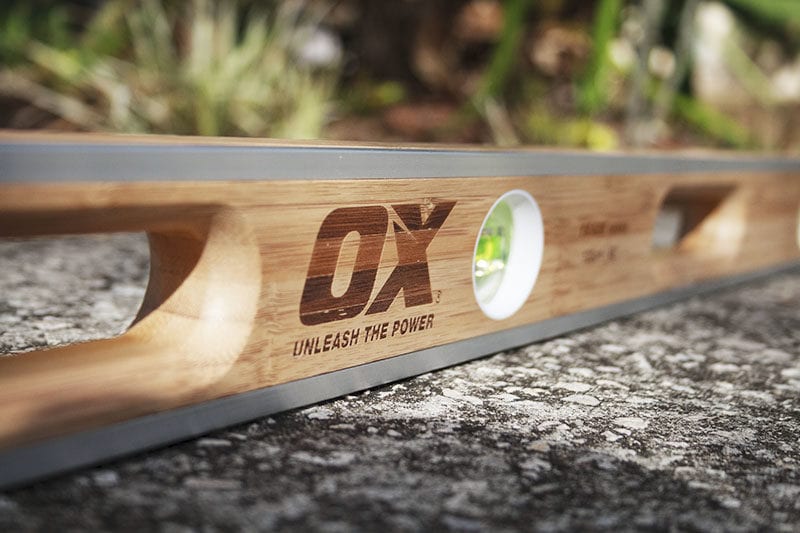
In the box beam and I-beam level family is a class called mason’s levels for Pros that are in the masonry trade. These levels are subject to additional abuse over their counterparts.
Not only do masons get concrete on their levels that they need to clean, but they also tend to tap them pretty hard to help settle bricks and blocks in place during construction. For that reason, mason’s levels are typically going to have a solid box frame rather than a hollow box or I-beam to resist damage.
They also tend to be longer, but some specialty mason’s levels are making their way to the market that also help screed and smooth with shorter lengths available. These combination screeds might be the newest types of levels used in construction.
Torpedo Levels
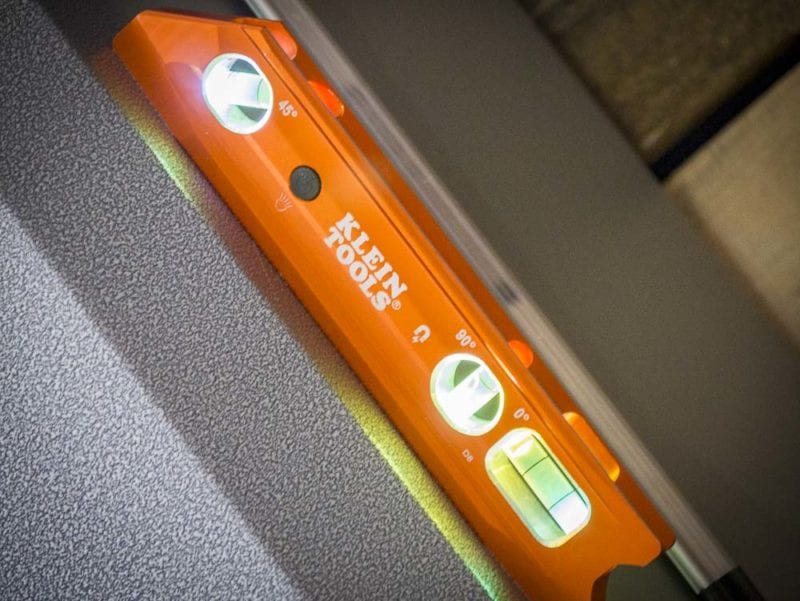
In general, the longer your level, the more accurate your build if you’re using it correctly. But trades like electrical and plumbing don’t have the advantage of as much space as other trades, so they often use a torpedo level.
These types of levels typically range from 6″ to 12″ and can have a 45° vial in addition to plumb and square vials. Some will have a vial with multiple lines for a variety of gradients.
Because you’re usually working against pipe or conduit, look for a torpedo level that has a notch in the top to help it rest on round materials. Still other torpedo levels offer clamps to let them grasp onto pipe while making bends.
Pocket Levels
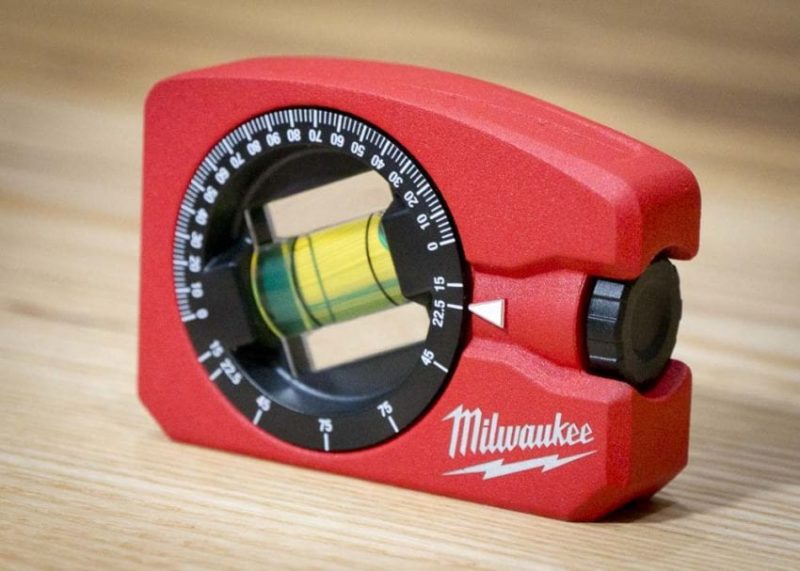
Pocket levels usually run 3″ to 4″ and, as you guessed, can fit in your pocket. The idea that longer levels are more accurate still holds true, so these aren’t your go-to models when you need to be as close to perfect as you can get. But for a quick check during a construction build or for even tighter spaces than a torpedo level will go, it’s a handy level tool.
While some pocket levels are a simple one-vial system, other models turn so you can verify the angle of installation and are incredibly valuable.
Magnetic Levels Used in Construction
Many levels come with a magnetic option. These are great when you’re working with steel frames, but not everyone needs or wants them. Their propensity to pick up metal shavings is frustrating to some tradesmen since it can scratch surfaces or collect enough to throw the level off.
Bonus Features – LED Lights
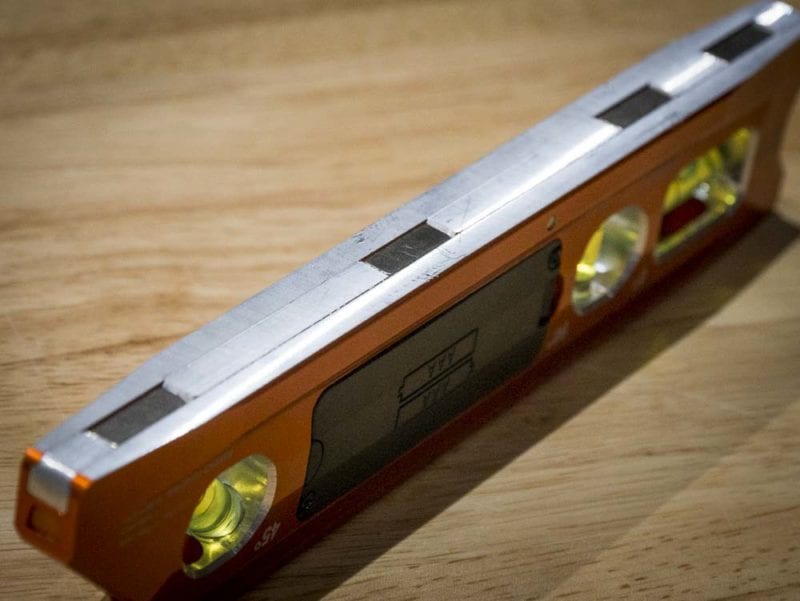
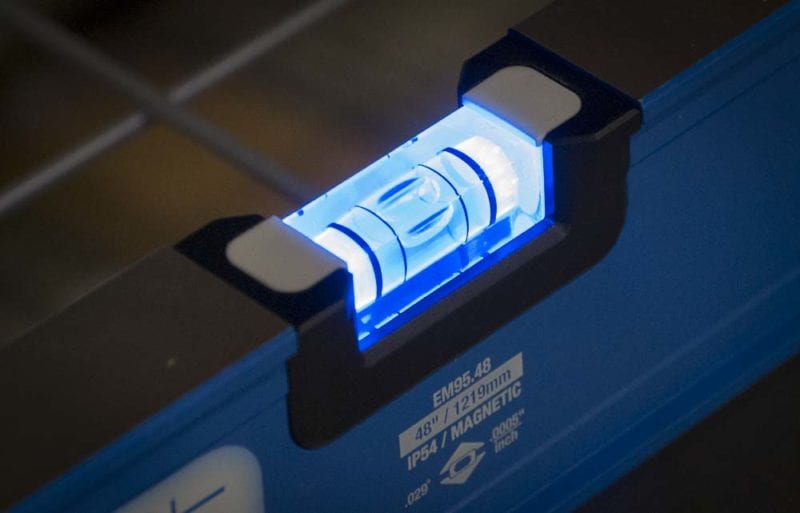
Some levels have the option of LED lights to help make the vials more visible. They really do work well. Just keep in mind that you’re introducing an electronic component to your level.
Typically, we find that the battery compartments generally come well-sealed. However, you do need to take care that water doesn’t find its way in regardless. You’ll also need to keep a spare set of batteries on hand and make sure you turn the lights off when you’re done if there’s not an auto-off function.
Wrapping Up the Types of Levels
This isn’t an exhaustive list of all the types of levels used in construction. There are more niche models like post levels and high-precision engineering levels along with several laser types. But these are the most common you’ll come across.
As I said earlier, the longer the level you can use the better. For general construction, it’s hard to go wrong with a 48″ level to start with while plumbers and electricians will need a torpedo level.
Every job is different, so don’t be afraid to ask around. Are you a Pro that doesn’t mind sharing some wisdom with the next generation? What trade are you in and what levels do you carry? Tell us about them in the comments below!