
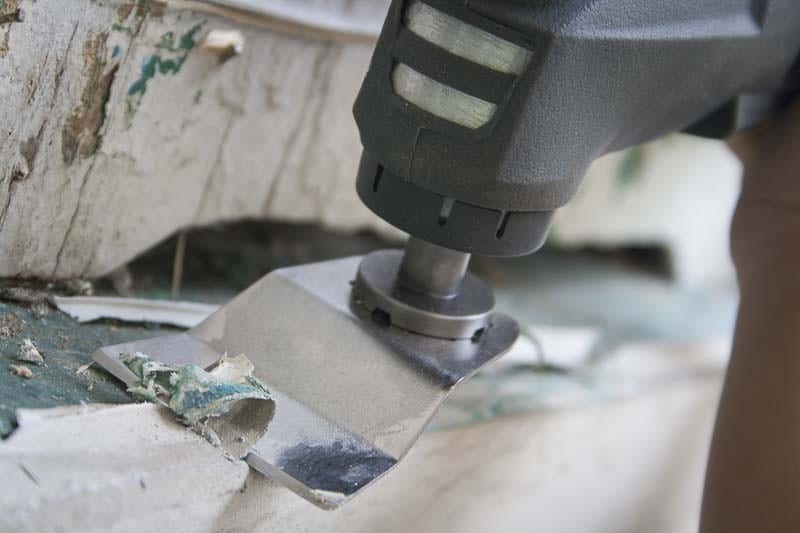
Editor’s Note: This review was originally published on April 7, 2015, and has been updated to reflect the results of our recent Best Oscillating Tool Shootout. In a nutshell, when put up against other corded and cordless multitools on the market, the Ryobi Job Plus finished:
- 6th in cutting speed for cordless models
- 7th in vibration control for cordless models
- Tied for last in blade change ratings for cordless models
- 4th in ergonomics for cordless models
- 7th in noise level for cordless models
- 5th in value rankings for cordless models
The Ryobi Job Plus Multi-tool (model P340) is what I call an “easy decision” purchase. With a retail price of just $69 for the bare tool (including multi-tool attachment), it’s an easy and inexpensive way to get into the Job Plus/Jobmax line. And, yes, all Ryobi Job Plus accessories are compatible with the Ridgid Jobmax Multi-tool. Aside from compatibility, however, the two tools also share a lot in the areas of build quality and features. Of all the cordless oscillating multi-tools on the market, the Ryobi and Ridgid are two of the least expensive and the most versatile.
Ryobi Job Plus Multi-Tool Features
As shown above, the Ryobi Job Plus is a very simplistic tool—at least on the surface. It features a 1.5-degree oscillation (per side) for a total of 3 degrees of cutting arc. The variable speed trigger serves to allow you to adjust the speed rather than a speed dial—a natural choice given the multi-use functionality of this tool. For example, you wouldn’t want to have a fixed trigger and speed dial for use with a right angle drill or impact driver. This is a fairly lightweight tool, coming in at around two and a half pounds not including the battery. For this tool, we recommend going with one of the new Ryobi 4.0 Ah Li-ion batteries. That should give you enough run-time to get a good amount of work done, be it scraping, or cutting, or sanding.
Before we go too far, let’s lay out the similarities and differences between the two tools so that you understand where each is coming from:
Ryobi Job Plus vs Ridgid JobMax Multi-Tool Comparison
| Ryobi Job Plus | Ridgid JobMax | |
|---|---|---|
| Available as | 18V cordless | 12V/18V cordless, corded, pneumatic |
| LED light | Yes | Yes |
| Head technology | Ridgid JobMax | Ridgid JobMax |
| Battery | One+ 18V Li-ion/NiCd | Ridgid 18V Li-ion |
| 3rd Party Adapter | OIS (included) | OIS (included) |
| Trigger | Variable speed | Variable speed |
| Weight | 2.5 lbs | 2.7 lbs |
| Warranty | 3-year limited | Lifetime Service Agreement |
| Price (bare tool, multi-tool head) | $69 | $99 |
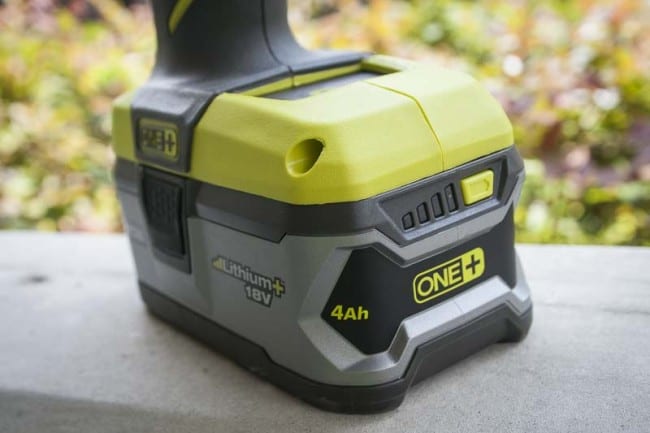
As far as the power heads are concerned, the Ryobi Job Plus Multi-Tool comes with the standard oscillating multi-tool head. There aren’t any other heads available for this tool from Ryobi, but that’s because TTI has already done the heavy lifting with the fully-compatible Ridgid JobMax power heads. These are fully compatible with the Ryobi Job Plus. The Ridgid JobMax heads that are available include:
- Right Angle Impact Driver Head ($49.97)
- Right Angle Drill/Driver Head ($49.97)
- Ratchet Head ($49.97)
- Auto-Hammer ($49.97)
- Jigsaw (~$49.97)
When using the Ryobi P340 Job Plus with driver heads, there’s a forward/reverse switch just behind the trigger. This lets you switch the tool when needing to remove a fastener, for example. The switch on the Ridgid JobMax is a little easier to use than the Ryobi Job Plus because it’s separate from the trigger, whereas the Ryobi has it snugged up against the mechanism.
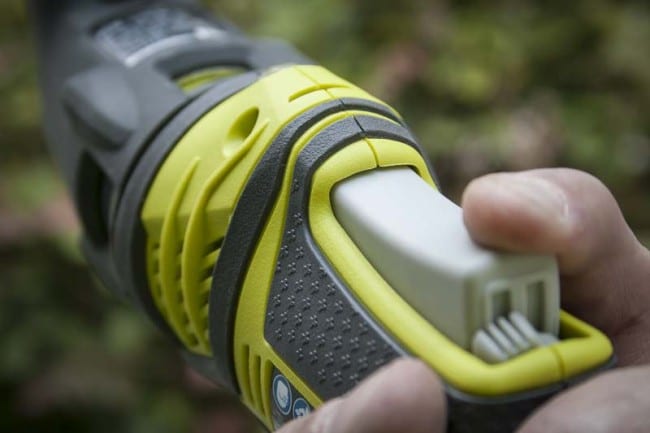
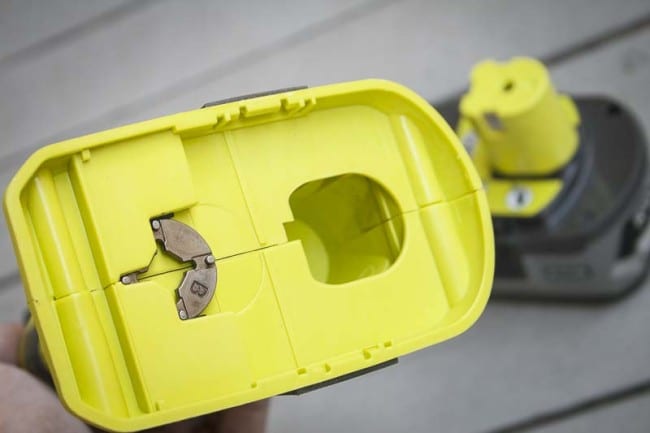
You can use just about any brand multi-tool accessory on the Ryobi Job Plus, thanks to the included OIS-style adaptor that stores nicely in the battery compartment. We used it with Bosch, Porter-Cable, and other third-party accessories.
Testing and Using the Ryobi Job Plus Multi-Tool
I used the Ryobi Job Plus Multi-Tool with its standard oscillating head, using it to cut into drywall, softwood, and hardwood (plunge-cutting for undercutting some tile in a tile over brick fireplace renovation). I then took it to task on an exterior job where I was removing old grout from some pillars that need to be renovated on an early 20th century home. This is one of those tasks that can be a nightmare if you are doing it by hand, but the Ryobi Job Plus multi-tool shaved over an hour off my clock.
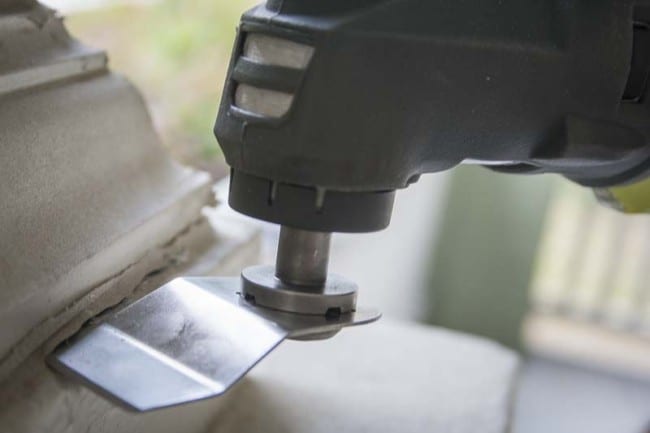
It not only broke underneath the caulk quickly, it gave me a smooth edge along the concrete pillars and cleaned them up pretty well in the process. I was soon able to run my new wood overtop and dress up the trim.
Conclusion
The Ryobi Job Plus oscillating multi-tool is an easy choice for anyone already in the One+ line of tools. But its also an easy choice for anyone who wants to dip their foot into Ryobi Tools. This is a great multi-tool—and if you don’t already have one, this is your excuse to get it. Doing a tile job? Regretting a kitchen or bathroom? This is your tool, and the cost of entry is low enough to tip you over the edge.