
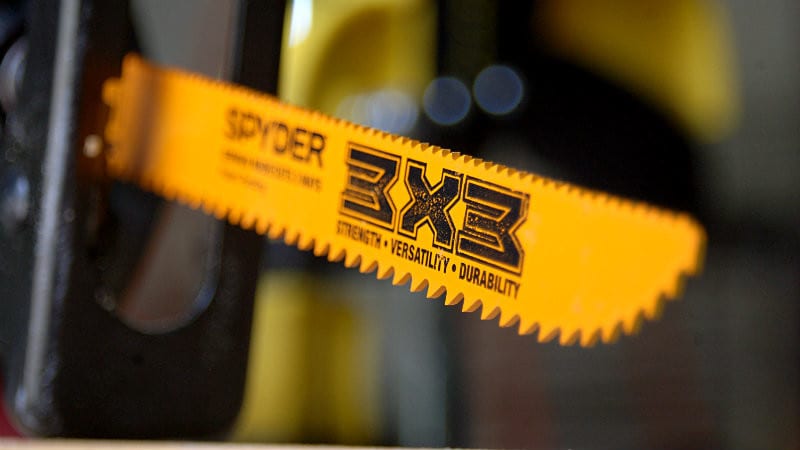
Spyder Products is a smaller power tool accessories brand that impressed us with the speed of their Rapid Core Eject Hole Saw System. They’re typically creating accessories that don’t look traditional. Consider their Skeleton Jig Saw Blades, for example. The willingness to step outside the norm and take a risk is what has led to the company’s success through innovation.
Introduction
A few years ago, Spyder introduced the Bore Blade that our reviewer wasn’t impressed with at the time. It featured teeth on the top and bottom and the ability to plunge cut. Tom suggested that the idea was sound, but some improvements needed to be made for it to be a viable pro option. I’m setting out to see if the new Spyder 3×3 Reciprocating Saw Blade has the adjustments to make that leap.
Demo is my thing. Short of the ability to use an explosive, my recip saw is one of the most used tools in my arsenal. My tool arsenal, that is. We don’t discuss the other arsenal publicly. Let’s just say that… never mind. I’m getting off track. I’ve got several questions that I want to answer with this update to the recip saw blade. First on my mind, I want to know if I can actually make a consistent plunge cut. Not all blades are effective at this. However, it needs to be able to do it in 2x material since we see so much of that on the jobsite.
Build Quality and Features
I get the double-sided blade. There’s no doubt that the ability to cut from the top and bottom is valuable. I’d assume that the same TPI (teeth per inch) and tooth direction would be the way to go. The Spyder 3×3 Reciprocating Saw Blade offers two separate TPIs. The bottom pulls toward the shoe, and the top pushes away from it. This was a source of contention in our review of the prior generation, but I’m going to take a fresh look at it to see if I can find an optimal way to make use of this innovation. Spyder also added 8% Cobalt to the mix, which should result in a tougher blade. We’ll see if that makes a difference in the cutting experience.
For this testing, I’m really looking at design innovation, so I won’t be testing every material that you’ll run into. These are bi-metal blades at common TPI designs, so I expect them to be able to cut the materials that they are rated for. I want to know specifically if they are helpful in making plunge cuts and bottom-up cuts in addition to the traditional top-down cuts.
Spyder’s product page offers a handy chart to help you understand where each blade type should perform best.
Spyder 3×3 Reciprocating Saw Blade Recommended Applications
- 6 TPI/10 TPI: Wood, nail-embedded wood, MDF, reinforced plastics, and PVC
- 10 TPI/14 TPI: Thick metals
- 14 TPI/18 TPI: Medium-thick metal
- 18 TPI: Thin metal and stainless
Spyder 3×3 Reciprocating Saw Blade Manufacturer Key Features
- Made in Germany
- Double-sided, cuts 3 ways
- 8% cobalt for long-lasting metal cutting
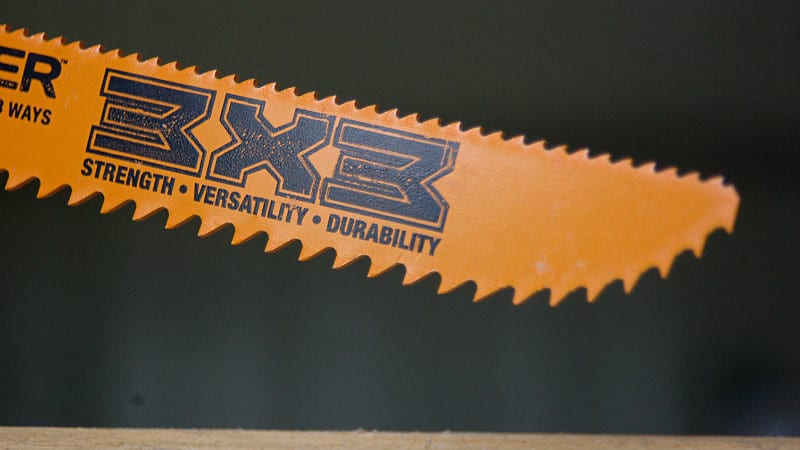
- Exceptional strength, versatility, and durability
- Rounded tip plunge cuts with ease
- Double-edged blade cuts both ways
- Cuts wood with nails, pipe, sheet metal, plastic, fiberglass, and other materials
- Optimized blade grind, set, and kerf
Spyder 3×3 Reciprocating Saw Blade Performance
Talk about a learning experience! I took the 8″ 6/10 TPI Spyder 3×3 Reciprocating Saw Blade to a piece of pressure-treated 2 x 12 to try each type of cut that Spyder says you should be able to do. First, the most obvious – the traditional top-down cut. Using my trusty Ridgid Gen5X Reciprocating Saw, I started the cuts the same way I would any other of this type: by cutting at full speed with orbiting action. The cut was on par with what I expect from my blades. The aggressive TPI, tooth angles, and nature of orbiting action chewed through the wood at a solid rate.
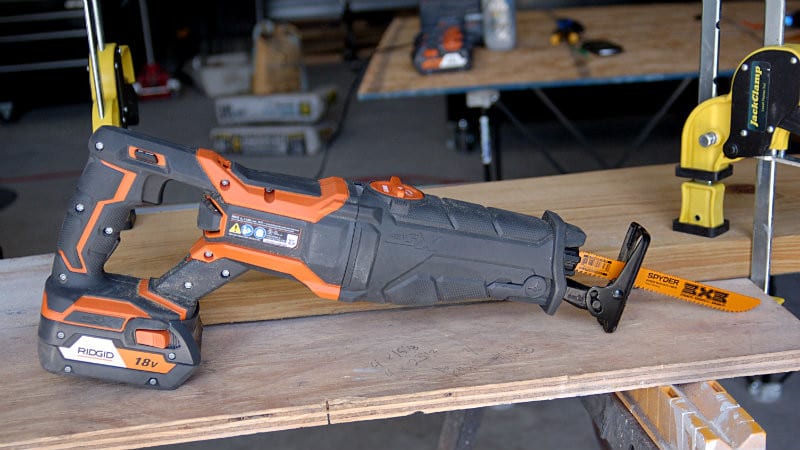
I also tried cutting with the orbiting mode off. As you would expect, the cut was slower, but it delivered less vibration to my arms and produced a smoother finish. At this stage, I was neither disappointed nor stunned to silence. So, for now, we can put a check mark in the traditional cut box for the Spyder 3×3 Reciprocating Saw Blade.
Reverse cuts, AKA bottom-up cuts, caused me to consider my methods. The higher TPI created a slower cut; no surprises there. It was clear very quickly that taking the orbital action off was the way to go on these cuts. I tried cutting by flipping the saw around like most people would if they absolutely had to make that cut. It was much more natural to cut with a traditional grip and use the top of the blade.
I originally questioned why I would want a higher TPI for these cuts and discovered why. The higher TPI with orbiting action off reduces the vibration and creates a smoother cut than you would normally experience. That’s good because the technique you’re using for the reverse cut is very foreign. Reducing the vibration makes it much more likely that I’ll actually use that end of the blade in some situations. Check the box for reverse cuts.
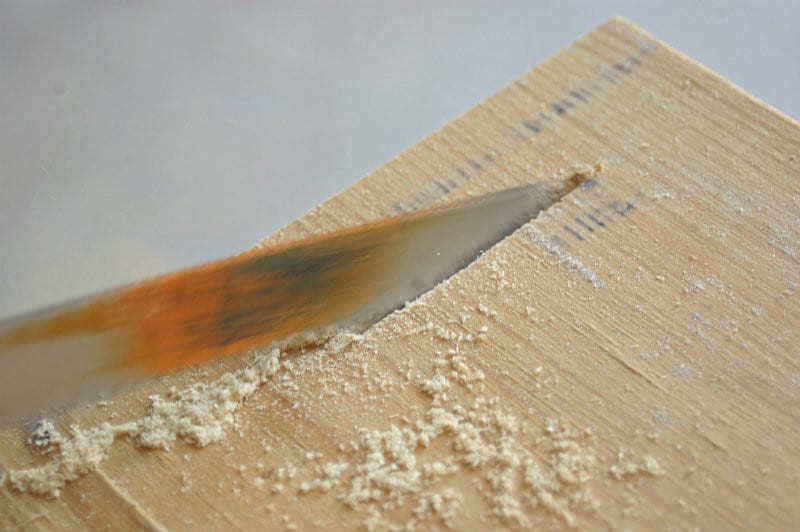
Next up were plunge cuts with the Spyder 3×3 Reciprocating Saw Blade. Plunge cutting with a recip saw isn’t a completely new idea, so this isn’t uncharted territory. Teeth rounding the tip help, though. You’ll need to have a stable base for your plunge cut, and I found the cut to be more effective with the orbiting action on. As you push into the cut, pivoting on the shoe, you achieve a breakthrough and can go about your cut in both directions. Again, this was neither a disappointing nor a mind-blowing experience. It is effective. Check that last box for plunge cuts.
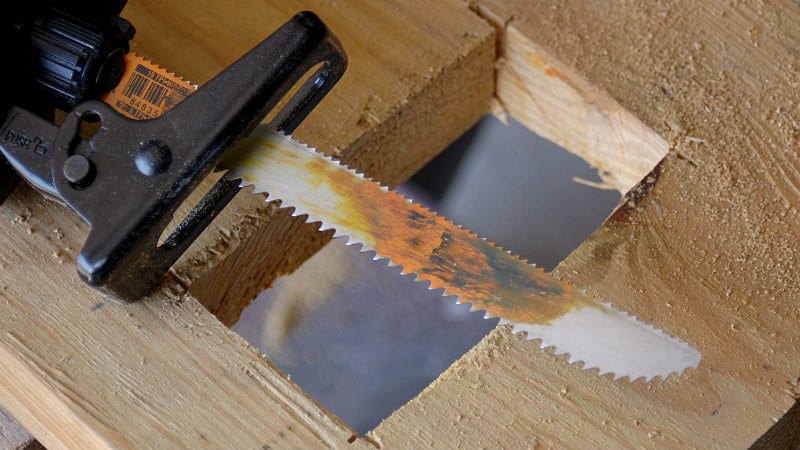
One thing that I noticed through testing was how quickly the paint on the blade was removed. Despite the aesthetic displeasure, the blades continued to cut with no noticeable drop in performance.
Conclusions
When considering the Spyder 3×3 Reciprocating Saw Blades, I’m not blown away by a cutting experience that leaves everyone else in the dust. They’re just not that kind of recip blade. What is notable to me is that they are capable of making each of the three cuts in a way that is effective. These blades don’t magically convert your recip saw into a tool that can go places it never could before. However, they do give you more versatility in situations where you are already using them.
Is it really like buying three blades in one? Eh, probably not. You’re still likely going to toss the blade when you’ve reached the end of life with the bottom teeth. There is some additional value in knowing that you can make the reverse and plunge cuts if you want to.
Where does the Spyder 3×3 Reciprocating Saw Blade belong? I think there’s room in the pro toolbox for a few of these next to your premium blades. I still want to make the majority of my cuts as fast as I can, so I’ll have these on standby for situations where reverse and plunge cuts are in my way. The cutting is solid enough in all directions that DIYers can make Spyder 3×3 their primary blade. Spyder 3×3 Reciprocating Saw Blades retail in the $3 – $5 each depending on the model.