
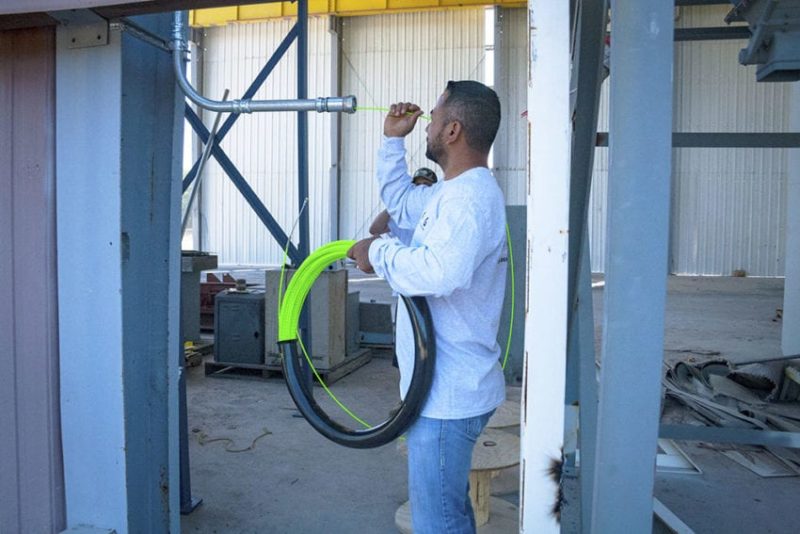
If you’re into electrical installation, you might have noticed that Southwire has a different approach to fish tapes. Rather than using just steel or fiberglass, the Southwire SIMpull 240 FT Fish Tape uses a unique material that the company claims “reduces the amount of effort required to push or pull the fish tape through EMT or PVC conduit.” Is this the answer to our fish tape-pushing prayers? Could the Southwire design give traditional steel and fiberglass fish tapes a run for their money?
Key Features
Tape Material
The distinctive feature of any SIMpull fish tape is the neon green extruded polymer material. This polymer’s characteristics are supposed to offer the best of both fiberglass and steel tapes without the drawbacks of either one. It’s low-friction and lightweight like fiberglass but exhibits much of the strength and rigidity of steel. Importantly, it also has no memory. That might make it sound like it’s a politician in the hot seat, but in this case, it means that you can bend it and it won’t retain the bend like steel. It also won’t kink or splinter like fiberglass.
Tubular Design
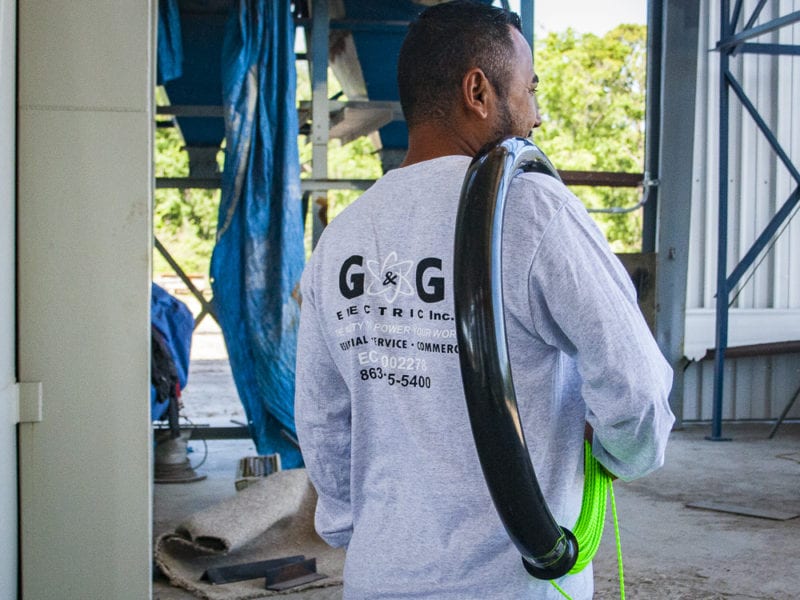
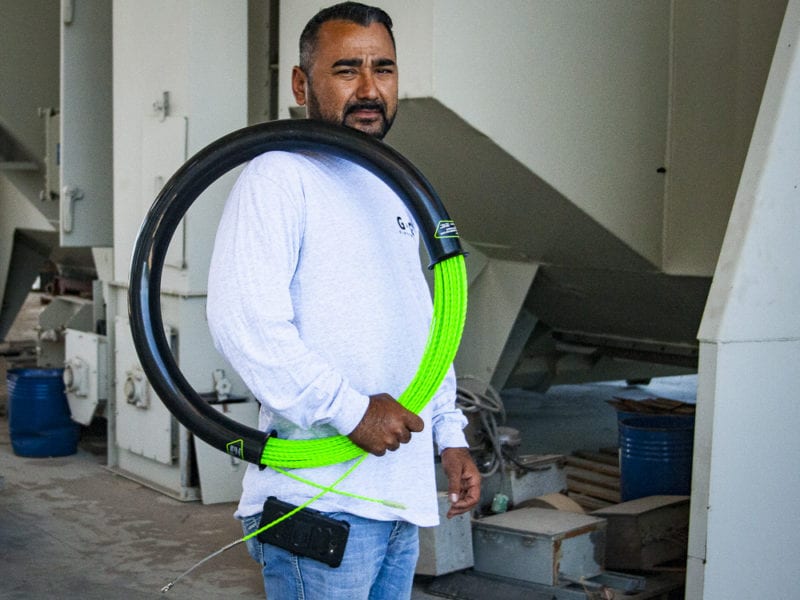
The Southwire SIMpull 240 FT Fish Tape moves away from the traditional reel. Instead of being tightly wound in an enclosed case, this fish tape rests in a tube nearly two feet in diameter that leaves about 25 percent of it exposed. It can spin freely inside the tube, whereas normal tapes are tethered to the spool on one end.
Dual Leaders
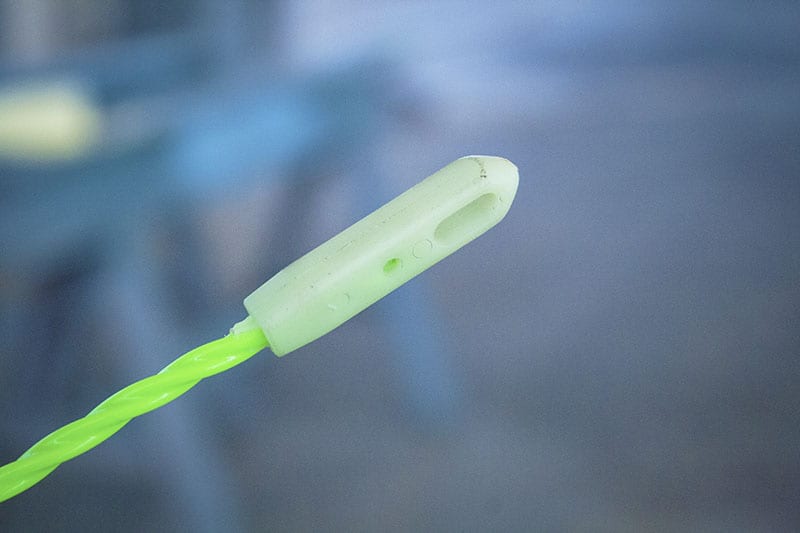
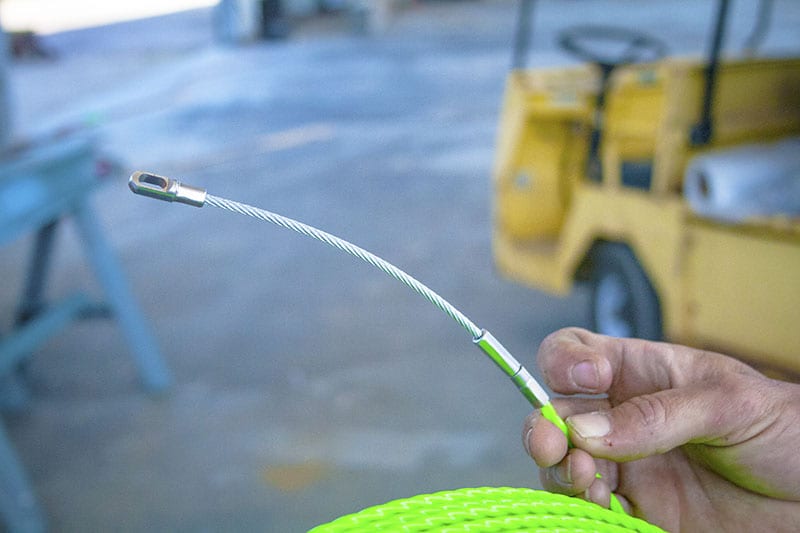
Since the Southwire SIMpull 240 FT Fish Tape isn’t on a spool with one end attached for winding it back up, Southwire includes both a non-conductive leader and a swiveling metal one. The advantage of the non-conductive leader is evident: we work on and around potential deadly voltage all day long, so it’s best not to use conductive material. I started to use this at every opportunity. The swiveling metal leader is superior for navigating tough conduit bends. While there will still be times to use the metal leader, you won’t need to unless there’s a good reason.
Performance
Casting A Line
Let me put this review into a context. I perform many types of electrical work, from service work to large installations. Presently, a large industrial painting company is expanding, and they have hired me to wire it all up. It’s a great opportunity to really test out the Southwire SIMpull 240 FT Fish Tape.
I found the SIMpull’s unusual form beneficial as soon as I slung it over my shoulder for transport. First of all, at only 3 lbs, this roll of fish tape feels extremely light and manageable. Not only does the design allow me to free up both my hands, but I can deploy the fish tape without removing it from my shoulder.
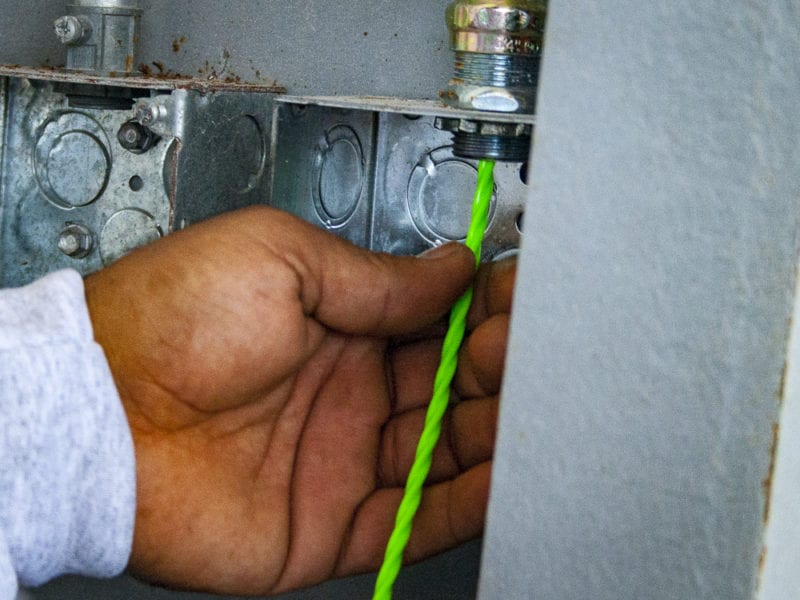
Speaking of deployment, on account of the low-friction extruded polymer that Southwire uses, pulling the fish tape out of its spool feels smooth and easy. These smooth moves extend through the conduit and give me far less resistance than I get with a steel tape.
A typical steel fish tape tends to stay curly because it spends most of its time wound in a tight coil. It retains that bend, making it more difficult to work. The Southwire SIMpull 240 FT Fish Tape avoids this pitfall. It stays straight and pliable.
Pushed To The Max
It’s not unusual to have three or more 90° bends in a long run of conduit. The Southwire SIMpull 240 FT Fish Tape breezes through runs like that with ease, and much more smoothly than a steel tape would. By the time I get near the fourth 90° bend, a steel tape needs a little extra encouragement to progress. But that’s not the case with the SIMpull.
The sweet spot in pipe diameter for this tape is roughly 3/4″ to 2″. Larger diameter pipes will allow the SIMpull to bunch up like a flimsier fiberglass tape. The inner walls of 2″ pipe and smaller really let the Southwire shine as it guides the tape through.
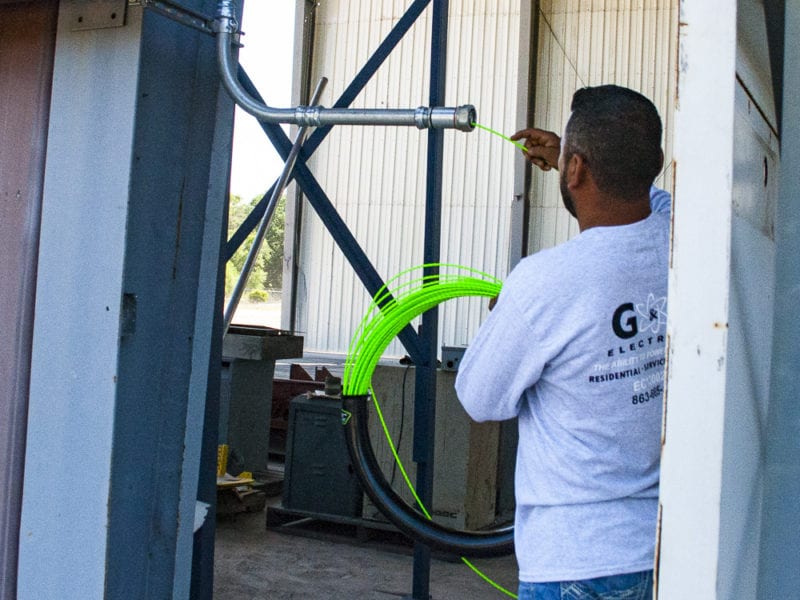
The SIMpull ultimately falls short where any fish tape on the market does – a short horizontal run with a 90° bend straight up 30′ or so and then another 90° bend. I took a shot to see if it could handle that nearly impossible feat. As it turns out, this kind of run still needs a vacuum and a pull string. I don’t consider this a strike against the SIMpull. If it succeeded, it would be the only one on the market that could.
The big reason that we get better performance on longer runs with multiple turns than the original SIMpull boils down to diameter. At 4.5 mm, this model is 50% thicker than the 3.0 mm models. That makes a difference in both the optimal diameter of conduit and number of turns it can handle.
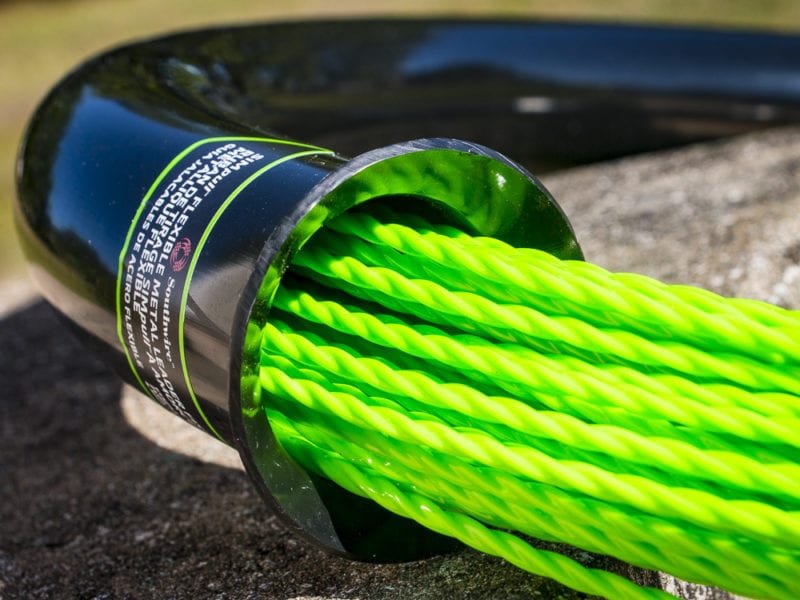
If I can make one gripe about the Southwire SIMpull 240 FT Fish Tape, I wish it had a bigger hook or hole on the leaders. When you have to pull seven or eight #10 wires for a home run, these leader holes are just a skosh too small for that.
The Bottom Line
Manually winding your fish tape through a tube rather than using a reel might not seem too appealing at first glance. However, the design is much more convenient than it looks, especially for this long of a tape. Use it for those longer runs in 3/4″ – 2″ diameter conduit, but keep in mind that it will still have some limitations like other fish tapes. The main advantage is the same as the original SIMpull – easy wire pulling with no steel bend memory and no kinking, snapping fiberglass. The difference is that the extra diameter puts longer, more complex runs in its wheelhouse and you have both non-conductive and metal swivel leaders already on board.
Related Content
Southwire SimPULL 240 FT Fish Tape Features
- Spiral extruded polymer design reduces the amount of effort required to push or pull the fish tape through EMT or PVC conduit
- Swiveling flexible metal leader easily glides through bends
- Combines the strength of a steel fish tape with greater flexibility than fiberglass fish tapes
- Flexible metal leader on one end and Non-Conductive Leader on the opposite end
Southwire SimPULL 240 FT Fish Tape Specs
- Model: Southwire FTSP45-240FMLT
- Diameter: 4.5mm
- Length: 24o feet
- Leaders:
- Flexible Metal
- Non-Conductive
- Height: 22.75 inches
- Width: 22.75 inches
- Depth: 2 inches
- Weight: 3 pounds
- Packaging: Tube
- Warranty: Lifetime
- Price: $173.93