
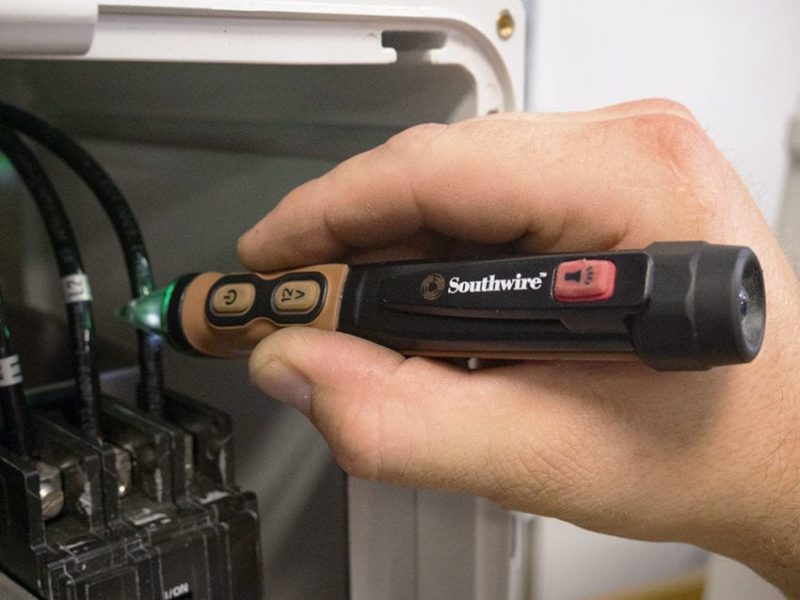
Electricians know that the difference between a good and bad day can be the difference between live and dead wires. You might experience a lot of challenging situations, but voltage makes a clear distinction between safe and dangerous ones. As I’ve said before, it’s wise to de-energize. But there’s an important nuance in this profession: there are times when we want to detect only high voltage, and times when we need to detect low voltage, too. A non-contact voltage tester, or ticker, is the tool we typically use to detect high voltage and keep ourselves out of harm’s way. But only a few tickers on the market, including the Southwire 40150N Dual Range Non-Contact Voltage Tester, can detect two voltage ranges.
Is this the right tester for you? Let’s get detecting and find out!
Power Source
Two AAA batteries power this voltage tester. That’s good news since there’s no funky battery size to worry about. On the off chance that you leave the shop without a spare set, just walk into virtually any store and you’ll find some. We just can’t help you if you also forgot your wallet.
Avoiding Ticker Shock
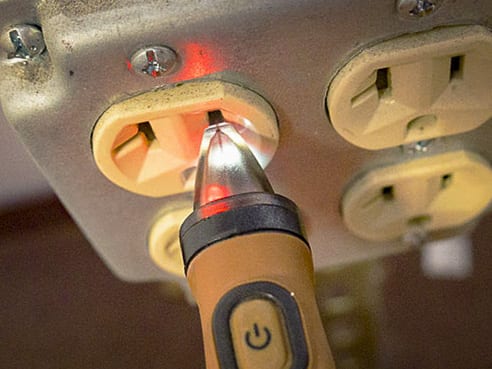
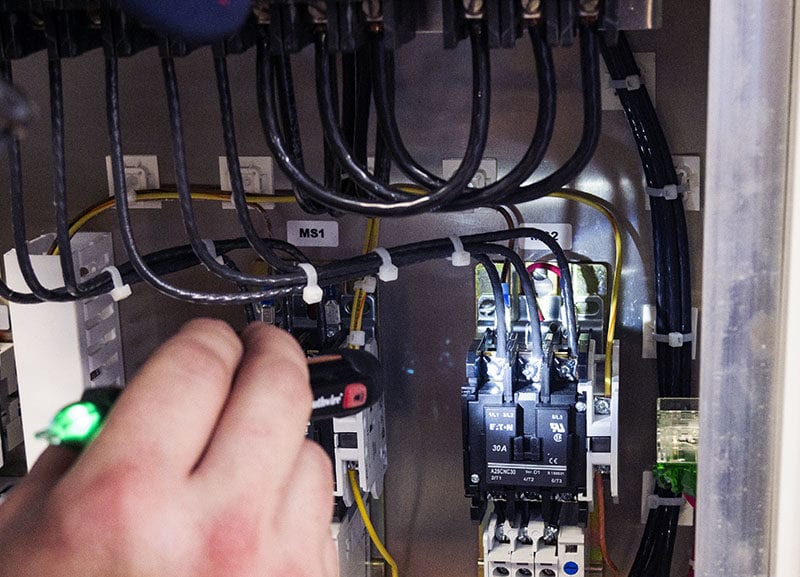
Tickers are simple tools, although some are more sophisticated than others. Case in point, the Southwire Dual Range Non-Contact Voltage Tester. If you’re working in the 12-1000V range, this model lights up a yellow LED in the ticker’s tip. The 100-1000V range indicator lights up green. When it detects voltage in your selected range, the LED flashes red and beeps audibly. It also has a low battery self-test, which helps avoid false reads because of a dying battery.
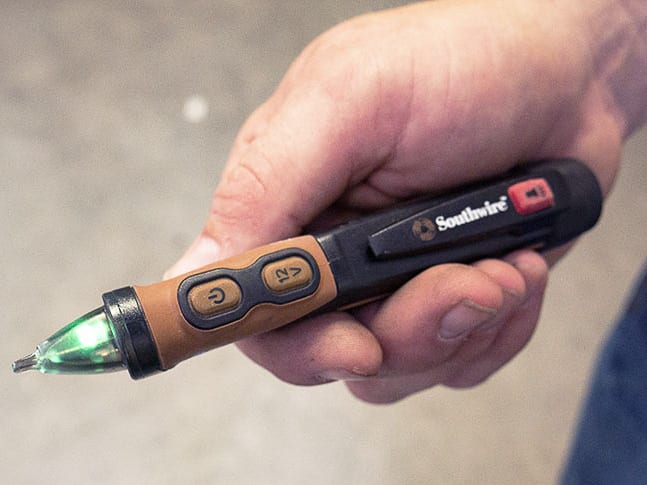
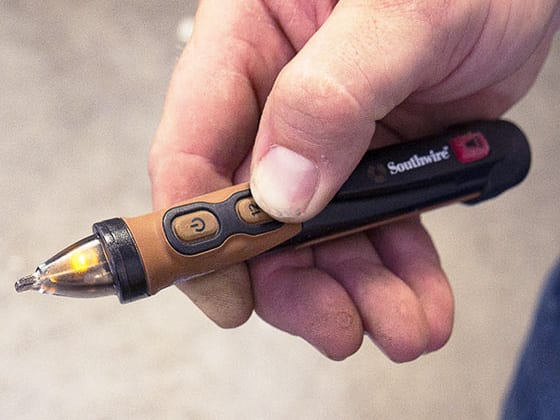
I really like what Southwire did here. The high voltage range is the default, and the low voltage range simply draws the range downward while keeping the 1000V top end. The ticker will always detect dangerously high voltage no matter what range you’re in.
To extend the range to low voltage, you have to press and hold the 12V button, illuminating the yellow LED. Releasing the button returns the ticker to the high range, illuminating the green LED. As the ticker approaches the live volts, the red LED will blink increasingly faster, and the audible beep increases to let you know you’re getting warmer.
Why Are Dual Ranges Helpful?
Residential Pros generally work with 120 Volts, but even when the power to a fixture is off, there can still be low voltage bleed. So if I’m trying to test for high voltage in, say, a nearby fixture or 3-way switch, I don’t want my ticker picking up this low voltage. By keeping my detection floor at 100V, I can eliminate those low voltage bleeds from my sweep.
But then again, sometimes I need to test for those lower voltages. Perhaps I need to work with a low-voltage transformer, or maybe I need to see if a driver is sending low voltage to some LEDs. If the ticker’s floor only registered 100V or higher, I wouldn’t know for sure. Most voltage testers don’t register voltage as low as the Southwire Dual Range Voltage Tester, giving it a distinct advantage over more basic models.
Drop Test
The Southwire Dual Range Non-Contact Voltage Tester feels pretty tough, due in part to the rubberized grips. I appreciate this level of durability because I drop my voltage testers frequently. Like, all the time. More often than not, it doesn’t work afterward. I find this annoying, costly, and ultimately, dangerous. As careful as I’ve been, I’ve already dropped the Southwire model a handful of times. Thankfully, this voltage tester keeps on ticking since Pros tend to drop their tools a lot, right?
Editor’s Note: Actually Ben, it’s just you. Most Pros don’t have your butterfingers.
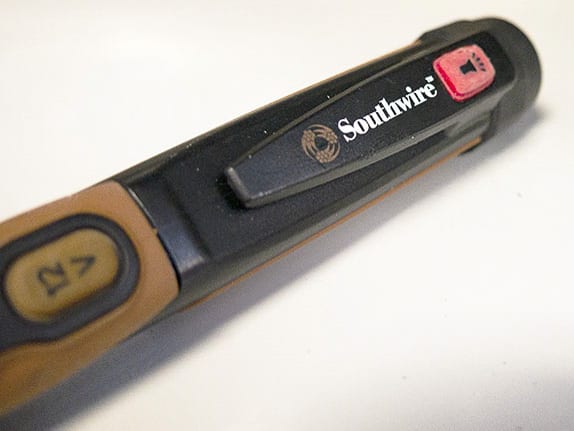
The Southwire Dual Range Non-Contact Voltage Tester also carries an IP67 rating, meaning that you won’t have to worry too much about water or dust getting into the housing. However, you do need to keep an eye on the humidity since Southwire recommends you don’t use it above 80%. In Florida, that’s a legitimate concern. Anyway, at least the beefy clip will keep it from falling out of my pocket (but it won’t help my grip).
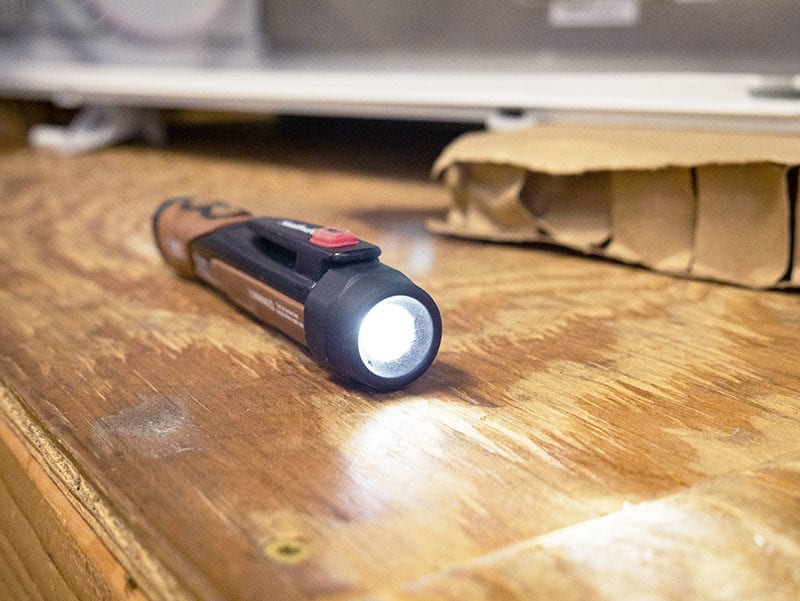
The non-business end even includes a flashlight, which is helpful in those dark corners.
The Bottom Line
The Southwire Dual Range Non-Contact Voltage Tester, with its big flashlight, has replaced at least a couple tools in my bag at this point. It can take a beating, and more importantly, its dual ranges keep me from eating both low voltage zaps as well as life-threatening shocks.
If there’s a downside, it’s that you can only use it reliably down to 32°. While that’s not a major issue here in Florida, our friends north of the border need to be aware of that limitation. Aside from that, there aren’t many excuses to avoid this one.
Southwire Dual Range Non-Contact Voltage Tester Features
- High power rear flashlight
- Thinner probe tip for working with wall outlets
- Power switch now standard
- Green LED means power on, flashing red LED with beeper means voltage detected
- Low battery self-test
- Two modes, green means high voltage mode, yellow means low voltage mode
- Silent Mode
- Forward facing flashlight
- IP67 waterproof
- Pocket clip for easy storage
- Flash and Beep rate increase as the detector gets closer to the voltage source helping the user pinpoint live circuits
Southwire Dual Range Non-Contact Voltage Tester Specifications
- Model Number: Southwire 40150N
- AC Detection Ranges: 12-1000V & 100-1000V
- Safety Rating: CAT IV 1000V
- Frequency Range: 50/60Hz
- Batteries: Two AAA
- Operating Temperature: 32°F to 104°F (0°C to 40°C)
- Storage Temperature: 14°F to 140°F (-10°C to 60°C)
- Dimensions: 6.23 x 0.83 x 0.99 in (158 x 21 x 25 mm)
- Humidity: 80% max