
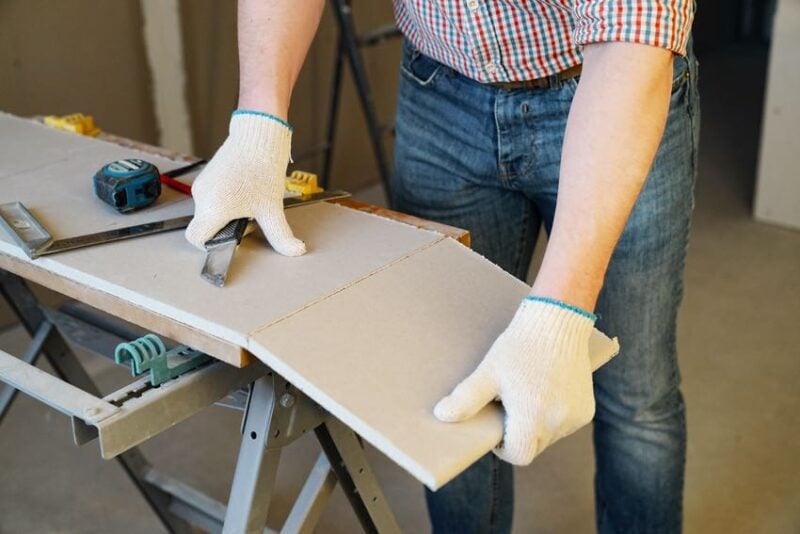
Preparing drywall to be fastened to a stud takes a little more skill than you might think. The panels are heavy and unwieldy in their 4-foot wide x 8-, 10-, or 12-foot sheets. Moisture-resistant drywall for use in bathrooms is even heavier. You may be able to install a panel on a wall alone, but without an extra human or mechanical hand, it’s very difficult to install on a ceiling. We’d say it’s impossible, but we’ve witnessed a professional drywaller install 10-foot-long boards on a ceiling by himself—it was amazing. So here are 6 methods for cutting drywall from the Pros that will help you hang in there.
He Scores! The First of 6 Methods for Cutting Drywall
Often, you will need to cut drywall panels to fit on a wall before cutting holes for outlet and switch boxes. Novices might think it seems like a good idea to use a circular or table saw to make major cuts. But as Pros know, the gypsum material between the outer paper layers of a drywall panel is brittle and quickly crumbles. This is easy to see on panel corners that have been dropped. When coupled with a spinning blade, it turns into a particulate-filled cloud of dust visible from space, with a few exceptions (which we detail below), that makes power saws a poor tool choice for cutting drywall.
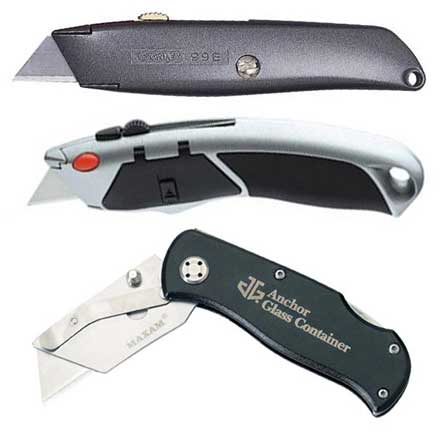
The vast majority of drywall cuts are done by simply scoring the panel with a razor knife using a straightedge as a guide. Of our 6 methods for cutting drywall, this is easily the one most people are familiar with.
For large pieces, the panel can be laid on a flat surface or over two sawhorses. Vertical or standing cuts are also possible once you get the hang of it. The razor only needs to plunge ⅛ inch or so into the drywall—just enough to cut through the paper on the cutting side. When done correctly, slight pressure from the uncut side will cause the panel to break cleanly along the cut, and a new edge is revealed. You can then use a rasp to smooth any uneven gypsum. With some practice, you will produce clean edges along the cuts. And there’s no gypsum dust cloud to clean up or breathe in.
I Saw the Light
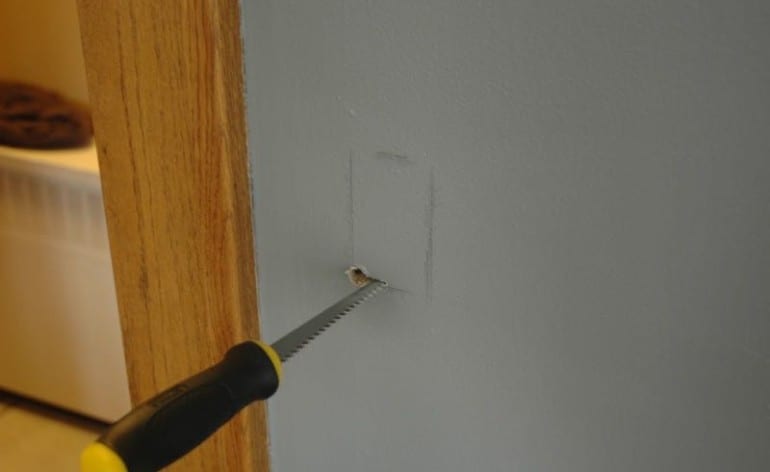
Many pros use small, handheld keyhole saws to rough in boxes for outlets and switches. Simply use a “new-work” outlet box to trace the hole to be made in the drywall (typically applicable for old work or renovation). Then use the keyhole saw to make the cut. This step in the process has been a source of frustration for many DIYers. If you’re trying this method before hanging the drywall, measure twice to ensure the panel lines up with the hole. Alternatively (and because we love power tools), you can use a reciprocating saw to make this cut—with the right kind of blade. An oscillating multi-tool can also be used to plunge cut the hole, and is even better. Perhaps the best tool for the job, however, is the spiral saw. It’s fun, too.
The Exceptions to the Rule
Yes, drywall and spinning blades don’t mix except in the possible case of saws with dust collection systems. There are a few circular saws that offer it, but one alternative is a track saw with dust collection. This is undoubtedly a specialty tool and hasn’t yet been widely accepted for this application. It’s certainly an option to get the job done when you need to cut many sheets to the same length.
Most people will opt for hand tools, which is understandable. However, for professionals or those starting a larger project, powered alternatives can make the job easier and faster—in some situations. Remember to always protect your eyes, lungs, and hands when working with gypsum.
We hope you’ve gained some knowledge from these 6 methods for cutting drywall. If you’re a Pro and you have a drywalling tip, add it in the comments below—or contact us with your own Pro tips. Happy drywalling!