
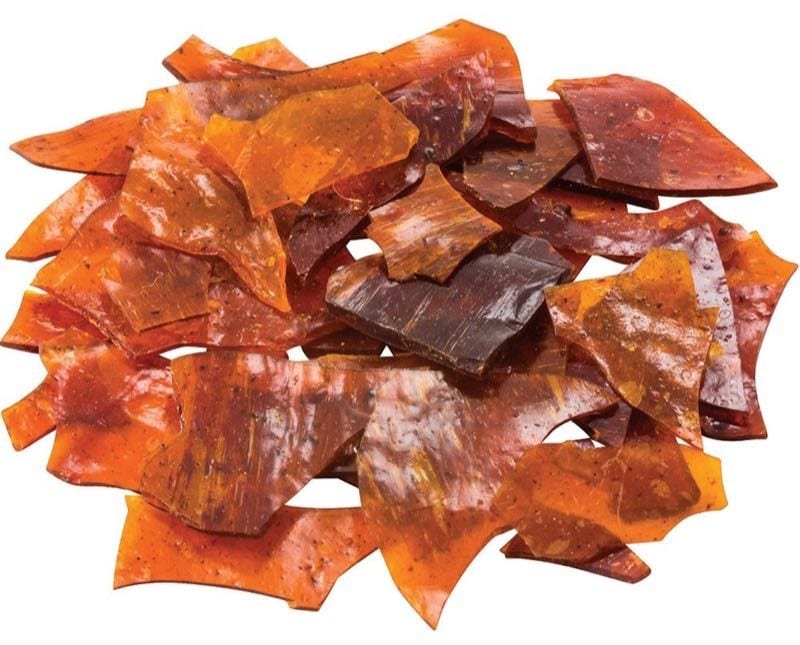
I was a soccer player in high school and college, and while we took our share of shellackings from higher-ranked teams or squads from superior divisions, we were generally on the giving end. Even Calvin and Leah, my 7-year-old twins, know what a shellacking is – it’s the word we’ve used to describe some of the violent summertime thunderstorms we get here in Central Florida. So imagine my surprise when I got an email from Rockler letting me know that they had Shellac back in stock. It opened up a process and material that I honestly hadn’t known existed before.
Build Quality and Features
Back in the day, we made a wooden serving dish that we coated with a heavy, clear coating, similar to varnish, to create an impenetrable protective layer that would make the dish last for years. The problem was that, even at 40 times the viscosity of normal varnish, it still required three coats to achieve the desired thickness. I remember wondering if this was the process they used to achieve the nice high-gloss coatings on coffee tables and other furniture that shared that finish. It seemed so time-consuming and redundant (granted, I was maybe 12 at the time).
Enter shellacking – the process of dissolving shellac flakes into a solution, allowing it to be brushed or sprayed to create a beautiful, high-gloss coating. A couple of reasons that it is such a popular finish (in addition to its inherent appearance) are that it is easily repairable and non-toxic. In fact, shellac is used to create the coating on some pills to make them easy to swallow and as a confectioner’s glaze on candy. I wouldn’t try licking your coffee table, though; your wife might give a strange look.
The Shellac Process
Shellac, available in flake form from Rockler, actually starts as a protective coating secreted by an insect – the lac bug (Lacccifer lacca). The lac bug infests certain trees in India and Thailand. The coated branches are harvested, and the coating (called seedlac) is chipped off. The raw seedlac contains natural dyes, some of which are released during processing, while others remain, giving the shellac its characteristic colors. The color varies based on the type of tree it was produced on, the geographical area, and even the time of year that it is harvested.
Raw seedlac contains impurities such as wax, bark, twig wood, and even leftover insects (remember the mosquitoes from Jurassic Park?). The seedlac is melted or dissolved in alcohol, then strained to remove those impurities. A filtration process can then be utilized to lighten the resin or remove the wax. The purified resin can then be dripped onto sheets as “buttons” or rolled/stretched into sheets, cooled, and then broken into flakes.
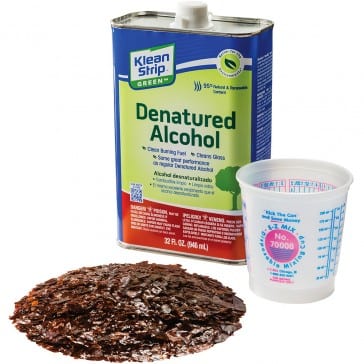
The now-ready-for-use shellac is dissolved in a solution with mineral spirits by the end user and then brushed or sprayed onto the surface they wish to protect. The wax-free shellac coating is great for sealing stains, odors, and knots. It can also be used underneath other finishes. In recent years, shellac has become increasingly challenging to obtain and expensive due to drier-than-normal conditions in the region where the seedlac is harvested. Currently, more normal rain patterns have returned, and the supply of shellac has made a comeback as a result.
Many thanks to the folks at Rockler for providing information on the shellac production process for this article. For more information on Rockler woodworking products, please visit their website.