
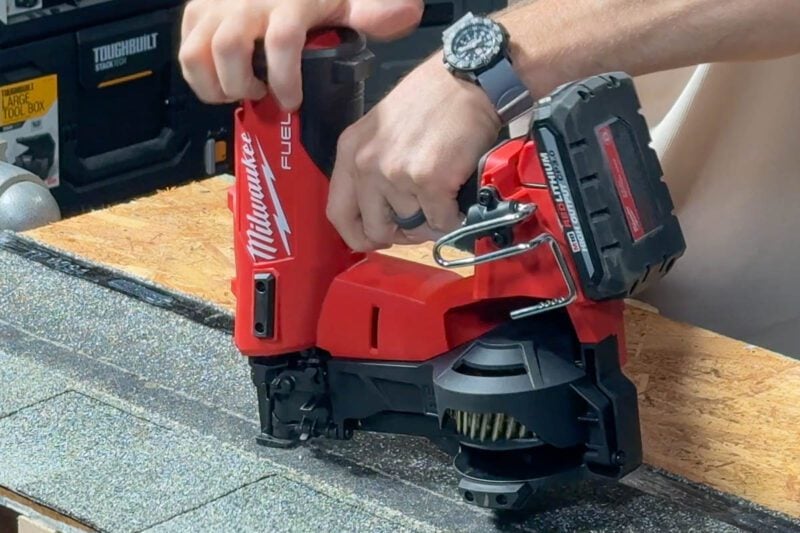
From trim to framing and stapling to roofing, it seems like cordless nailers are all the rage. Even a cursory glance through my inbox shows probably twenty cordless nailer announcements for every one pneumatic launch. Have we finally reached the point where it’s time to ditch your compressor and hoses for good and embrace battery power?
We’ve had our hands on the majority of cordless nailers on the market, and I’ll share my perspective on where things currently stand and what might be just over the horizon.
You Might Also Enjoy: Pneumatic vs Cordless Nailers: What’s the Best Choice?
When Cordless is the Way to Go
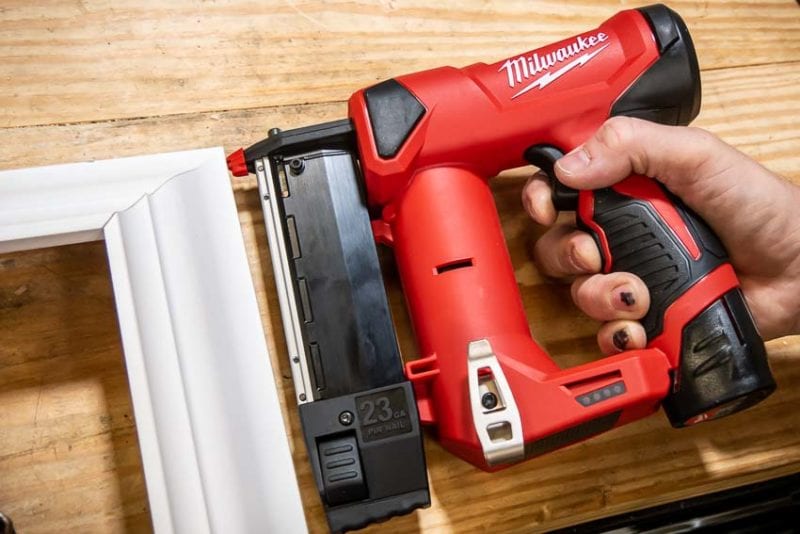
Are there nailers worth going all-in on battery power and leaving compressors and hoses behind for good? Absolutely!
Some cordless pin nailers and crown staplers are now compact enough that we won’t bother reaching for an air version under any circumstances.
Several Pro and DIY brands offer models that are much lighter and more compact than the first-generation efforts. However, no other brand has done a better job than Milwaukee. Their M12 Pin Nailer and M12 3/8-inch Crown Stapler perform great, get into tight spots better than other models, and don’t fatigue our arms as quickly.
There are a couple of niche models we’re sold on as well. While most electricians opt to pound in their staples with a hammer, Milwaukee’s M12 Cable Stapler is well worth the price thanks to the incredible time savings it offers (not to mention fewer bruised thumbs).
PTR Reviewer Luke Smith relies heavily on Milwaukee’s M18 Fuel Fencing Stapler over manual hammering or gas-assisted models like the Stockade Fencing Nailer. While it’s on the heavy side, it’s another model that saves so much time and effort that we’ll never go back.
When Cordless is Still Up in the Air
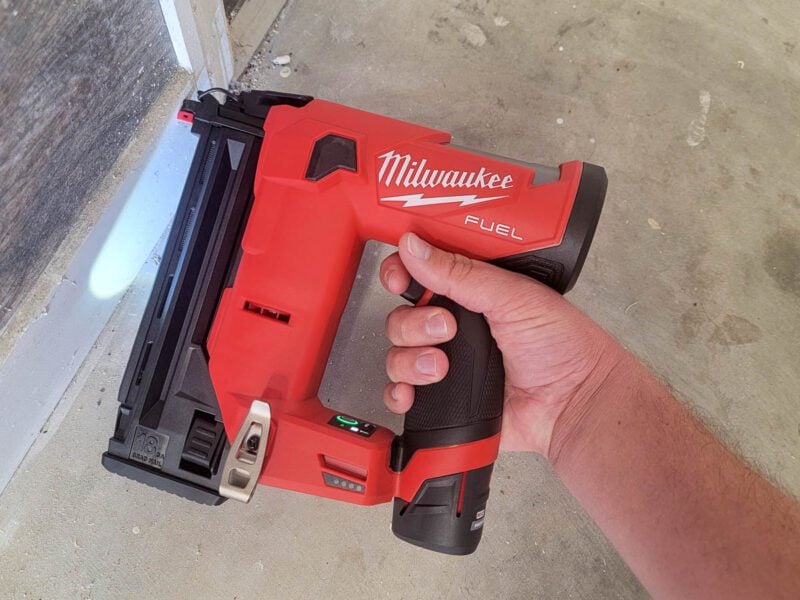
As we move into the finish nailer and narrow crown stapler classes, there are a ton of cordless choices and serious competition. Brands such as Milwaukee and Ryobi are on their second or third-generation models, while others like Bosch and Flex are challenging them with their first-generation offerings.
When it comes to replacing air power, things aren’t as clear-cut, though. Even among 18-gauge brad nailers, there’s a significant weight penalty you’ll have to endure to enjoy cordless freedom for most models.
Again, Milwaukee is leading the charge, and their M12 Fuel 18-gauge Brad Nailer is an excellent option. It doesn’t quite have the full nail length range as 18V and air models, though, so it’s not going to be the best solution for everyone.
Looking to the larger classes, there are three more nailers that are a tough choice between cordless and air. Working at a slower pace than most framing applications, cordless metal connector (positive placement) and duplex nailers are tempting options. Cordless concrete nailers can also be worth dealing with some extra working weight.
Remember that it’s not just a trade-off between weight and freedom, though. Cordless nailers introduce new features you won’t find on air nailers. LED lights, diagnostic feedback, and push-button mode changes give battery power some additional selling points.
When Air Power Still Has the Advantage
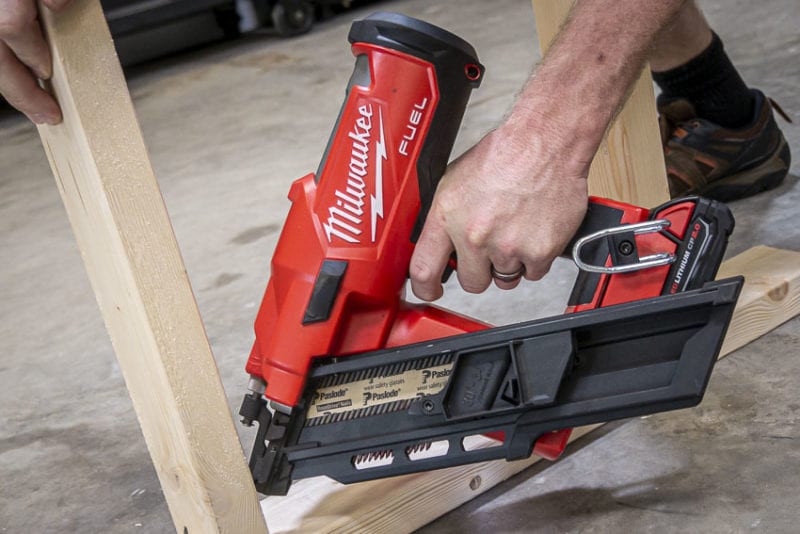
When it comes to framing and roofing, we still reach for our pneumatic models as our primary nailers. It’s for somewhat different reasons, though.
It’s primarily about weight with cordless framing nailers. Considering this is already one of the heaviest nailer classes, you feel it even more with battery-powered models. However, premium cordless framing nailers have the speed and power to replace air models, even in engineered lumber.
On the other hand, cordless roofing nailers are heavier and they’re not as fast as air models. It’s not just firing speed, though. For example, Milwaukee’s M18 Fuel Roofing Nailer is capable of firing up to six nails per second, though most other models are slower. Instead, there’s a very slight firing delay present in the models we’ve used. Even in the better models, it’s just enough to throw off your rhythm if you’re a seasoned Pro. We find the same delay on framing nailers, but since you don’t fire as quickly with those, it’s far easier to tolerate.
Even though there are caveats, we still use cordless framing and roofing nailers. Why? Because they’re fantastic on small projects and punch lists. Some of the jobs we use them on can be completed by a cordless model before you even get a compressor, hose, and air nailer set up. So, even though we might not use them as our primary nailers, they’re still excellent supplements to have on hand.
Forecasting the Future
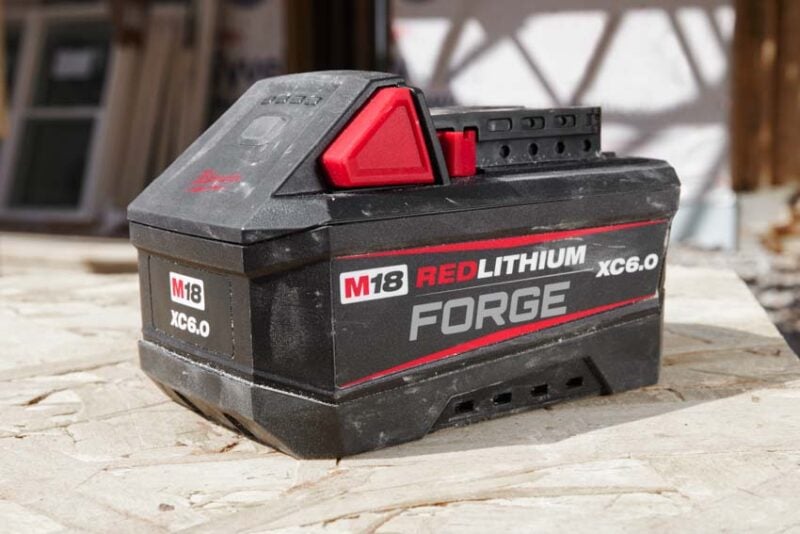
Looking ahead to what might be next, there are already some hints at what’s possible. Most of the major brands now have tabless batteries available, and that means they can deliver even more power to their brushless motors. Since most premium cordless nailers already have the power Pros need, I expect the next generation will be able to bring the weight and size down a little more thanks to the improved power delivery. Paired with compact tabless batteries, we might see half or even close to a full pound come off some of the larger models.
If Milwaukee develops a tabless M12 battery, it’s possible that a limited-range M12 16-gauge nailer could be in our future. Yes, that’s ambitious, but Milwaukee is an ambitious company.
Looking further forward, battery technology is sure to continue improving, and there are promising developments with alternative chemistries that could potentially be compatible with today’s lithium tools.
There’s only so much you can do, though. A cordless nailer has to have a completely different mechanism to run the driver blade, so you’re always going to have additional hardware inside the housing that an air model doesn’t require.
If cordless nailers are going to completely take over for pneumatic, it’s likely going to take a rethinking of the driver system that allows the size and weight to at least be in the same ballpark as air models.
So, has the final nail been fired in the coffin of air nailers? Not even close. Pneumatic nailers will continue to be relevant for the foreseeable future, even as cordless nailers continue to develop and earn greater adoption among Pros and DIYers.