
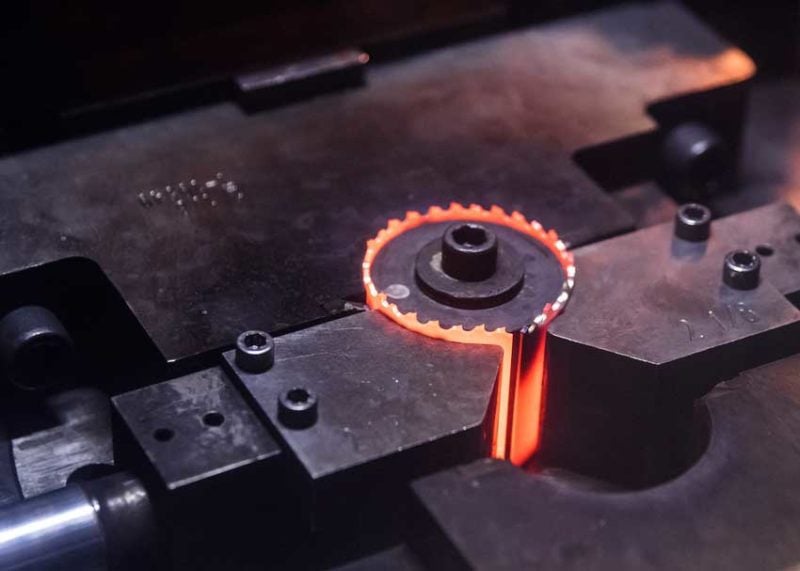
Fresh off our tour of the Milwaukee SawZall blade manufacturing plant in Greenwood, we next ventured to hole saws. Ryan Rudzinski began our tour with a look at how Hole Dozer bimetal hole saws are made. In 1992, Milwaukee hole saws were made in their Brookfield, WI, facility. In 2004, they relocated their manufacturing operations to the Greenwood facility. In 2015, the Hole Dozer was announced. It broke norms by including a lifetime warranty for broken teeth. This product emerged when Milwaukee recognized that nearly all industries were utilizing these types of hole saws.
Why Hole Saws?
Electricians, plumbers, HVAC, and MRO professionals all require high-quality hole saws that are durable and won’t break easily. Many Pros also move back and forth between metal and wood boring applications. This goes double for those involved in home remodeling, where you can run into just about anything.
Milwaukee designed the Hole Dozer for durability in both metal and wood applications. The company tested over 3200 different designs, many of which they sent out into the field for practical application testing. Tradesmen and workers cut over 100,000 holes with these saws during just the testing phase.
Through the process, they found that durability, speed, and even plug removal were at the top of the priority list for Pros. So what makes the Hole Dozer so special? We discovered this during our Milwaukee hole saw factory tour, where we got to see the hole saw manufacturing process up close.
Milwaukee Hole Saw Factory Tour
Hot forming eliminates the need for heat treating, thereby eliminating an entire step in the process. Milwaukee has invested a significant amount of time in enhancing its weld strength and understanding how the steel design and thickness affect its capabilities.
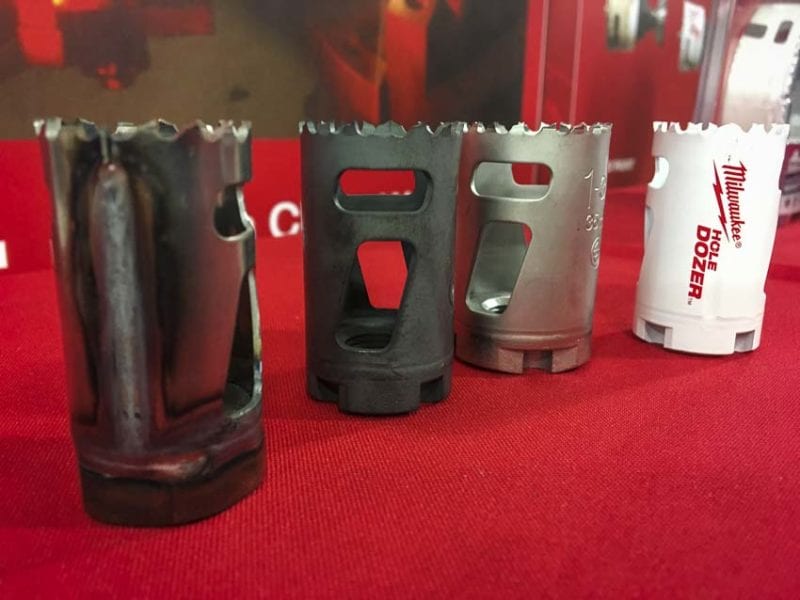
Hole Saw Manufacturing Process
After a straightening process, a machine stamps the hole saw steel into blanks with the appropriate width and length. This also adds the core removal ports.
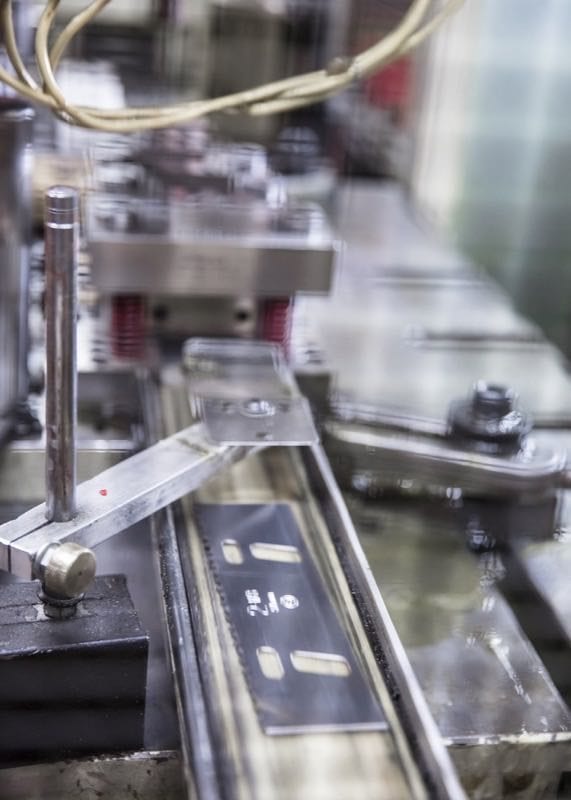
The flat pieces of steel proceed to the hot form molder and furnace.
A combination of dies form together to take those blanks and form them into the hole saw shape. This is where the hot forming process really shines. It takes about 20 minutes to switch out the entire line from one size hole saw to another.
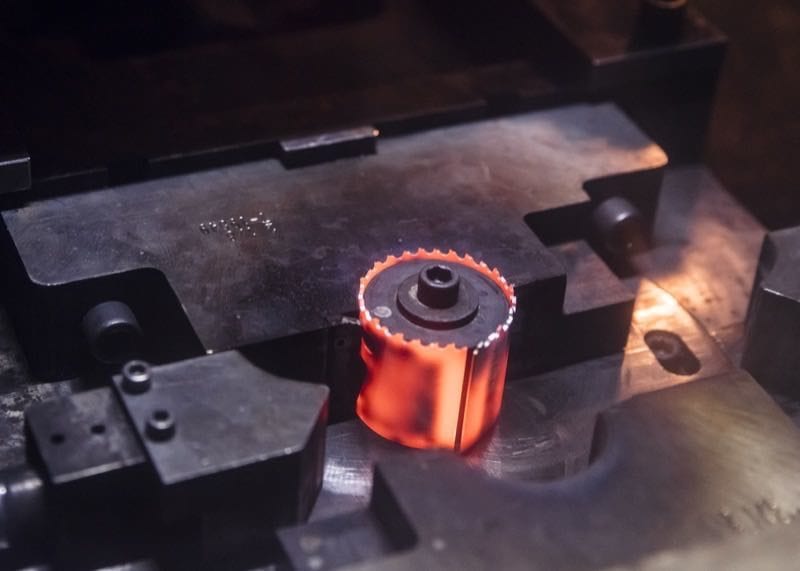
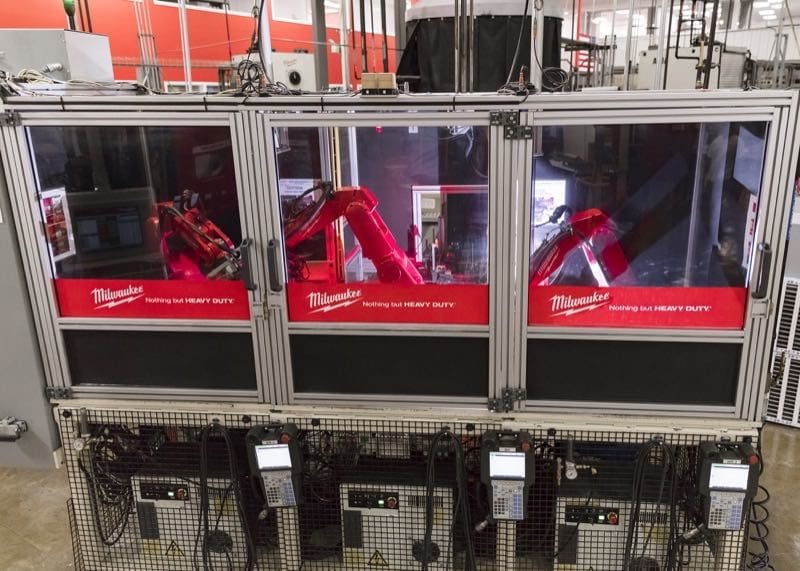
After forming, an automated system welds the base onto the round hole saws. Next, they get sent on to the painting process.
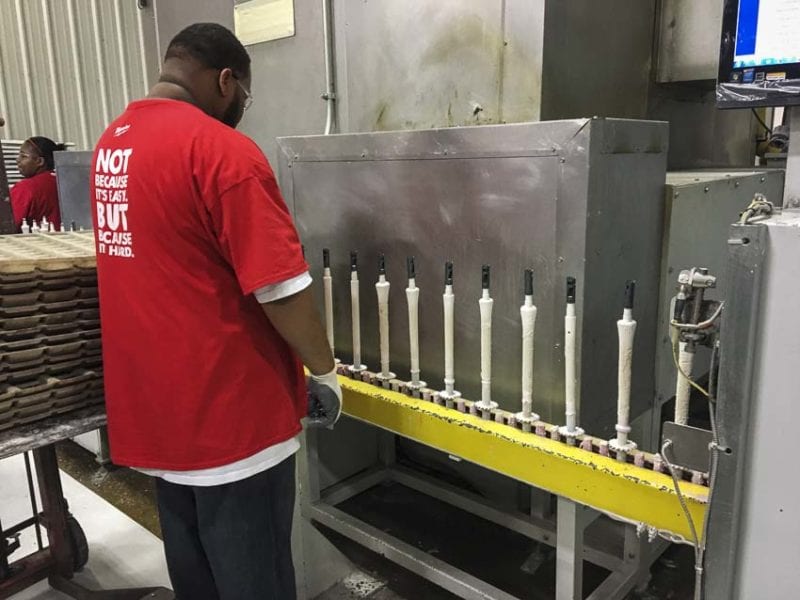
At the paint line, the operator puts the hole saw on the stem. It undergoes an automated paint process and then a heat treatment to dry the paint. From there ,it moves on to a cooler to allow them to be handled.
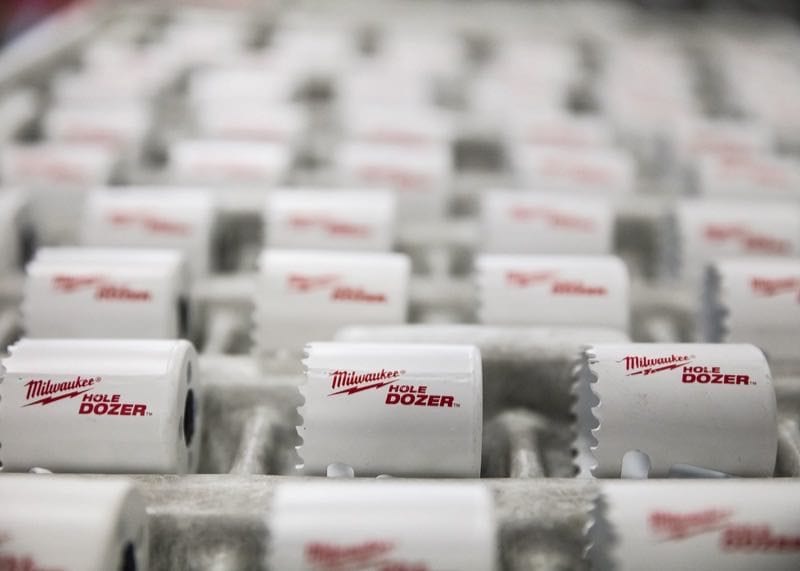
Workers apply the logo, and the hole saw passes a quality inspection.
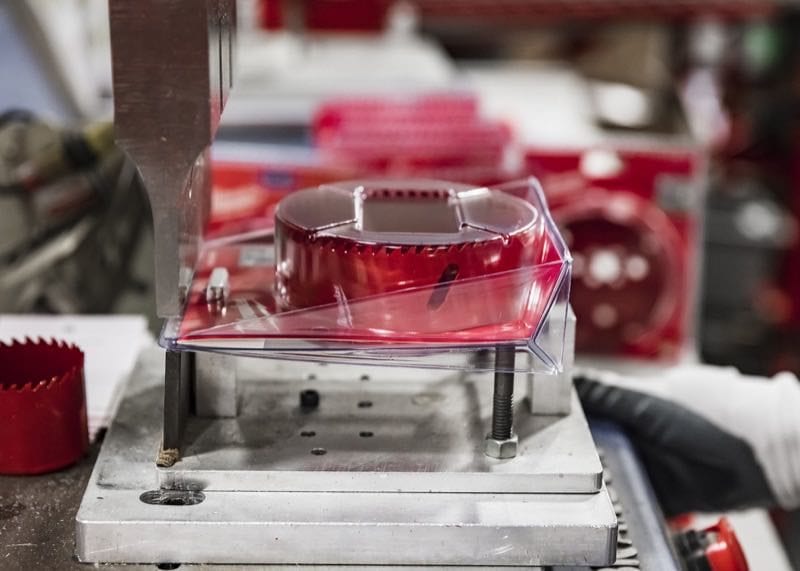
The final process in Hole Dozer manufacturing is packaging. Various kits, including boxed multi-packs, single arbor packs, and clamshells, offer multiple options for consumers and retailers.
Conclusion
Of course, a fun component of the Hole Dozer manufacturing tour included a visit by Phil Bryant, the governor of Mississippi. He stopped by to talk a little bit about the special relationship Milwaukee Tool has with the people of Greenwood and the state of Mississippi. This southern state is bending over backwards to help Milwaukee expand, and—in turn—Milwaukee is increasing its commitments to keeping these valuable manufacturing jobs in the area.
I’ve used hole saws for decades—it was great to see what actually goes into making these tools. I no longer take them for granted, and it has helped us gain a better understanding of what goes into making these power tool accessories.