
Good end to end silica dust management starts with a solid plan and making sure your crew knows how to use the products that keep you compliant with OSHA’s 50-microgram PEL. Fortunately, some manufacturers are making it easier with websites dedicated to Table 1 compliance.
How to Use Table 1 for Silica Dust Management
There are six major components when it comes to silica dust management and each choice you make along the chain affects others down the line.
- Application
- Tool
- Accessories
- Attachments
- Dust Collection
- PPE
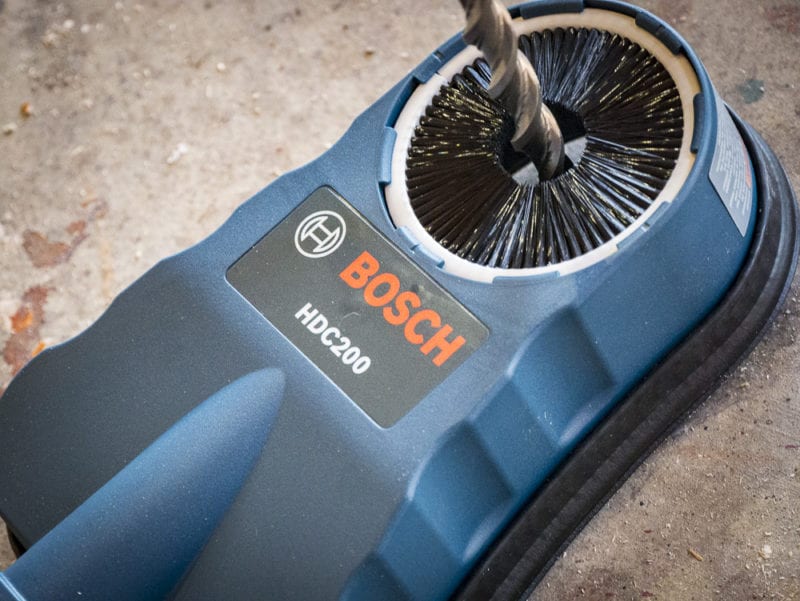
When you look at Table 1, you’ll see that each part of this chain plays a part. Here’s what to look for in each part of the table:
- Equipment/Task: Gives you the general type of equipment you use and occasionally gives you a specific application. Not every possibility is there, but don’t worry, there’s still a solution!
- Engineering and Work Practice Control Methods: This is going to start getting more specific about dust control requirements. You don’t need a HEPA filter for every application, so only use it if you really need it.
- Required Respiratory Protection: Split into time that is 4 hours or less and more than four hours per shift, this lets you know if additional PPE is required. Note that those hours are continuous use hours, not how many hours you’re assigned to the job. You might be assigned to 5 hours of surface prep but only spend 2-1/2 with the tool actually on.
What if Table 1 Doesn’t Cover It?
If Table 1 doesn’t cover the tool or applications you’re getting ready for, the next thing you’ll move to is Objective Data. This is where the tool company you’re working with can be your best friend and do a lot of the legwork for you.
Objective data defines the specific application, tool, accessories, attachments, dust collection, and PPE you’ll need on a much more detailed level. It’s kind of like following a recipe. If you use the entire system the way it’s described, your silica dust management is OSHA compliant. Change any part of it and it doesn’t help you.
What makes it easy is that the manufacturer takes all the guesswork away from the process. They’ll tell you the model to use from the tool to the accessory so you know you have exactly what you need and aren’t wasting money on what you don’t. Best of all, you can download compliance letters straight from the manufacturer’s website to show an inspector.
And if the Manufacturer Doesn’t Have Objective Data for Me?
The third option isn’t quite as pleasant. Scheduled Monitoring puts a monitoring device in play to determine if the environment is below the action level of 25 micrograms. If it is, you can stop testing and move on with your life.
In the event that it’s higher than the action level and below the PEL, you’ll need to repeat the monitoring within 6 months. If you’re above the PEL, you get to repeat the testing within 3 months.
You can also perform your own performance testing and essentially create your own Objective Data documentation. Just keep in mind that it’s open to OSHA inspector challenges and is generally considered to have a higher risk of being overturned.
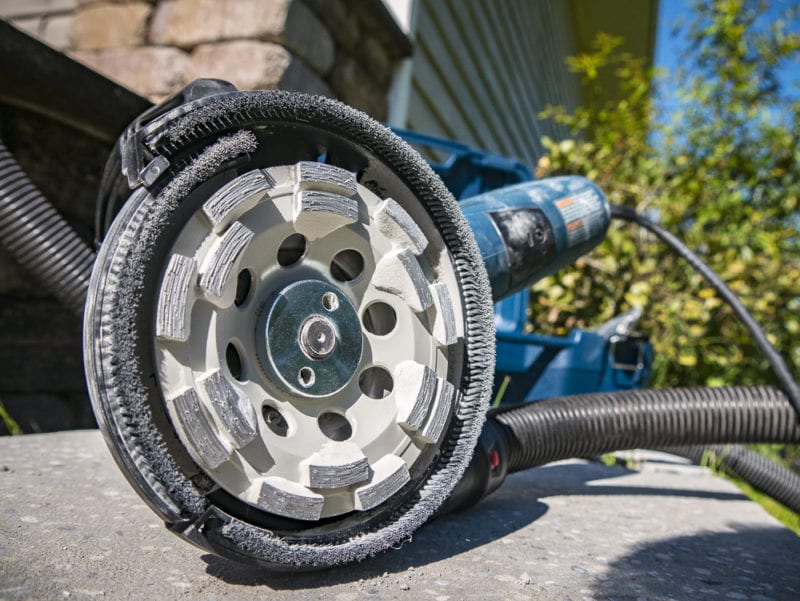
Making Your Life Easier
That’s a lot to digest on its own, but just keep in mind the silica dust management chain and it’s not too difficult to piece together. Clearly, it’s going to be easiest to work within Table 1 or a manufacturer’s Objective Data documentation.
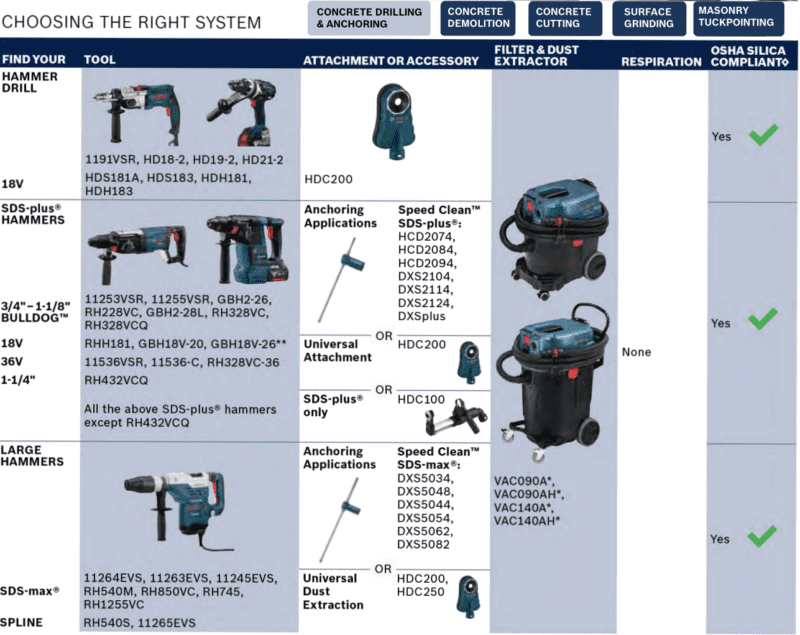
But some manufacturers make it even easier. Take Bosch for example. They break silica dust management into 5 sections:
- Concrete Drilling
- Concrete Demolition
- Surface Grinding
- Concrete Cutting
- Masonry Tuckpointing
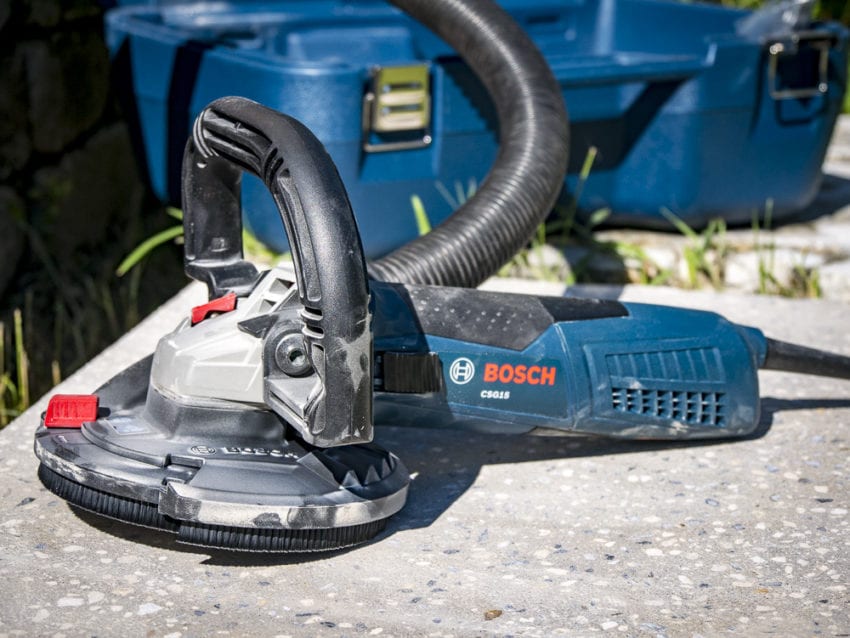
Clicking this link takes you to a PDF with a very easy to follow breakdown that starts with the tool and lets you know what attachments, accessories, dust control, and PPE you need to be OSHA compliant. They tell you exactly what model numbers to use so it’s as easy to use as Objective Data documents. Maybe even easier since it’s laid out in such a logical format.
Applying What You Know
By understanding how to navigate Table 1 and how to find Objective Data, the hard part is done. If you do that work on the front end, the rest is just a matter of getting your hands on the right equipment and using it correctly. If you’re running a crew, that means making sure each member has the training to use the equipment properly.
You’ll notice that Table 1 frequently says, “Operate and maintain tool in accordance with manufacturer’s instructions to minimize dust emissions.” That’s code for “read the manual.” All of your hard work is thrown out by an OSHA inspector if you’re not following the instructions for use and maintenance. You’ll also want to make sure you’re replacing consumables when they’re due.
If you’re not 100% sure you’re doing everything right, you can contact OSHA directly or take advantage of some of the manufacturers’ hotlines that have been set up just to help with silica dust management. There may even be a local rep that can come out to work with you directly and make sure you have everything you need for full compliance.