
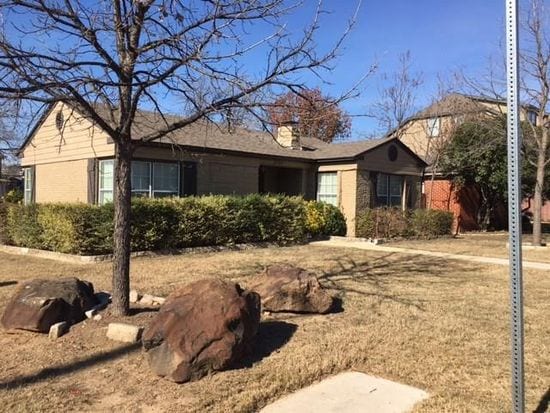
Mistakes and accidents are just part of the jobsite: if you’re going to work, they’re going to happen. We always aim to avoid overt negligence and carelessness, so we have workflow plans, safety procedures, and safety equipment. But that doesn’t cover all bases because a jobsite fail can still happen in communication with the client, misreading instructions, or perhaps most frustrating of all, what we call honest mistakes – those that can be tricky to avoid. We recently read a story out of Fort Worth where a discrepancy between a house’s street number painted on the curb and the actual house number resulted in just such a mistake.
How This Jobsite Fail Went Down

The subjects of the whole ordeal are two homes on Forest Park Boulevard: 2700 and 2736. The owners of 2700 hired a contractor to gut the home – and to start by breaking in because there were no keys to the door. The owners of 2736 had a buyer for their home after their son and his roommate graduated from college and moved out. The contractor arrived in front of what he thought was 2700 because that address was painted on the curb in front of the house. Unfortunately, when he didn’t confirm the house number with the number on the curb, he broke the door in and stripped 2736 of all furniture, fixtures, and equipment.
If you need any restoration of faith in humanity: the contractor immediately took responsibility once he realized his error. The owners of 2736 spoke highly of him and his efforts to rectify the situation, although the details of their final plan won’t be disclosed. We commend his integrity and regret on his behalf what must be a bit of an embarrassing and expensive mistake. We know that such a misunderstanding could (and maybe has!) happened to us.
Debrief: What Can We Learn?
It’s easy to critique this situation in hindsight with full knowledge. But that’s not how things happen in real time. Ambiguity can lurk around every corner and broadside us during a project. This jobsite fail was really a perfect storm: the conflicting address information, both houses were empty so no one was there to say “stop!”, and the contractor didn’t meet the owner of 2700 at the site to discuss the work. If there’s a lesson to be learned, it’s that routine jobs can turn into huge, costly headaches if there’s not confirmation of the scope (and location!) of work before it starts. Still, we recognize this as a mistake that might have been more difficult than most to avoid. We’re thankful that this contractor upheld the values that build trust in the profession and keep business coming in the door.