
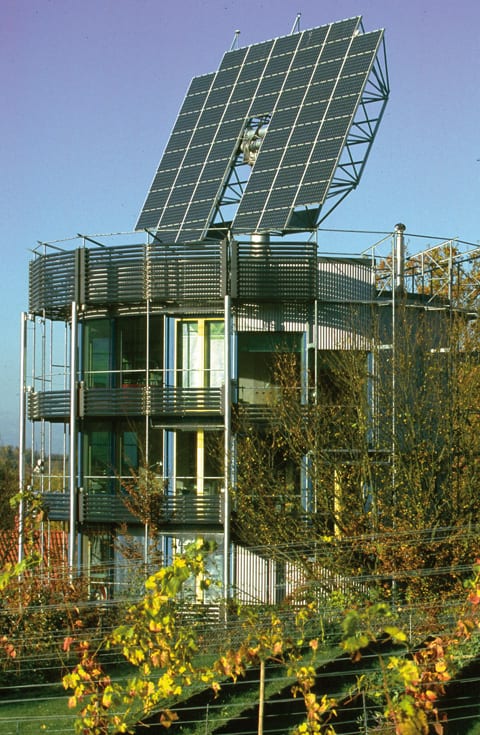
As solar power continues to gain traction in the minds and plans of builders across the country, it was no surprise to see a new home design lived out that takes advantage of the sun in ways that are older than construction itself, and yet newer than anything we’ve seen to-date. The sun is important in a numbers of ways. In terms of energy production, solar cells are typically positioned so as to maximize their exposure to the sun during the most active portion of the day. For efficiency of cooling, however, a home that has lots of windows may want to face away from the sun or take advantage of shade during the hottest parts of the day.
Heliotrope Revolving Homes
For all of these concerns, how about a house that rotated to position itself in the most optimal direction? The idea isn’t new. Arctic plants do this naturally, allowing the maximum photosynthesis possible, and even buildings have ventured into the world of heliotrope rotation. George Bernard Shaw had a writing shed that he could push around so as to get the best lighting. And he wasn’t alone. In the 1900’s these rotating sheds were not uncommon in England. A 1935 Villa Girasole home is powered by a 3HP diesel engine and rotates at 4 millimeters per second. In 1958 a Belgian design was built with a fixed concrete roof that allowed the window-laden home below to rotate.
Rolf Disch is a German architect who is well-known for his work in solar efficient homes. He built the very first heliotrope house, which actually generated more energy than it took in and remains one of the more famous examples of this technology in existence.
Editor’s Note on Heliotropism: This is a word given to describe the way plants that live in the Arctic follow the sun around as it arcs across the sky. Because the growing season is so short, they need every advantage they can get. Arctic poppies are particularly known for the phenomenon.
And the heliotrope explosion is just apparently beginning. Homes of this type are being constructed in Australia, Germany, and even Dubai. When you think about how much energy is spent just trying to combat the sun and its warming effects on a home during the summer months, a heliotrope home starts to make a lot of sense.