
Milwaukee Conduit Bender Targets Improvements in Durability and Visibility
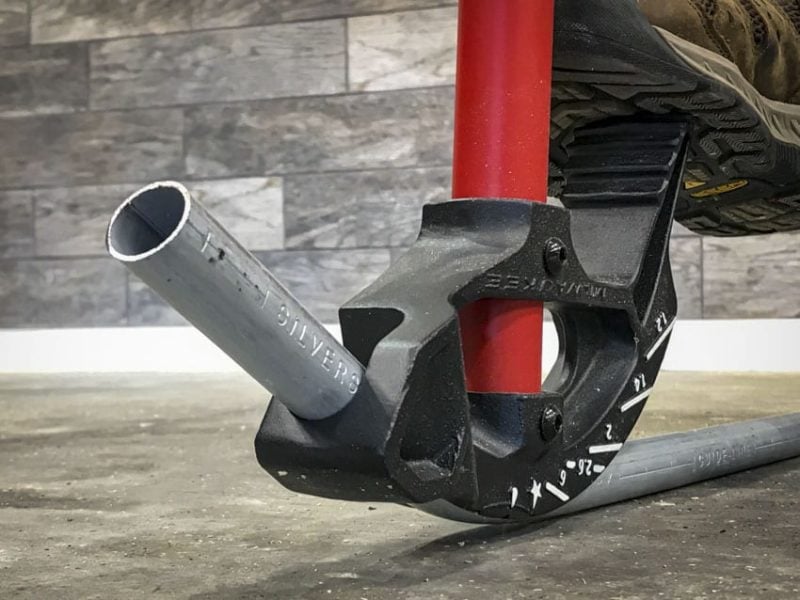
Milwaukee Tool’s lineup of conduit benders for electricians is designed to tackle bending jobs with better functionality, durability, and visibility throughout the whole process. The improvements they’ve made are genuinely helpful and you have a choice between iron and aluminum.
10-Second Summary
- High-contrast markings
- Double-bolted handle
- Wear-resistant reference chart covering most bending references
- Key reference angles and offset multipliers on shoe
- 30°, 45°, and 60° center of saddle bend notches
- Reinforced hook and pedal
- Back of 90° bend indicator
Key Improvements
The Milwaukee conduit bender line starts with a series of reinforcements designed to extend the life of the tool. A double-bolted handle eliminates any handle wobble or loosening. Milwaukee has also beefed up the hook and pedal, ensuring that these key pieces won’t give out on you in the middle of a job.
These are usually the two weak points on any bender, so getting the additional reinforcement here is a big step to improving the overall durability.
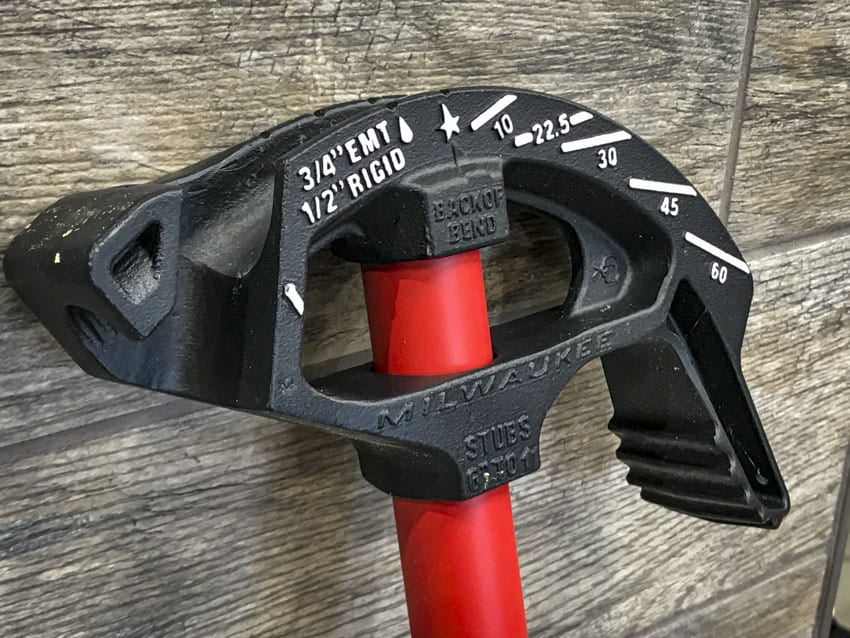
They’ve also increased the visibility so that your bends are more accurate and the job less taxing. Milwaukee uses high-contrast markings that resist wear-out. Your key reference angles, as well as your offset multipliers, are all marked off on the side of the shoe. It includes a back of 90° bend indicator as well as a wear-resistant reference chart.
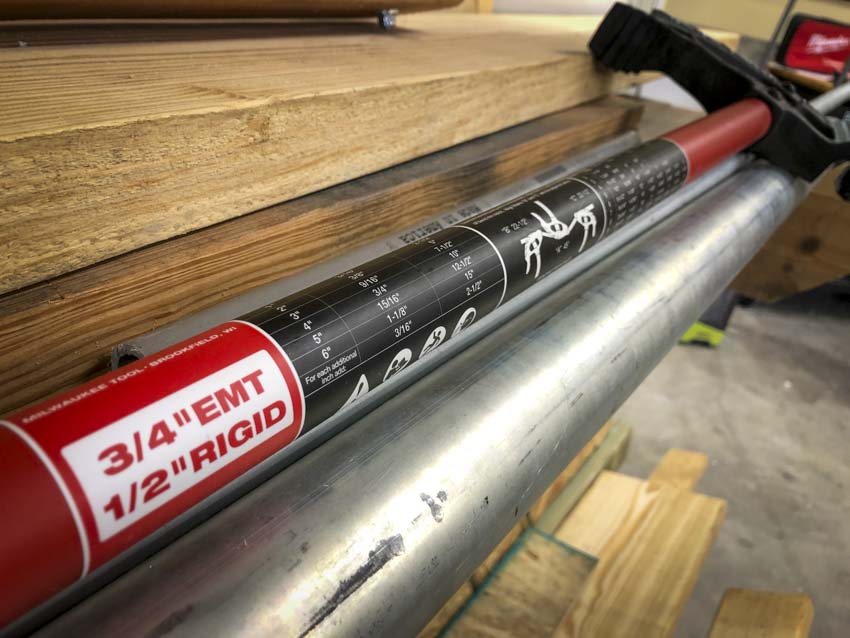
We like the measurement markings that Milwaukee includes but it’s the high-contrast white-on-black that really stands out to us. When you’re making a bend, it doesn’t do much good if you can’t see the angles from where you’re standing. These markings make it easy, even for our Managing Editor who only has 1 good eye.
For the aluminum models, it’s going to shift to black-on-silver markings. They still stand out, but don’t pop as much as the ones on the iron heads.
Aluminum or Iron Conduit Benders?
You can get a Milwaukee conduit bender in any of 6 different flavors. You have 1/2″, 3/4″ and 1″ lightweight aluminum options, as well as 1/2″, 3/4″, and 1″ heavy-duty iron models.
So which one do you go with?
Deciding between aluminum and iron is more than just a weight vs durability discussion. There are a ton of outstanding electricians that swear they’ve never had an issue with the durability of aluminum (unless it was abused) and just as many that swear they’ll only use iron.
About half of our team prefers the long-term durability of iron since most of them are buying their own gear and want it to last as long as possible. The ones that work for a company that buys the benders for them mainly prefer the lighter weight aluminum.
There’s not really a bad choice between the two. If you want a shot at using the same bender 20 years from now, go with iron. If you know it’s going to get lost or stolen way before then, go with lighter and less expensive aluminum.
The other piece is the quality of the conduit you’re using. Some Pros are reporting that cheaper conduit is more prone to bending issues with aluminum conduit benders. If you have a chance, try bending the conduit you actually use in the field with both types and see which one gives you the best results.
Aluminum or iron—which one is your preference? Let the discussion begin!
Milwaukee Conduit Bender Models
Milwaukee Iron Conduit Benders
- 1/2″ Iron Conduit Bender (48-22-4080): $64.99
- 3/4″ Iron Conduit Bender (48-22-4081): $79.99
- 1″ Iron Conduit Bender (48-22-4082): $99.99