
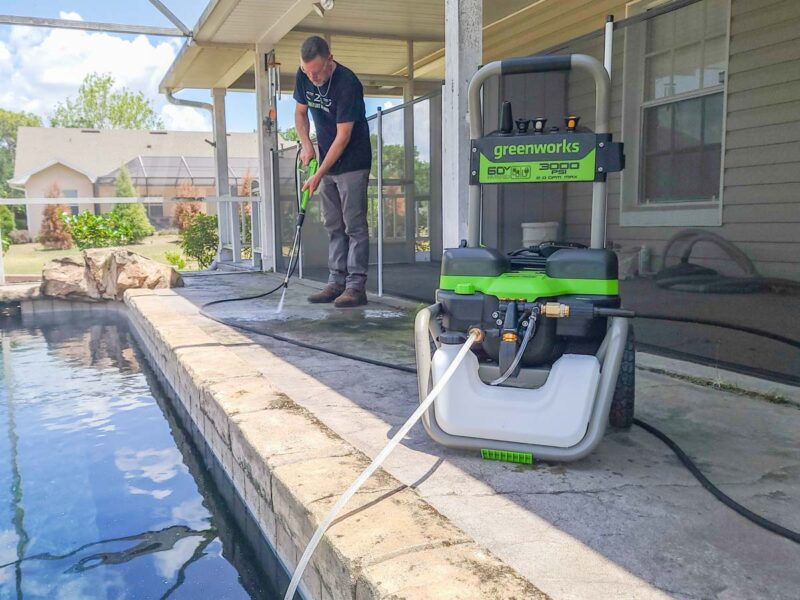
First Time Using a Pressure Washer? We Have Some Helpful Tips to Get You Started!
Pressure washers are one of the most effective tools to keep the outside of your home clean. Personally, I find pressure washing to be very satisfying. Watching the grime melt away to reveal clean siding, decking, and concrete is an enjoyable experience. Is that weird? Maybe so. However, if you’re in the same boat, I’ll show you how to use a pressure washer safely and effectively while avoiding damage and injury.
You may be thinking, “It’s just water—how much damage can it actually do?”
Well, the short answer is, a lot, if you’re not careful! The best pressure washer for your needs can vary in size and capability, and the higher the performance, the more cautious you should be. Knowing a few things about the differences and settings will help you achieve the best possible success with your cleaning projects.
But that’s enough warnings for now—let’s help you get the outside of your home into tip-top shape!
Step 1: Prepare the Area
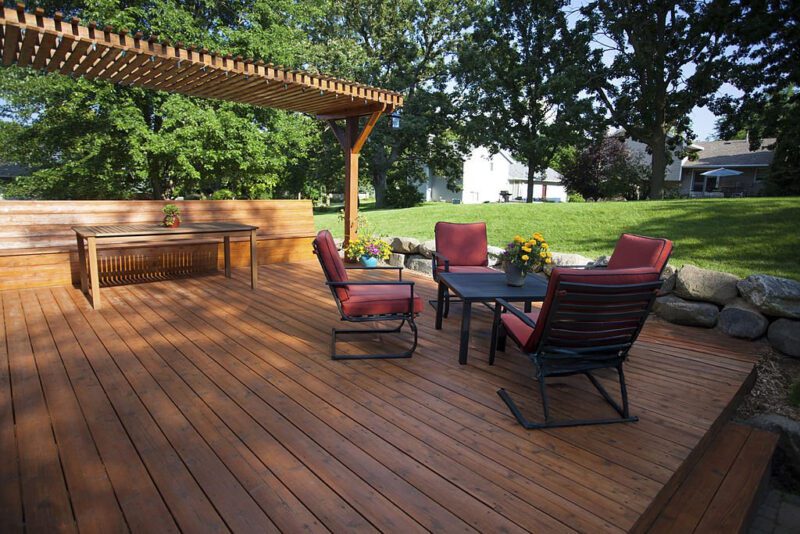
The first step to using a pressure washer is the least fun, but we have to get it out of the way before we start cleaning. Make sure to clear your area of anything that could be easily broken. As the tool’s name suggests, the water comes out at high pressure, so it can do some damage if you’re not careful.
Clearing also ensures you don’t have to maneuver around obstacles, which may lead to an uneven wash. If you’re cleaning your deck, remove everything from the surface, like chairs, tables, and other small items. For cleaning your home’s exterior, identify any electric boxes and additional areas you want to avoid spraying.
Oh, and make sure you’re wearing the proper footwear. A good pair of work boots, tennis shoes/sneakers, or really anything close-toed will be your best bet. Never use a pressure washer with bare feet, sandals/flip-flops, etc. You’re spraying highly pressurized water down toward the ground, which can easily tear through your skin if you accidentally spray your foot!
Step 2: Choose a Cleaning Agent (Optional)
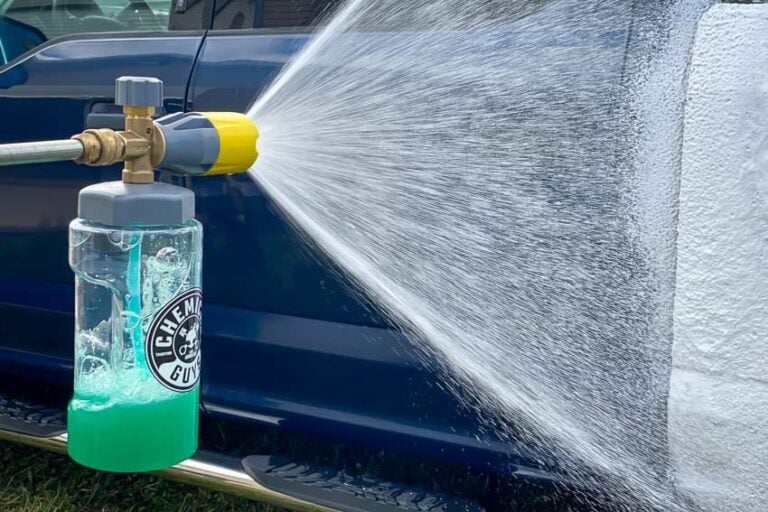
If you’re tackling some serious grime on your deck, concrete, siding, or even your vehicle, adding some type of cleaner to the mix can help break it down more easily.
If you have mildew growing on your deck or siding, you can add a 10% bleach solution to kill any mildew and prevent it from coming back as easily. Saturating your grass with plain water before using a bleach solution will also prevent the bleach from damaging the grass around your cleaning surface.
There are also several systems available as add-ons to pressure washers that facilitate mixing additives and cleaning solutions into the water in proper quantities. In general, though, your pressure washer’s detergent tank is fine for any detergents that don’t require foaming action and a foam cannon is the way to go for those that do.
Step 3: Attach the Pressure Washer Hose to a Water Supply
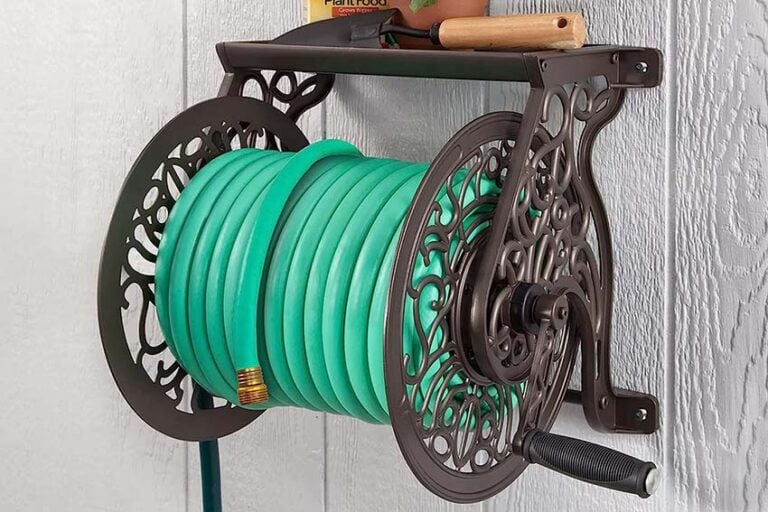
In most cases, you typically get water into the pressure washer by attaching it directly to a water hose. This should provide sufficient amounts of water to the unit’s high-pressure hose. Once you have it attached, you can start the pressure washer.
If you’re using a gas pressure washer, you need water to be flowing through the pump to help it start more easily. Pull the wand trigger with one hand (I usually do this without a nozzle to get the highest water flow) and pull the cord to start it up. It’s also helpful to put one foot on a wheel or the front of the frame to keep it from moving around while you pull.
Be sure to use a good-quality hose as well. If you don’t know where to start, check out our best garden hose recommendations.
Step 4: Set or Monitor the Pressure Level
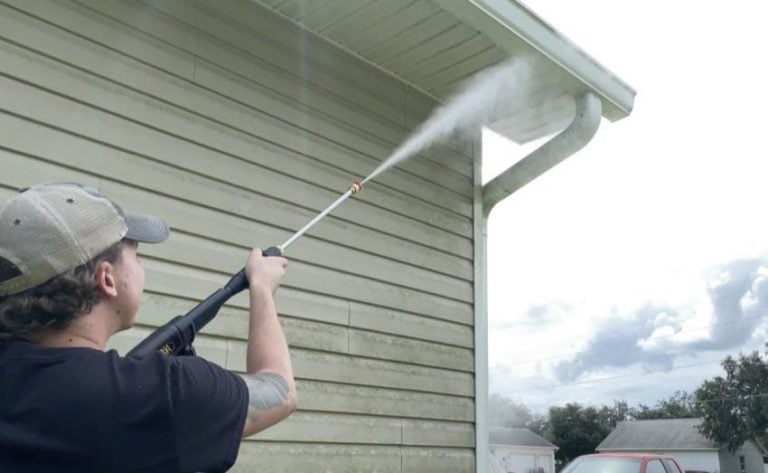
While some pressure washers let you adjust pressure via a pressure-regulating control, the majority do not. Instead, most pressure washers include a variety of nozzles with different angles to adjust the width of the spray. I’ll go more into nozzle details in the next section, but as a rule, the wider the spray pattern, the less pressure is applied to your cleaning surface.
However, the primary way to adjust your cleaning pressure is by varying the distance of the tip from your cleaning surface. Move closer to apply more pressure, and back off to apply less pressure. It’s pretty intuitive!
No matter how you plan to adjust for pressure, you want to understand the output pressure level of the water before you start. You want enough pressure to clean a surface well, but you also want to avoid using excessive force that can damage harder woods or the siding of your home.
Always consult the pressure washer’s instruction manual first to see what settings the manufacturer recommends for various applications. Then, experiment in an area where you won’t damage any surfaces, starting with a lower pressure tip and a greater distance.
Step 5: Select the Right Pressure Washer Nozzle
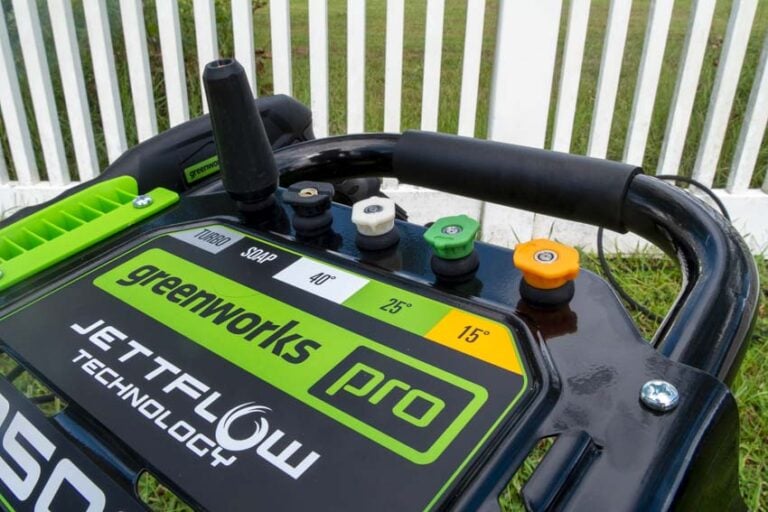
Most pressure washers use a quick-connect nozzle that varies the output pressure and sets the spray pattern for the pressure washer. Knowing which pressure washer nozzle to use helps you get the job done properly—and safely.
The tips are frequently color-coded to indicate the fan pattern and thus the pressure. In most cases, these colors are universal across different manufacturers and models, letting you quickly identify which angle you’re using.
Here’s a breakdown of each common pressure washer nozzle and recommended applications.
Red nozzle – 0°
Results in a tight pencil point pattern. Since it creates no fan pattern, it produces the highest pressure washer level possible. This is most certainly NOT the nozzle you would use for general cleaning purposes. Use this tip for high-pressure cleaning of metal surfaces or to really chew away stubborn concrete stains.
Yellow nozzle – 15°
This fan pattern is ideal for use as a virtual “scraper” to remove paint or stubborn mildew stains from PVC fencing. The truly tough stains will call for this tip more often than others!
Green nozzle – 25°
This tip is primarily used for general washing. For tough jobs that need a good balance between scrubbing power and delicacy on the surface, this is the tip you’ll use.
White nozzle – 40°
This fan tip is suited for rinsing and delicate washing. You can use white nozzles for washing/rinsing glass or vehicles. These are also great tips for wooden decks and all delicate surfaces.
Black nozzle – Soap
When using a pressure washer to apply soap or other chemicals, the black tip works best. It provides a wide spray, resulting in low pressure to introduce your chemical to the water flow.
Step 6: Begin Spraying!
Congratulations, you made it through the preparation (and education) portion of learning how to use a pressure washer. Now you get to have some real fun (that is, if you consider cleaning fun).
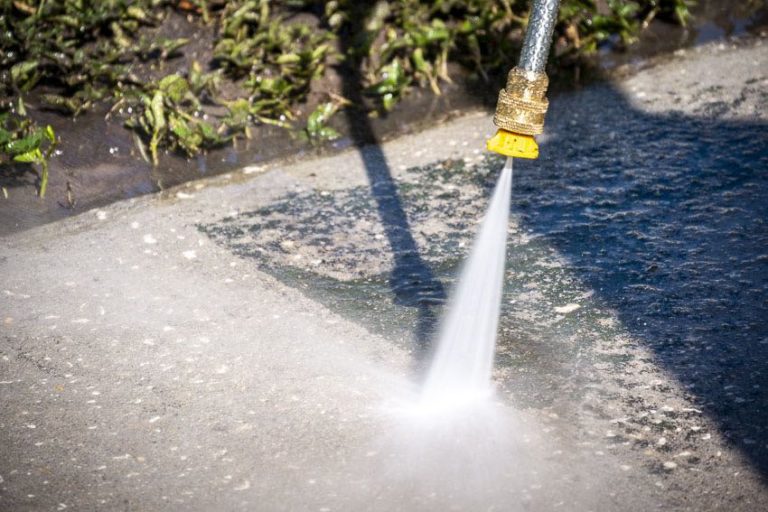
But first, let’s talk technique. If you’re planning to spray a deck, try to use a sweeping motion away from the house. Use the same motion and direction the entire time to prevent leaving marks on your cleaning surface. A slow, even action usually provides more even results than quick back-and-forth movements, so be deliberate.
For cleaning your home’s exterior, begin at the top of the house and work your way down with a side-to-side motion.
Finally, be sure to always keep a tight hold of the pressure washer wand during the wash. If you let it slip, the high pressure could send the wand flying, which could lead to injury or damage.
Final Thoughts
Using a pressure washer is more intuitive than it might seem. At the end of the day, it’s just cleaning with more steps, but pressure washers can really save time and energy for large outdoor surfaces. Once you get started using the steps I outlined above, you’ll be a pressure washing pro in no time.
Still looking for the right pressure washer for your needs? Check out our best pressure washer reviews and best electric pressure washer reviews for some of our favorite models.