
It wasn’t until I moved down south that I realized how important insulation for warm climates could be. You see, I really like old houses. I like them so much that I decided to move my family into a 3 bedroom bungalow and renovate it while we lived there. It only took a couple of months for me to notice that our electric bill was skyrocketing out of control. I had thought that a southern home would save tons of money since we wouldn’t have to heat it all that much during the winter. But for a home that measured less 2000 square feet, this house was seeing electric bills upwards of $250 a month during the summer.
Ah yes, air conditioning.
Understanding the Effects of Home Insulation
And so I began my quest to understand insulation for warm climates. I adapted our plan to best combat this phenomenon known as a “breathing” historic home. You see, back when they didn’t have air conditioning, people preferred houses that closely resembled large pieces of swiss cheese. It was in this way that air circulated throughout the house and cooled it down. The family pet took care of random pest issues, and everyone was happy.

Fast forward to air conditioning. Now the house leaks like a balloon at a dart convention, and you might as well leave your front door open and cool down the entire neighborhood. I just don’t believe an energy-sealing attic ladder is going to be enough to fix that.
But we can do better.
Solutions for Insulating an Older Home
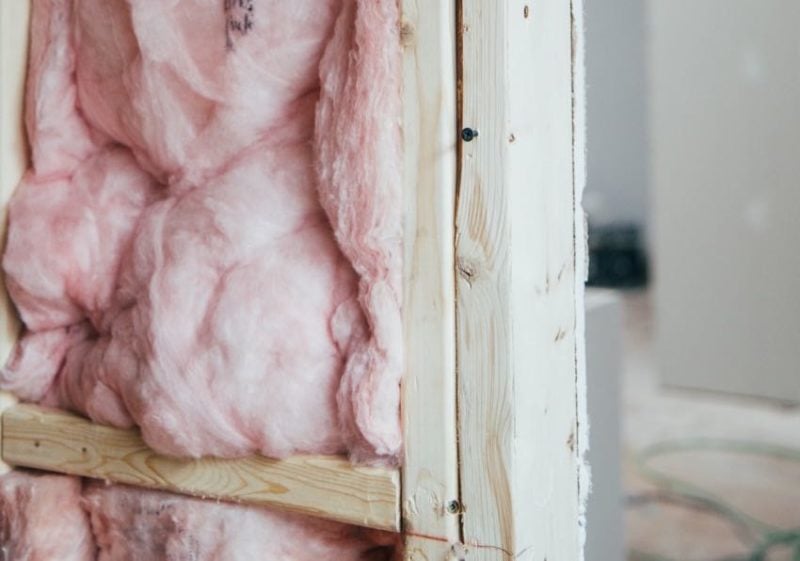
To combat this issue, we looked at and considered several solutions. In the end, we decided to kill two birds with one stone. Our house was in desperate need of new windows, so this was an excellent excuse to re-side the home with Hardiplank and insert some insulation in the walls at the same time. This would not only beautify the home but also give us this much-needed barrier against air simply running right through our walls.
Well, now that we’ve got those walls insulated… (it took us about 2 weeks, but I just wanted to sound like an episode of This Old House where even days of work can occur over a short commercial break)… we realized that we had left one very important area uncovered—literally.
The attic. As it turns out, when addressing insulation for warm climates, the attic plays a very important role.
Insulating Your Attic
We had inserted R13 and Tyvek around our entire house but had neglected this very important part of the home.
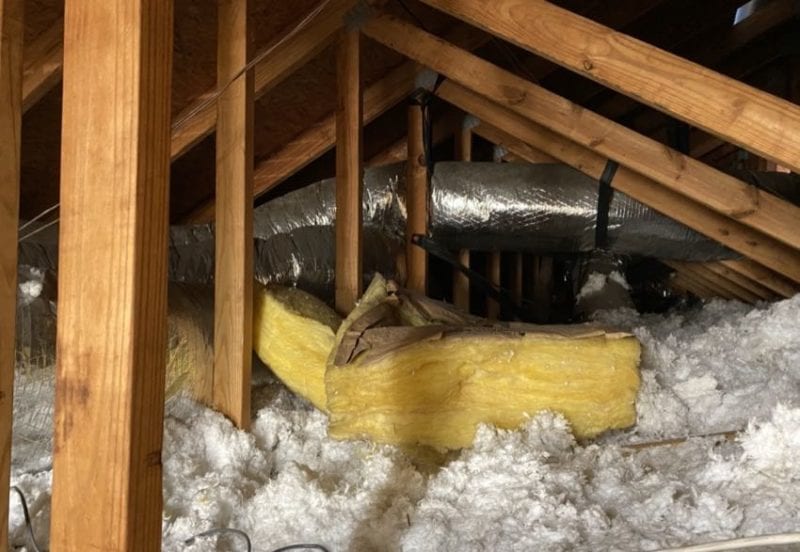
The attic had two problems: lack of proper insulation (what was there was far too old and compressed to be of any practical use) and lack of proper ventilation. How much attic insulation you use will be determined by how much improvement you want to see and what your budget it for the improvement. You can spend more on blow-in insulation with pest control properties (it’s like Pestblock foam in insulation form), or you can go with standard insulation.
Ridge Vents and Attic Insulation for Warm Climates
The next thing we looked at was roof ventilation. Believe it or not, our roof had only one small outlet for air to escape. There were no ridge vents and few inlets for air to properly pass through.
Our next step was to insert some ridge vents. Fortunately, this can be done quite easily afterward—even to an existing roof that had been there for ten or more years. The difference was staggering. Prior to the vents, our attic easily reached temperatures of 140+ degrees. Now the temperature was greatly reduced. The net effect on the home is that we weren’t “heating” the home from above while cooling it from below.
R38 Insulation to the Rescue
After this, we had Combee Insulation blow in the equivalent of R38 insulation throughout the attic. This was calculated taking into account what we already had in there. Then, we waited to see our next month’s electric bill. It came in at around $175. Not bad. Averaged out, we calculated we’d end up saving nearly $900 each year. Now you may not be in a hurry to re-side your entire home just to save $75/month in electricity. To be honest, we were going to do this regardless—it made the home much more attractive. Insulation just served as icing on the cake.
Installing Radiant Barrier
We have an entire article dealing with installing radiant barrier insulation to help reduce your energy costs. It works. It works like magic. Seriously, check it out and get some.
Can I Insulate Without Tearing off Walls?
There are several other products on the market that will allow you to insulate your home without tearing off your walls. Each has its pros and cons, so do your research. Ensuring adequate ventilation in your attic and installing an attic fan might be ways you can save a lot of money with only a minimum expenditure.
And believe me—the attic is where you gain the most benefit and savings. Start there.
I learned that insulation is not just an issue you deal with in cold-weather climates. It’s critically important in warmer environments as well. When addressed properly it stands to save you lots of money. Look into the options available to you and take advantage of as much cost savings as you can.