
Dealing with copper plumbing is a job I love to hate. Not because I don’t understand it. Not because I can’t accomplish the plumbing tasks that I set out to achieve in various projects. No, the reason why I hate copper piping is that it’s unashamedly unpredictable. Here’s what I mean by that. I interviewed three different professional plumbers, each of whom had over 20 years of experience, and each of whom swore they would only work with copper piping. This article is about copper piping vs PEX, so expect some arguments as to why you may want to reconsider what you know.
We Pop the Copper Piping vs PEX Question
I asked them a simple question:
“Every time you get done with an installation, having sweated the pipes and assembled your plumbing system… Do you really, truly know that it will work up until the moment after you turn on the water to test it under pressure?”
All three said: “No.”
If you disagree, you’re probably kidding yourself, or you’re just a supremely confident person. That’s OK, keep reading.
Somehow, this is acceptable to the industry (as a general rule). Ask an electrician if he knows whether or not any electricity will “leak” when he flips the switch. Or ask a framer if he thinks the roof will hold up after the first rain. An electrician knows his system will work. The framer knows his roof will hold up and his window won’t leak. The plumber, on the other hand, hopes his pipes won’t spray water all over the place.
Say a prayer, and turn on the water… Because even if you’ve been doing plumbing for 30 years you really have no assurance that it’s all going to work until you actually pressure test it.
Anonymous veteran plumber
Why I Hate Copper Piping – Solder and Pray
So when asked, what did these plumbers say they do when turning on the water? Well, aside from the normal run through of checking the connections and performing a general inspection, each more or less admitted they “say a prayer, and turn on the water… Because even if you’ve been doing plumbing for 30 years you really have no assurance that it’s all going to work until you actually pressure test it.”
Say a prayer? There’s got to be a better way. After all, it’s been more than 100 years since we’ve had indoor plumbing. Surely there has been some innovation.
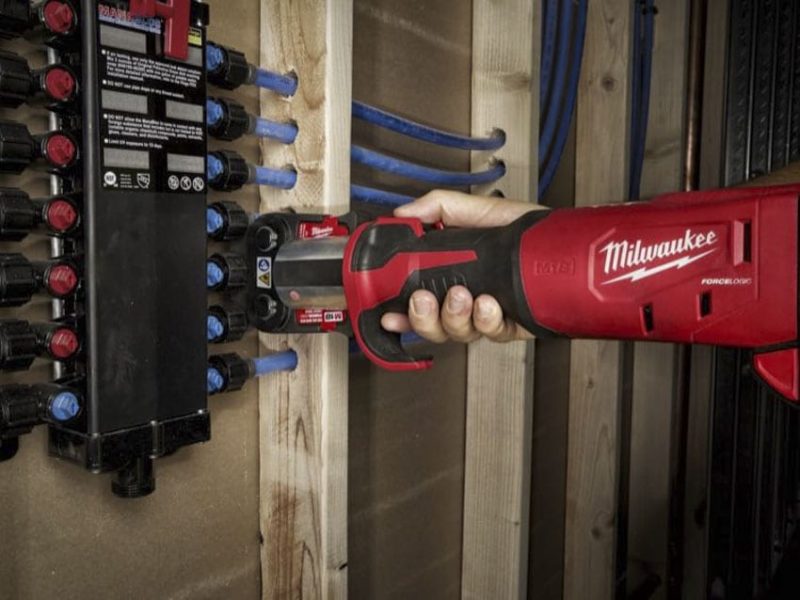
There has. It’s called PEX piping. The reason the average homeowner may not hear about it, however, is that it will result in a shorter installation time, meaning your average plumber will have to do more jobs to make the same amount of money. This is plain talk (and sure to garner some hate mail), but it’s largely true. There’s also a lot more room to mark up copper—and it has more perceived value. In the comparison of copper piping vs PEX, there is no doubt that the tradesman can have a bit more wiggle room for both material and labor with copper.
Copper Piping vs PEX – Time and Money
Recently, one of our staffers solicited two local plumbing contractors in his area to complete a bathroom renovation. The quote included plumbing the entire bathroom (which was open down to the sticks). The first contractor said it was going to take two to three days and cost about $3,500 to do the entire job. The second contractor said it would take no more than 6 hours and would cost $1,200.
That’s quite a difference. The first contractor was going to use copper, the second – PEX tubing. Guess who got the job? And now imagine what you can save with an entire house… (by the way, we called plumber #1 back and asked him what he was smoking).
I have a separate article on this site that goes into the differences between copper, CPVC and PEX plumbing solutions, so I won’t rehash that here. My primary point is that, especially in these economic times, plumbers had better reconsider traditional ways of doing business. Since PEX tubing allows “home run” installs of relatively inexpensive supply lines, and no fittings in between the source and destination, it often makes for a quicker, less expensive job. The average plumber will take some hits in terms of learning curve and some specialized tools on the front-end, but this will quickly pay off. They will likely land more jobs than their counterparts who are insisting on sticking with copper, even though it takes longer and results in a greater cost to the homeowner.
Addendum
Copper is still perceived to be the “high-end” product for upper-scale homes. We don’t begrudge anyone that. After all, it’s perfectly acceptable to want to pay more for a particular product. This article more or less addresses the rank and file builders and contractors who we feel should be pushing harder to ensure that PEX (or a similar technology) makes its way into the marketplace and simplifies the plumbing industry. In this economic climate, we fear that those who insist on more expensive and time-intensive plumbing methods may find themselves out of business.
The second thing we want to point out is that we don’t endorse PEX in particular, but simply see it as one of the first real innovations in plumbing since CPVC began seeing widespread adoption in the industry. While CPVC is certainly easier to work with than copper (at least for the non-professional homeowner) it also relies on many fittings to go from point A to point B – and as you know, every fitting is another place where the system can potentially leak.