
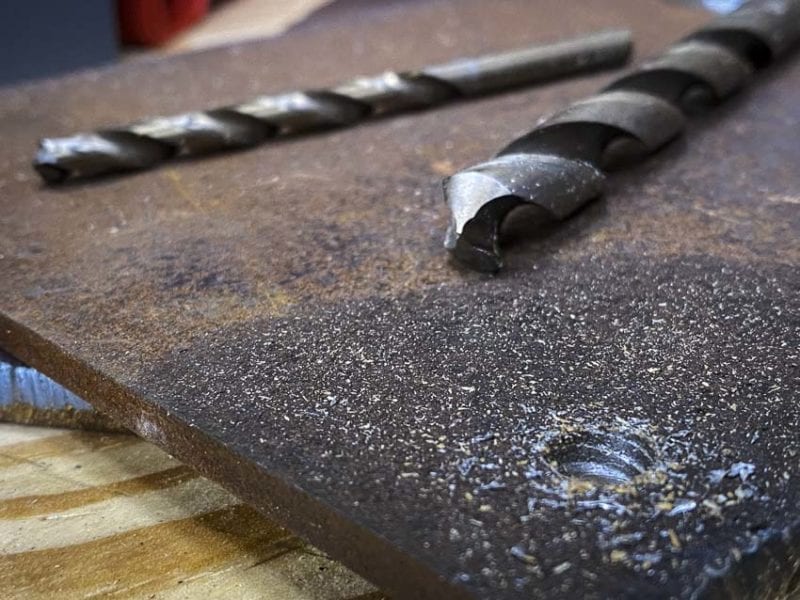
Do your drill bits work in metal? In most cases, yes, but drilling in steel is not the same as other metals and I’m going to make the case that you should be using cobalt bits when steel is on the menu.
Need a recommendation? Check out our best drill bits for metal drilling!
What Happens When You Drill Metal
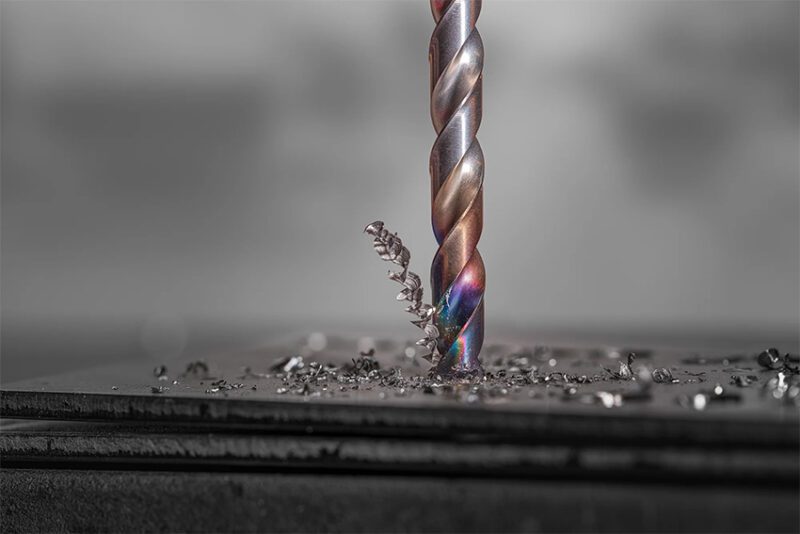
First, let’s consider what happens when you drill metal in general. As the cutting edges of your drill bit contact the metal you’re drilling into, they slice thin shavings away to make progress. If the edge is dull or damaged, it can’t slice effectively and begins to chip the metal away instead, losing efficiency and eventually ceasing to make progress at all.
When you’re drilling in wood, including hardwoods, the material is much softer than even a basic drill bit’s cutting edges, so they tend to dull very slowly. On the other hand, metal drilling is strength against strength, so whichever metal is harder wins. If the metal you’re drilling into is harder than the metal composition of the bit you’re drilling with, it will dull very quickly and struggle to make progress.
Because steel—especially hardened and stainless steel—is so hard, we need a bit with a harder composition to drill through it effectively.
The Case for Cobalt Bits When Drilling in Steel
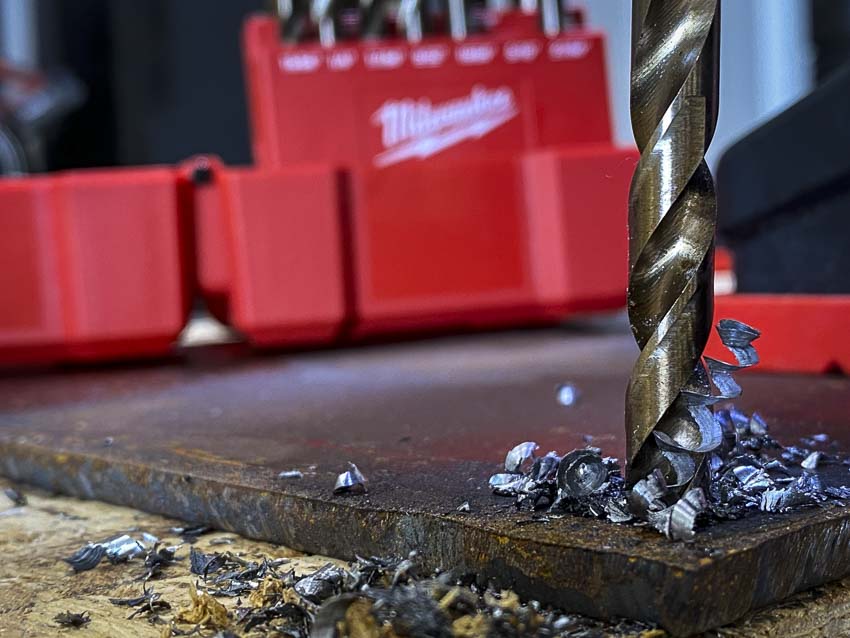
That’s where cobalt comes into play. By adding cobalt to the steel blend a drill bit is made of, it increases the hardness to a higher level than other bit compositions. These cobalt drill bits use an alloy that includes 5% (M35) to 8% (M42) cobalt. The downside is that these harder bits are also more brittle, so they can be easier to break.
Pro Tip: M35 cobalt bits are not quite as hard as M42, so they’re more forgiving when you’re drilling by hand. A good rule of thumb is to use M35 cobalt bits in your cordless drill and M42 cobalt bits in your drill press.
Since cobalt is blended with the steel, its benefit doesn’t wear off like the coating on titanium bits. It runs throughout the entire bit. When the bit dulls (and it eventually will), you can sharpen it to extend its usable life.
Pro Tip: When drilling a hole with a cobalt bit, add a drop of oil on the metal to keep the cutting edge cooler as it cuts. You also want to consider placing some wood underneath the steel if possible. This lets you cut cleanly through the material and not strike a surface below which might dull the cutting edge.
There’s no question cobalt bits are more expensive than standard high speed steel (HSS), black oxide, and titanium bits. However, their effectiveness when you’re drilling steel and their ability to be sharpened make their overall cost per hole more affordable in the long run.
Some people make a good argument that you should use titanium bits for drilling in mild steel. It’s effective and the bits are less expensive. Call me a snob, but I’m not in that camp. I prefer to reserve my titanium bits for wood, plastic, and aluminum where I’ll get longer life from them. For all steels—mild, hardened, or stainless—I prefer the performance of cobalt and am happy to resharpen them when necessary.