
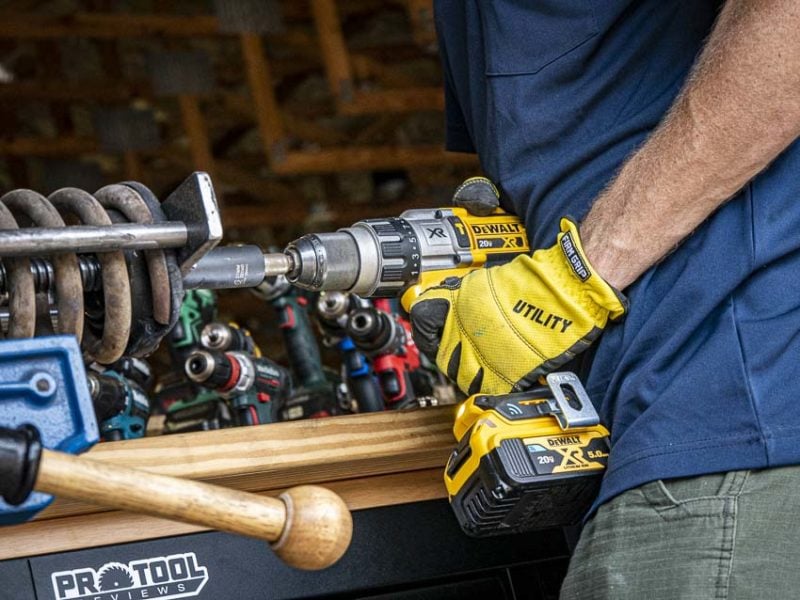
The Unit Watts Out (UWO) vs torque power ratings on tools have been out for years. DeWalt is one of the most popular brands that use the UWO calculation to present the overall power of a tool.
There are two unfortunate issues with this. First, people still don’t seem to understand what in the world they’re actually looking at. Second, the other manufacturers aren’t on board with this calculation—leaving us to wonder how Unit Watts Out compares to the traditional speed and torque measurements.
So let’s take a look at what these terms actually mean and see if we can make sense of it.
Speed and Torque as a Measure of Power
Let’s Talk Football for a Second
Speed is simply how fast the chuck is spinning on a drill. Torque is how much muscle it’s putting behind that speed. Think in terms of football. You’ve got a little wide receiver who’s blazing fast, but he doesn’t have much muscle so he’s tackled easily when caught. That’s speed without torque.
On the other hand, you’ve got a lineman who’s got plenty of muscle to fend off the other big guys, but not nearly as much speed. That’s torque without speed. In the middle, you have a tight end who has a balance of quickness and muscle and is a great example of the blend of speed and torque.
The problem with using speed and torque as guidelines of how much power a tool has is that it can be a little deceptive if you don’t know what you’re looking at. There’s a balance between the two that always results in a trade-off that’s easier to see in a 3-speed drill.
Translation
On high-speed mode, you get the maximum speed, but nowhere near the maximum torque; it’s your wide receiver. Mode 2 is your tight end balance between the two. Low-speed is your lineman that delivers maximum torque, but slow speed. In all three settings, you get the same amount of power, but it’s just distributed differently.
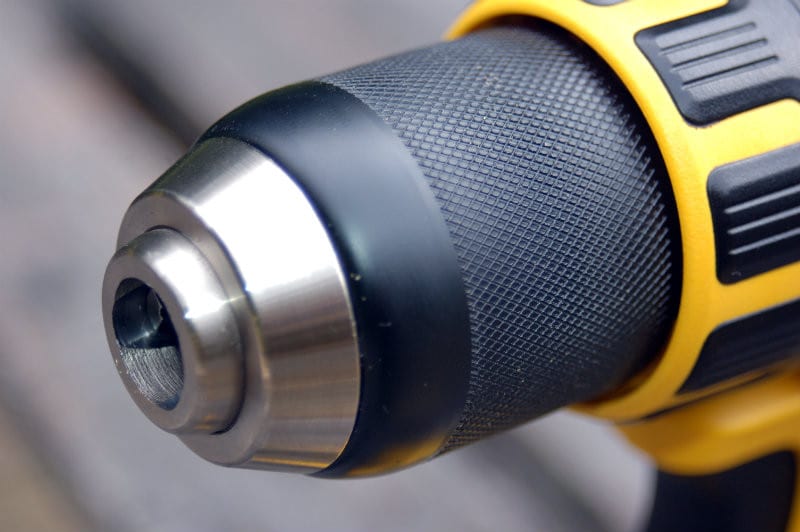
So it’s important to know that when you look at the max speed and the max torque, you’re not actually seeing the combined power. The calculation doesn’t simply come from multiplying the two together, because they can’t occur at the same time.
That comes from looking at the relationship between speed and torque at any given setting and is a little more complicated than a simple multiplication problem. Just in case you’re wondering, the Power Tool Institute (PTI) has the currently accepted standards for torque testing.
What it does tell you is how much speed you’ll get in high-speed mode and how much torque you’ll get at low-speed mode. This is great for most users, but when it comes to finding out which has the most actualized power, we need to look at Unit Watts Out (MWO).
Unit Watts Out (UWO) vs Torque as a Measure of Power
Unit Watts Out (UWO) is a calculation that takes speed and torque, multiplies them together, then divides by a constant. The result is Unit Watts Out. I spent so much time trying to dig up that constant that I’m kind of hesitant to share it since no one seems to be interested in making it public knowledge. Hmmm… maybe I’ll hang on to that a little longer and give you a reason to read on.
By using this calculation, it offers the maximum power output at any given time using watts. So maybe you’ve got a drill putting out 500 in-lbs of torque at 600 RPM and you’d like to know how much power that is compared to a drill putting out 475 in-lbs of torque at 650 RPM. The Max Watts Out (MWO) calculation does that.
How Can I Compare Speed and Torque vs Unit Watts Out?
All right, get out your calculators and get ready for some Unit Watts Out vs torque Algebra with a splash of statistical idealism. While this isn’t rocket science, it may not be pleasant, either. After way too much digging, I finally found some data that allowed me to hone in on this mysterious constant that people referred to, but never defined.
It’s roughly 560. Very roughly.
So we’re dealing with four pieces of data here. Max Speed, Max Torque, Unit Watts Out, and 560 (the Constant, often shown as K). Here’s what the equation looks like with nothing in it. Torque needs to be in in-lbs or the Constant changes, and I’m not digging up another one.
- Speed (RPM) x Torque (inch-pounds) / 560 = Max Watts Out (estimated)
What you have to remember to make this work is that if you are using the peak torque figure, you must use the max RPM in the same setting. In a multiple-speed drill, this is the highest number on the lower range.
Quick Case Study
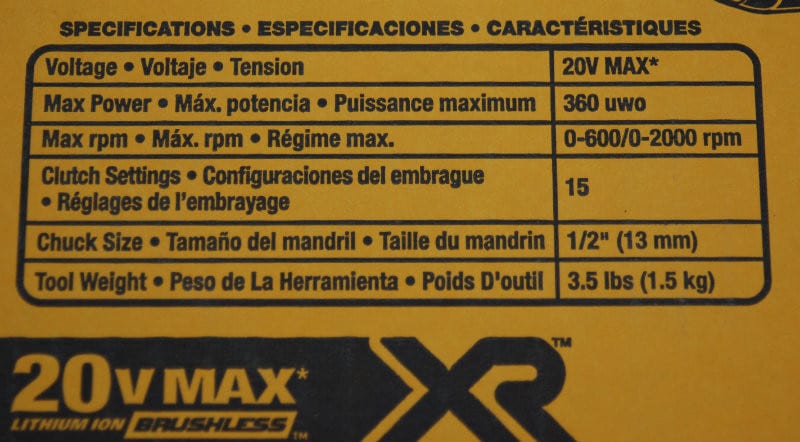
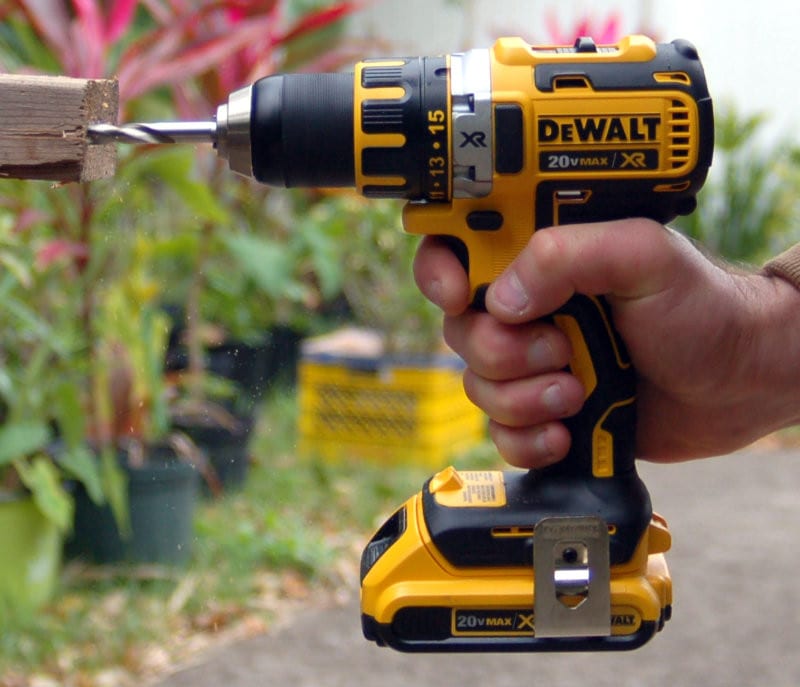
Let’s look at one of DeWalt’s drills, the DeWalt DCD790D2 Brushless Compact Drill. It has a Unit Watts Out rating of 360 and a max speed of 600 RPM in high torque mode. In our Unit Watts Out vs torque calculation we get the following:
- 600 (RPM) x Torque (inch pounds) / 560 = 360 UWO
Solving this equation leaves this 20V compact drill with a max torque of 336 in-lbs.
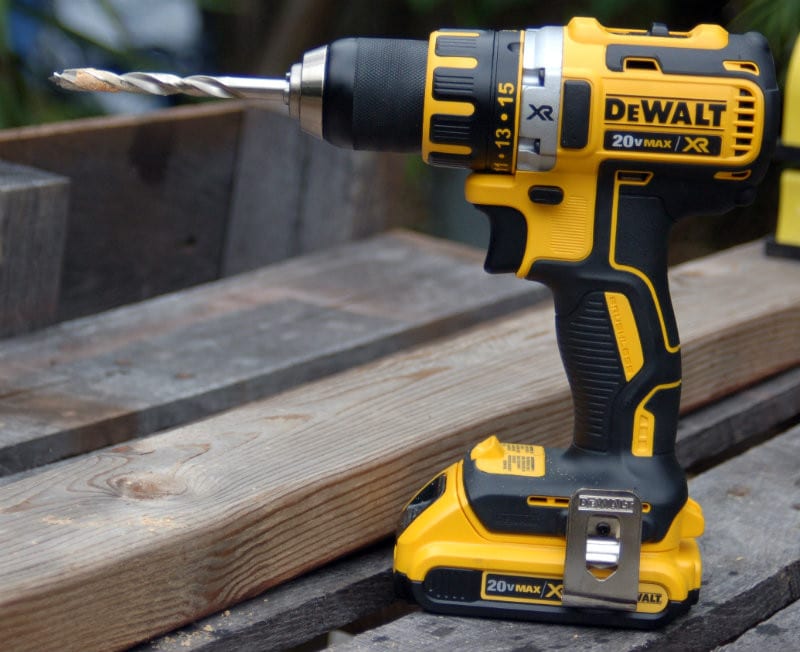
What if we know the speed and torque of a drill and would like to know the Unit Watts Out? We can do that, too. Let’s consider a DeWalt 20V Max XR drill that spins at 575 RPM with 490 in-lbs of torque (in high mode/speed).
- 575 (RPM) x 490 (inch-pounds) / 560 = Unit Watts Out
Solving this equation shows this drill has a Unit Watts Out rating of about 503 MWO.
Major Issues with the UWO Equation
There are several inherent problems with this Unit Watts Out vs torque equation, though. It will cause it to be relegated to use as a topic of conversation only. First of all, maximum power output actually occurs before top speed is achieved or max torque is applied in any given mode. It’s somewhere in the middle.
That means that working the equation to calculate the torque or the Unit Watts Out based solely on max speed or torque is subject to some significant error.
The other factor is that no one I found actually publishes the Constant (K) figure, which I had to work backward to find from a manual that offered me total watts, max torque output as Newton Meters, and the corresponding no-load max speeds.
Then there’s also the fact that the max torque does not occur at the max speed in that setting. Combining this together, and using this as anything other than the roughest of estimates would be misleading.
For example, the actual max torque in our DCD790 is 531 in-lbs—and that’s WAY off the equation’s estimate.
ToolGuyd Weighs In
I originally wrote this article back in 2015. In 2019, Stuart over at ToolGuyd (who holds a Ph.D., by the way) spent a few hours digging into this as well and shared some of his thoughts.
“I knew there’s no way to convert UWO to torque, and for the longest time I’ve been avoiding doing the math to prove it. Good news, I feel I have maximized my understanding of UWO. Bad news, there’s no way to convert from UWO to torque.
Here’s the problem – SBD doesn’t publish under-load speeds, and so there’s no way to get torque from UWO. There’s also no guarantee that UWO is measured at max torque and the corresponding speed. UWO is simply a value for which no useful cross-brand torque specs can be extracted.”
– Stuart Duesch, ToolGuyd
I have a ton of respect for Stuart, and he’s probably the smartest guy I know that’s not currently on a manufacturer’s engineering team. We’re not in the slightest bit insulted by his findings.
Is Unit Watts Out More Useful than Speed and Torque?
Well, yes… and no. If you are trying to find what drill has more overall power, Unit Watts Out is a great way to compare. However, two drills can have the same Unit Watts Out rating, but one has higher torque on the low-speed setting.
In that case, it would be nice to know what those torque levels are if that’s what you’re the most concerned about. DeWalt makes the point that it’s not just torque that creates a hole and they’re right. It is a combination of the two that gets results.
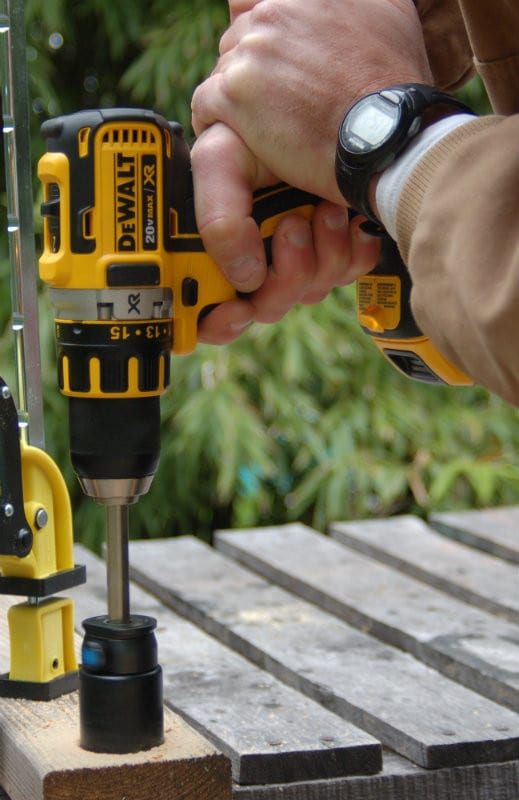
When you calculate the maximum torque, you’re attaching the drill to a machine that is measuring how much torque is applied by the unit without actually turning the chuck.
When you calculate the maximum speed, you’re counting RPMs when there is no friction force acting against the chuck.
Neither of these can be recreated when you’re producing real results in the field. Unit Watts Out is measured by a machine that takes into account how much speed the chuck has along with the amount of resistance (which requires torque) and has several different settings and tells the engineer the maximum that it produced.
This most likely occurs in mode 2 on a three-speed drill. When we compare the two, we’re quite frankly looking at two different languages and assuming that a third language can be used to translate them equally.
The Final Word on Unit Watts Out vs Speed and Torque
So what’s the bottom line here? If you need the maximum possible torque for an application, then you need to know the max torque outputs for the drills you are considering. If you’re really just concerned about having the most overall power, and therefore, the best combination for drilling in most applications, then Unit Watts Out is absolutely useful. Ideally, knowing the Unit Watts Out and how it is translated as the max torque would be a measure that combines both into a truly useful set of numbers.
Why does DeWalt use Unit Watts Out? For starters, they say that people were purchasing drills and drivers simply based on the highest torque, but that wasn’t a true picture of total power. Okay, I’m on board with that. It would be great to set up a shootout and know the overall power ratings before I even started testing.
Too Many Conversion Issues
The problem is that no matter which side of the conversation you’re on, tool manufacturers don’t agree on which specifications to use. It would be great if all of them would put one more line to their spec sheet. Most would need to include that Unit Watts Out value. DeWalt and Porter-Cable would simply need to publish torque ratings again. Then, you and I could decide based on which measurement of power was most applicable to us.
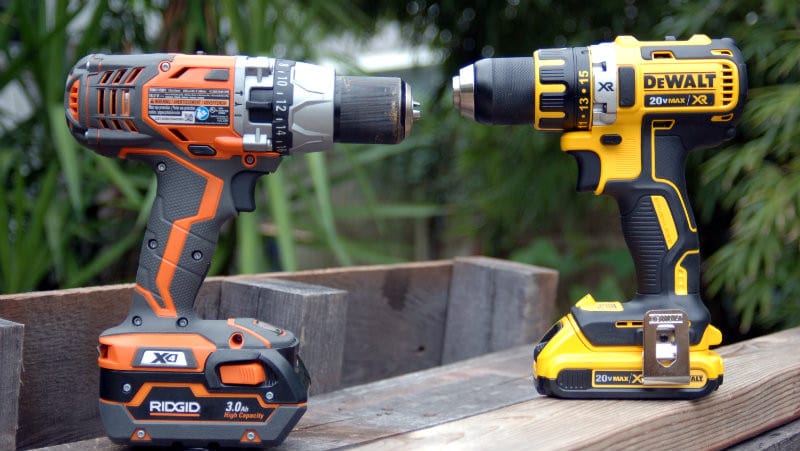
When DeWalt tells you that you can’t tell the torque from the Unit Watts Out rating, they’re right. I know that it’s frustrating. It’s frustrating to me as well. The issue is that the maximum amount of power doesn’t occur at peak torque or peak no-load speed. In fact, you’re likely to rarely, if ever, encounter a tool’s listed no-load speed or maximum torque.
So that leaves us with two rating systems that aren’t perfect but can be useful if you understand what each is trying to communicate to you. As we attempt to compare the best impact drivers and the best cordless drills, we’ll keep all of these things in mind.
One last note about the equations I gave you. Please understand that they are virtually irrelevant. Statistically, there is too much error there to account for. When you calculate the Unit Watts Out from Power and Torque, you’re actually getting a number that is too far away from reality to have any confidence.
Unfortunately, I can’t tell you if that’s a 5% error, 50% error, or something else entirely. It will change from tool to tool.