
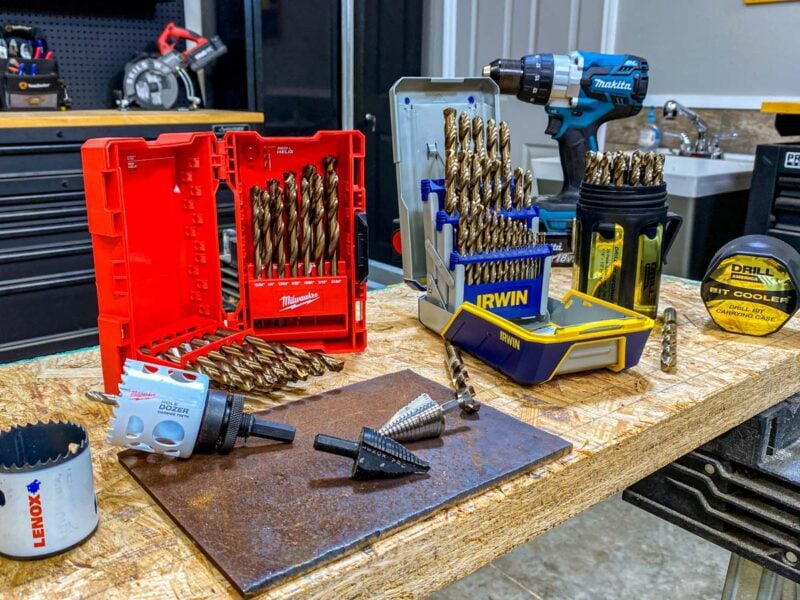
Metal drilling is common, but since metal varies widely, so do the drill bits you should use. In this article, I’ll share the best drill bits for metal that we’ve used and recommend. I’ll also share the most important things to consider as you’re looking for the right bit to drill through soft metals like aluminum, hardened metals, and stainless steel.
Need a recommendation for drilling in wood, concrete, or other materials? Check out our Best Drill Bits main page!
Best Drill Bits for Metal
- Hardened Metal and Stainless Steel: Drill America D/A Series M42 Cobalt
Jump to this Bit ↓ - Mild Steel: Milwaukee Red Helix Cobalt Drill Bits
Jump to this Bit ↓ - Aluminum and Copper: DeWalt Pilot Point Titanium Drill Bits
Jump to this Bit ↓ - Step Bits: DeWalt Titanium Nitride Step Bits
Jump to this Bit ↓ - Rebar: Diablo Amped Rebar Demon Bits
Jump to this Bit ↓ - Metal Hole Saws: Milwaukee Hole Dozer Carbide Hole Saws
Jump to this Bit ↓ - Best for the Money: Bosch M42 Cobalt Bit Sets
Jump to this Bit ↓
Need Some Help Before Deciding? Jump to These Sections to Learn More!
- Metal Drill Bit Terms and Parts to Know
- Types of Drill Bits for Metal
- Why You Can Trust Pro Tool Reviews
Best Drill Bit Set for Hardened Metal and Stainless Steel
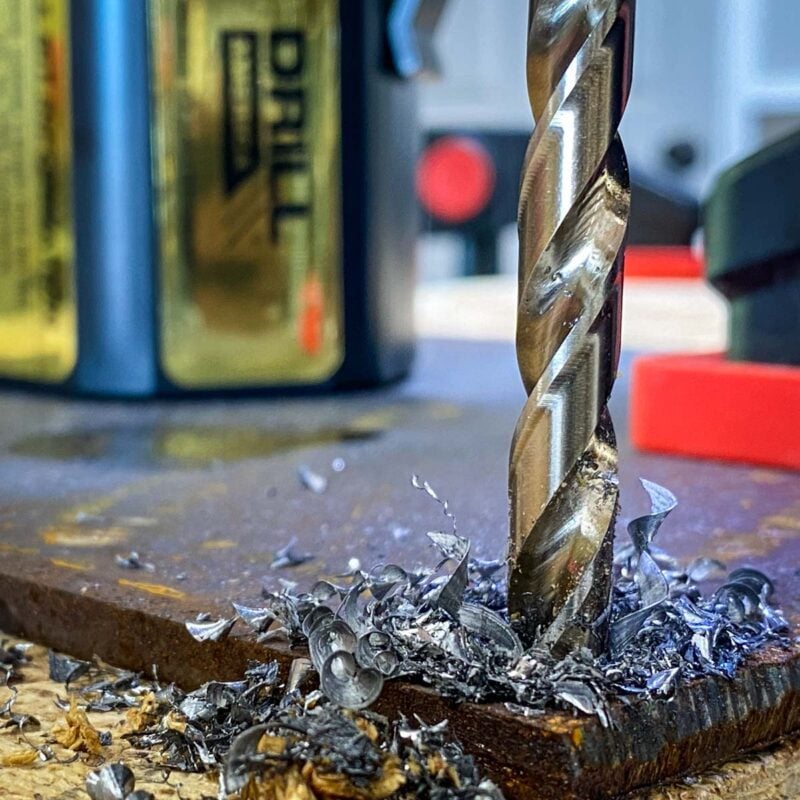
Drill America M42 Cobalt Drill Bit Set
- Type: M42 Cobalt Blend
- Length: Jobber
- Tip: 135° Split Point
- Flute: Dual Twist
- Shank: Round
- Price: $128 (29-piece set)
Pros
- Fast drilling in metal
- Holds its edge longer than M35 bits
- Can be sharpened
- Good value compared to other M42 bits
Cons
- More brittle than M35 bits
- More expensive than M35 bits
After head-to-head testing in multiple materials, we selected Drill America’s M42 cobalt bits as our best drill bits for hardened metal and stainless steel.
Manufactured according to National Aerospace Standard 907, the bits feature a 135° split point, which gives you a nice, steady, and productive drilling speed with less walking at startup.
Of course, it’s the quality of the M42 cobalt blend that gave these bits impressive drilling performance and life compared to the other bits we tested. You can drill up to 30% faster than you can with conventional M2 high-speed steel bits. It also holds its edge better when you’re drilling into hardened metals, stainless steel, or even titanium. That showed in our tests, where these bits seemed to melt through whatever we threw at them and then asked for more.
While the jobber length is tempting to use in cordless drills, remember that the harder M42 blend is also more brittle. Keep a steady hand when you’re drilling into metal to avoid snapping them.
Best Drill Bits for Mild Steel
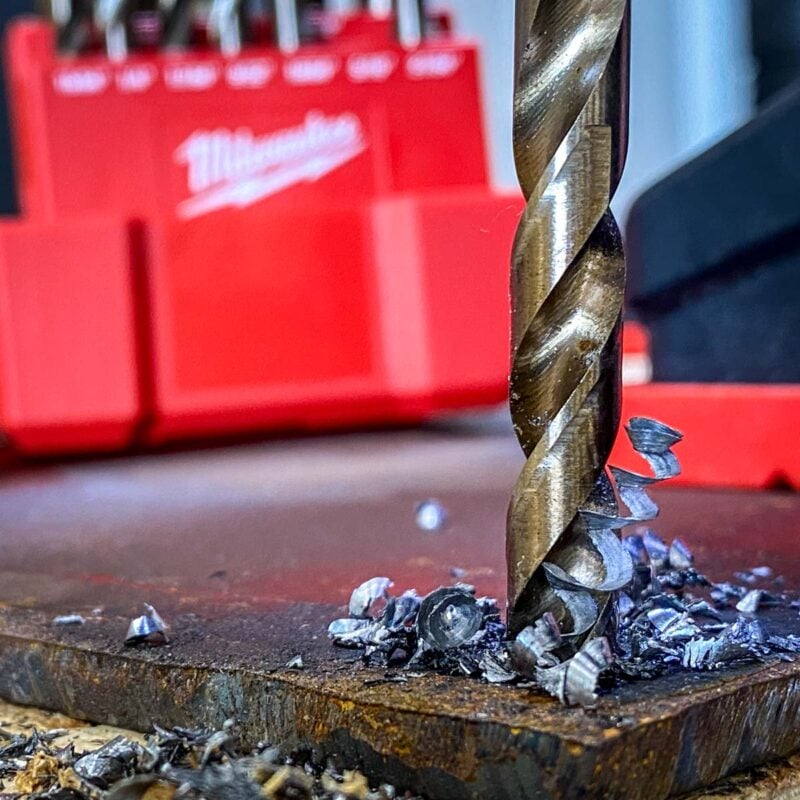
Milwaukee Red Helix Cobalt Drill Bits
- Type: M35 Cobalt Blend
- Length: Jobber
- Tip: 135° Split Point w/Quad Tip
- Flute: Variable Dual Twist
- Shank: 3-Flat
- Price: $149.99 (29-piece set)
Pros
- Faster starts than other cobalt bits
- Stronger web than typical bits
- Can be sharpened
- Easier to use in handheld drills than M42 bits
- Less expensive than M42 bits
Cons
- Doesn’t hold an edge as long as M42 bits
- Sharpening can reduce the effectiveness of the Quad Edge Tip
When considering the best drill bits for general steel drilling, the more affordable M35 cobalt is an attractive option. Balancing price and performance, we’ve had excellent success with Milwaukee’s Red Helix cobalt bits, and they’re our go-to bit for metal drilling with a cordless drill.
There are a few things that stand out in the design:
- Quad Edge Tip: Starts cutting faster and helps keep the bit sharp longer
- Variable Helix Flute: 35° – 15° flute angle reduces heat buildup and improves debris removal by 30%
- Tapered Web (core): Strengthens the bit against breaking
Since these are cobalt bits, you can sharpen them. However, using something like a Drill Doctor will reduce the effectiveness of the Quad Edge tips and can eventually remove them altogether. You’ll still have a quality cobalt bit—it primarily just loses some of its starting speed.
Another trade-off is that these bits thin out more towards the tip. Milwaukee countered this by making them a bit shorter than some others we’ve seen while extending the flutes further up the shaft. The result is a more compact bit with a similar drilling depth.
You can use these bits in any steel, including hardened and stainless. They’ll need sharpening a little sooner than M42 cobalt bits, but they’re more forgiving in handheld drills.
Best Drill Bits for Aluminum, Copper, and Soft Metals
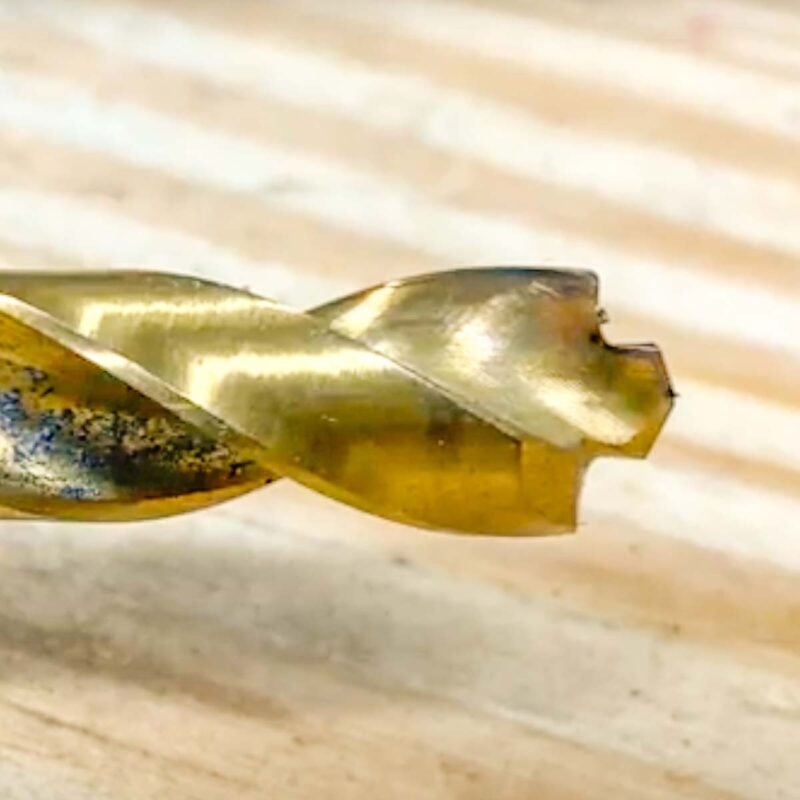
DeWalt Pilot Point Titanium Drill Bits
- Type: Titanium
- Length: Jobber
- Tip: 135° Split Point w/Pilot Point Tip
- Flute: Dual Twist
- Shank: 3-Flat
- Price: $29.99 (21-piece set)
Pros
- Fast starts and drilling in metal
- Reduced walking when starting
- Much less expensive than cobalt bits
Cons
- Loses it primary benefits when sharpened
- More expensive than standard titanium bits
- Not recommended for hardened metals
While cobalt is the way to go for hard metals, I like titanium options best for drilling in aluminum, copper, and other soft metals. The coating doesn’t wear off too fast, and its higher lubricity makes quick work of these metal-drilling applications.
When you first look at DeWalt’s Pilot Point titanium bits, it’s understandable to be skeptical since the tip design is so different. However, when we tested it against other popular titanium bits, it proved to be the fastest—by a significant margin.
Even though the set is more expensive than standard titanium bits, it’s not a huge premium, and the performance gains are worth spending a few extra dollars.
Best Step Bits for Metal
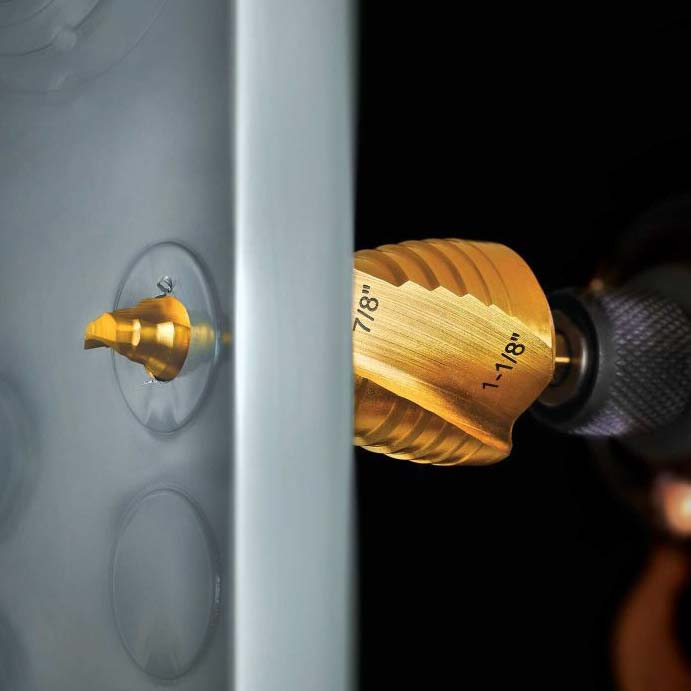
DeWalt Impact Ready Titanium Nitride Step Bits
- Type: Titanium Nitride
- Sizes: #1, #2, #4, #9
- Shank: 1/4-inch hex
- Price: $24.99 – $78.99 each
Pros
- Fast drilling in soft metals and mild steel
- Better edge retention than black oxide bits
- Less expensive than cobalt step bits
- Two-flute design drills faster and lasts longer than single-flute step bits
Cons
- Cannot be sharpened effectively
- Doesn’t hold an edge as long as cobalt step bits
Choosing the best step bit requires you to choose between speed and service life. With the way Pros, especially electricians, use these in the field, speed is usually the higher priority. With that mindset, DeWalt’s titanium nitride step bits are my top choice.
There are a couple of design elements that kick it up higher than other step bits we use. First, the titanium nitride coating is better at reducing friction and heat buildup on starts. Lower heat keeps the metal from hardening, so holes start quicker, and the titanium coating lasts longer than you might expect.
These bits also have two cutters with a curved flute. Compared to single cutters and straight flutes, DeWalt’s design works faster and holds its edge longer.
If you want the longest bit life, cobalt is your best bet. They can be a little harder to find, but we’ve had excellent results using Milwaukee’s and Greenlee’s cobalt step bits.
Best Drill Bit for Rebar
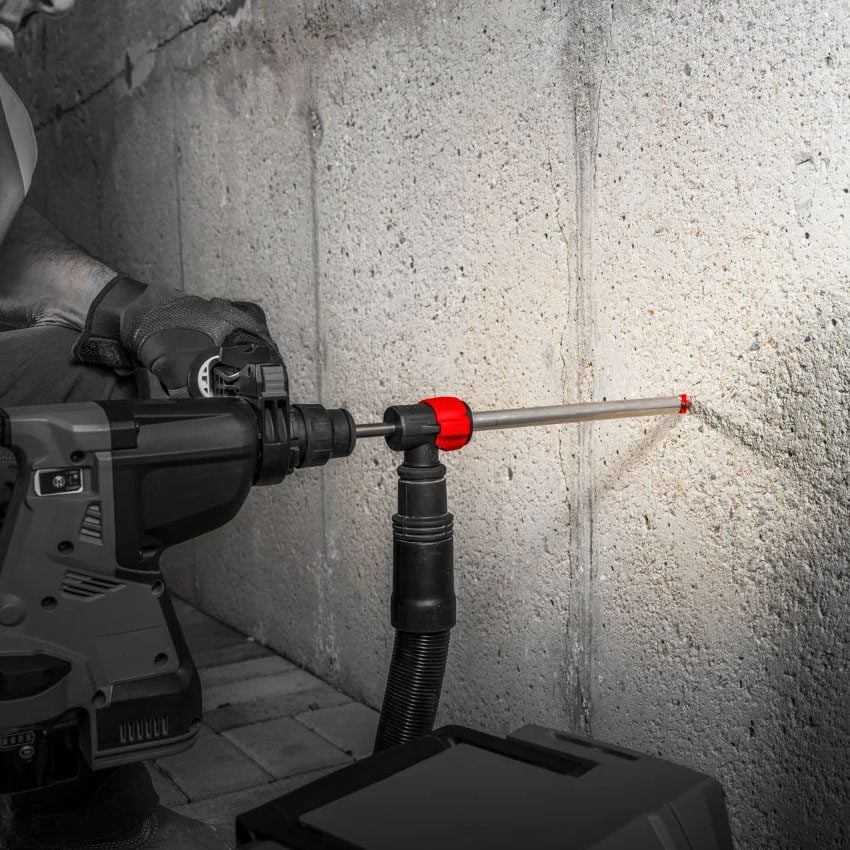
Diablo Amped Rebar Demon SDS-Plus/SDS-Max Bits
- Type: Carbide
- Length: 9 – 26 inches
- Tip: 4-Cutter
- Flute: None
- Shank: SDS-Plus, SDS-Max
- Price: $39.97 – $208.97 each
Pros
- Long-lasting cutter head
- No need to switch between concrete and rebar cutter bits
- Eliminates the need to blow and vacuum holes when paired with a vacuum
- Legitimately speeds up workflow
Cons
- Expensive
Sometimes, you need to drill through steel… but that steel is buried in concrete. When you’re drilling through reinforced concrete, the best drill bit to get you through rebar is Diablo’s Amped Rebar Demon line.
This is an upgrade of the Rebar Demon bits we’ve recommended in the past. It keeps the high-performance 4-cutter carbide tip and adds vacuum capability. When you’re drilling for chemical anchor installations, you can drill and remove debris in one step. It’s much faster than the drill-blow-vac-blow technique you normally have to use.
If you don’t need the dust collection function, go with Diablo’s standard Rebar Demon bits to get the same cutting performance at a lower price.
What we like about Diablo’s design is that all you have to do is drill. With designs like Bosch’s Rebar Cutters, you drill using rotary hammer mode with a standard bit until you hit rebar, switch to the Rebar Cutter in rotary-only mode to get through the metal, and then return to your original bit to finish the hole.
Diablo’s design drills quickly through concrete and then keeps chewing right through rebar. You don’t have to change bits, saving you a significant amount of time on each hole that adds up over the course of a job. It’s a huge win in our book.
Best Hole Saws for Metal Drilling
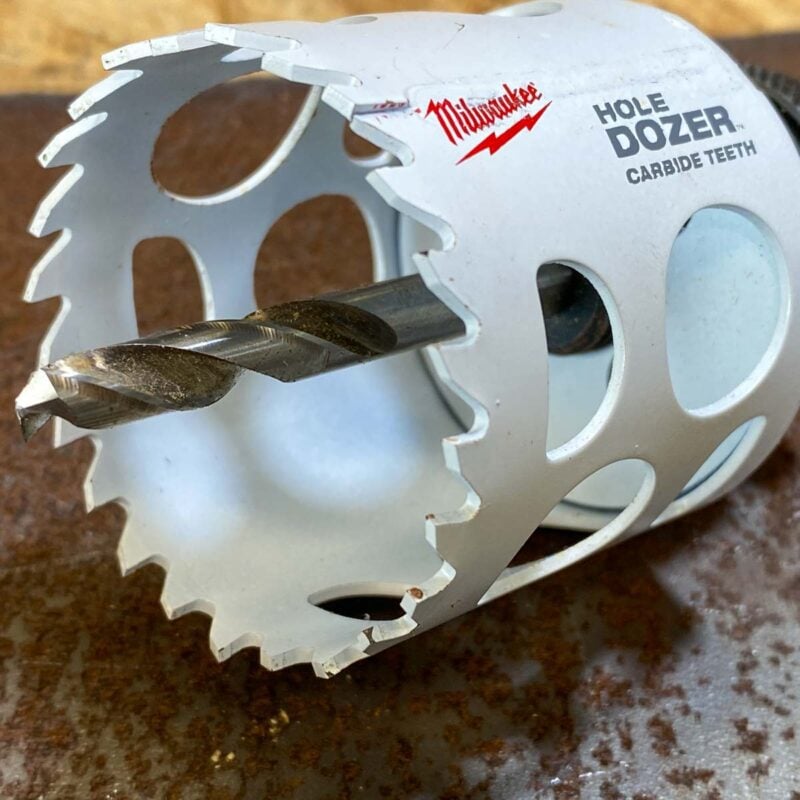
Milwaukee Hole Dozer Carbide Hole Saws
- Type: 3 TPI Carbide
- Diameter: 11/16 – 6 inches
- Arbor Pilot Bit: Carbide
- Price: $12.97 – $59.97 each (hole saw only, no arbor)
Pros
- Lasts much longer than bi-metal hole saws
- Faster cutting than bi-metal hole saws
- Capable of cutting through stainless steel
- Easier plug removal than standard designs
- Made in the USA
Cons
- More expensive than bi-metal hole saws
Traditionally, bi-metal hole saws were the top choice for drilling large holes in metal. Carbide is now king, and Milwaukee’s Hole Dozer with carbide teeth is the best hole saw for metal drilling that we’ve used.
It can tackle stainless steel and certainly anything softer or milder than that. Because they work effectively in both metal and wood, any Pro looking for a general-purpose set of hole saws should quickly fall in love with their productivity.
That said, Milwaukee’s Big Hawg hole saws are purpose-built for wood drilling and work faster if you’re not cutting in metal that often.
Carbide is an upgrade, so these hole saws are more expensive than bi-metal. However, the life is much longer. If you consider that one carbide Hole Dozer can replace dozens of bi-metal hole saws over its useful life, you come out way ahead.
Best Metal Drill Bits for the Money
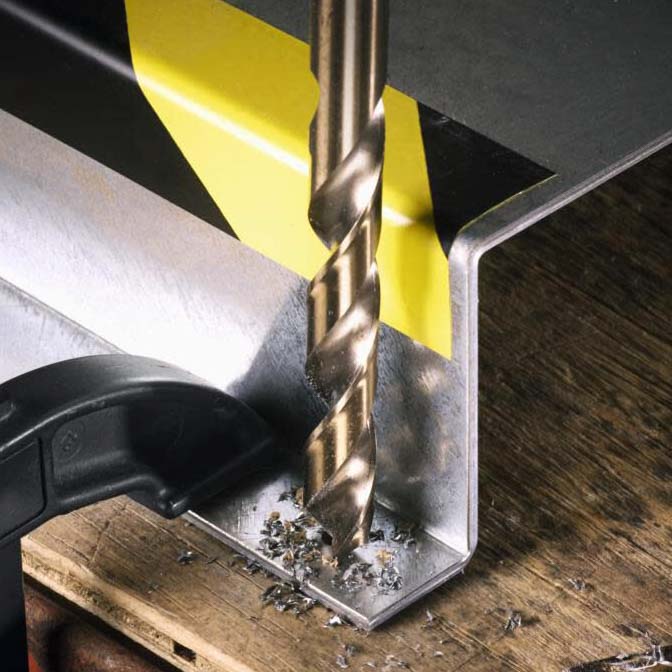
Bosch M42 Cobalt Drill Bit Sets
- Type: M42 Cobalt Blend
- Length: Jobber
- Tip: 135° Split Point
- Flute: Dual Twist
- Shank: 3-Flat
- Price: $46.99 14-piece set
Pros
- Fast drilling in metal
- Holds its edge longer than M35 bits
- Can be sharpened
- Excellent value: similar in price to M35 bits
Cons
- More brittle than M35 bits
When it comes to finding good value for metal drilling bits, it’s tempting to look to titanium or something like Spyder’s Mach Blue bits. They can be effective in some metals, including mild steel. But if you’re like me and come across hardened steel, even on occasion, cobalt is still the way to go.
Bosch has a set that’s in a similar price range as cobalt bits from other power tool brands but has one big advantage—they’re M42 cobalt, not M35. With a 15-piece set around $41 and a 21-piece set around $73, they’re more affordable, and you avoid the risk of a no-name Amazon brand without breaking the bank.
The 15-piece set covers 1/16 to 1/2-inch bits. Spyder’s Mach Blue set (~$35) only goes up to 3/8-inch and is a 10-piece set. With Bosch, you get more bits, a wider range, M42 cobalt, and only pay about $6 more for the set. That’s the kind of value that gets my attention and why Bosch earns my vote as having the best metal drill bits for the money.
More Metal Drill Bits We Recommend
Diablo Impact Strong Step Bits
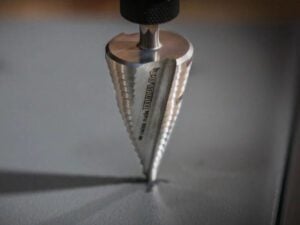
Diablo has a tempting step bit set that pulls in some of the best features with a price tag that got our attention. Made from high speed steel (HSS), their split point tip reduces walking and starts fast, while the dual-flute design keeps the feed rate high in thin metals. Plus, they have an impact driver-friendly 1/4-inch hex shank.
You’ll want to stick to typical electrical, HVAC, and plumbing applications, though. The bits struggle as you move into thicker and harder metals.
Price: $119.97 (3-piece set)
Greenlee Cobalt Step Bits
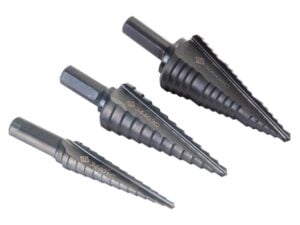
If you’re looking for cobalt step bits for their longer life, take a look at Greenlee. Their Made in the USA cobalt step bits feature a split point tip that gets holes started notably faster than others and a dual flute design that keeps the cutting speed high. Plus, a steam oxide finish helps these bits last longer than others. It’s the best balance of speed and service life we’ve seen.
The downside is that these premium bits are more expensive. A 3-piece set that includes #1, #3, and #8 sizes is $239.99.
Price: $239.99 (3-piece set)
Irwin Cobalt Industrial Drill Bits
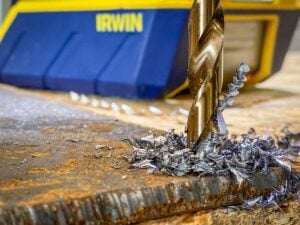
Irwin’s M35 cobalt industrial drill bits are a solid choice if you’re looking to save some money or need a quality index set for use with handheld drills. At $130 for the 29-piece set, it covers 1/16 – 1/2-inch sizes and is notably less expensive than M42 bits.
The larger bits have a small shank size, so they’ll still fit in 3/8-inch drill chucks. That’s perfect for electricians, HVAC techs, and others who have to drill through metal but prefer lightweight, compact drills.
It may seem like a small thing, but the set comes in a durable metal case with slots that the bits slide in and out of easier than other designs we’ve used.
Price: $155.99
Makita Impact Gold Titanium Drill Bits
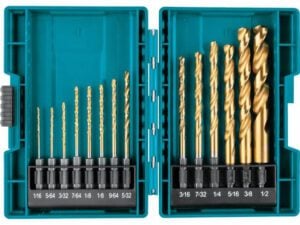
Makita makes a quality set of titanium bits that push all the right buttons for metal drilling, but it’s what you can’t see that sets them apart. As part of the Impact Gold lineup, they’re specifically designed to withstand the violence of drilling with an impact driver better than other titanium bits. If you drill with your impact driver often, keep a set of Makita Impact Gold drill bits in your tool box.
Price: $26.99 (14-piece set)
Ryobi 1/4-inch Hex Titanium Drill Bits
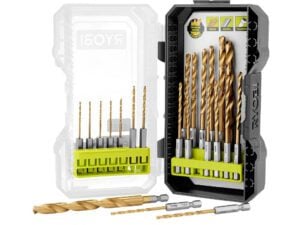
While we clearly prefer cobalt, titanium bits have their place for metal drilling, especially when hardened metals and stainless steel aren’t your norm. For general tasks and projects around your home, Ryobi’s 22-piece titanium bit set will take care of nearly everything you’ll run into.
This set covers 1/16 – 3/8-inch sizes and the bits have 1/4-inch hex shanks so you can use them in either a drill or impact driver.
Price: $19.97 (22-piece set)
Spyder Mach-Blue Drill Bits
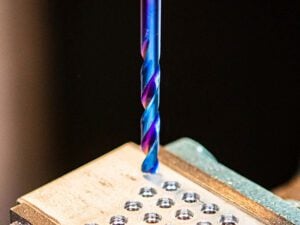
Spyder’s flagship drill bits have what they call Mach-Blue Armor Plating covering an M-series HSS bit. Details of the outer coating’s chemistry are a trade secret, but the claims are impressive—up to 100x more holes and 8x faster than titanium or black oxide. We’ve noticed the speed difference in our own tests, though we couldn’t find any volunteers willing to see if they could actually drill that many more holes than our favorite titanium bits.
What makes these a tough call isn’t the quality or performance but the price. At roughly $40 for a 10-piece set (1/16 – 3/8-inch), the price tag is similar to cobalt bits. However, these are Made in the USA, and combined with their extreme life, makes them worth a shot, especially if you don’t deal with hardened metals that often.
Price: $39.99 (10-piece set)
Metal Drill Bit Terms and Parts to Know
Twist Bit
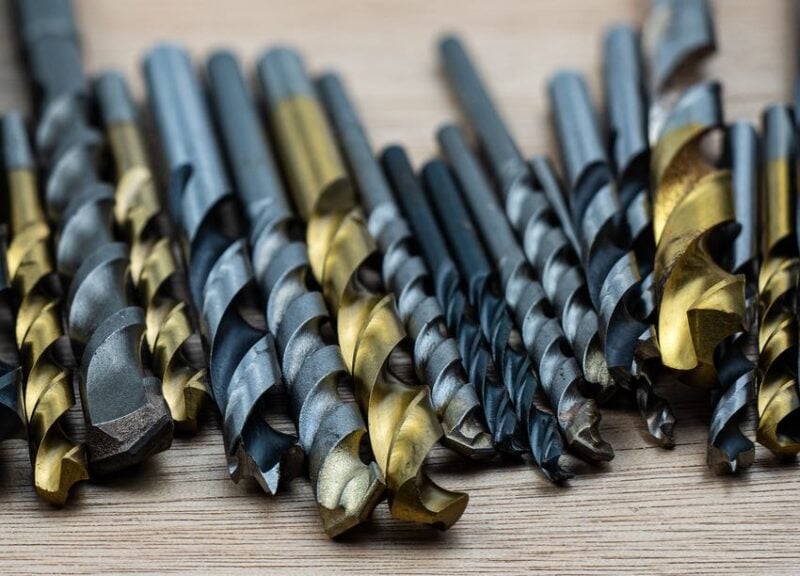
A twist bit is what most people think of when you’re talking about drill bits. Its tip is usually 118° or 135° and tapers very quickly to the flutes, where it has a straight profile until it reaches the shank. While the scope of this article is on metal drilling, they’re also good for wood and plastics, and some have tips specifically for concrete and brick.
Split Point Tip
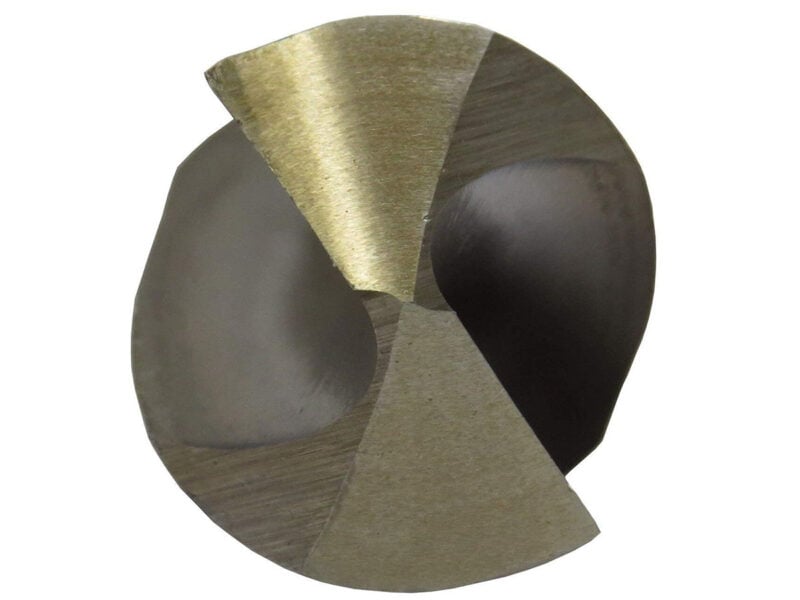
Many drill bits for metal have a split point tip. At the very tip, there’s a smaller extra set of cutting edges that help start a hole before the main cutting edges engage the material. This is an incredibly helpful feature for metal drilling because it helps prevent the bit from walking (sliding around) as you try to get the hole started and helps it drill faster as the bit progresses through.
Flute
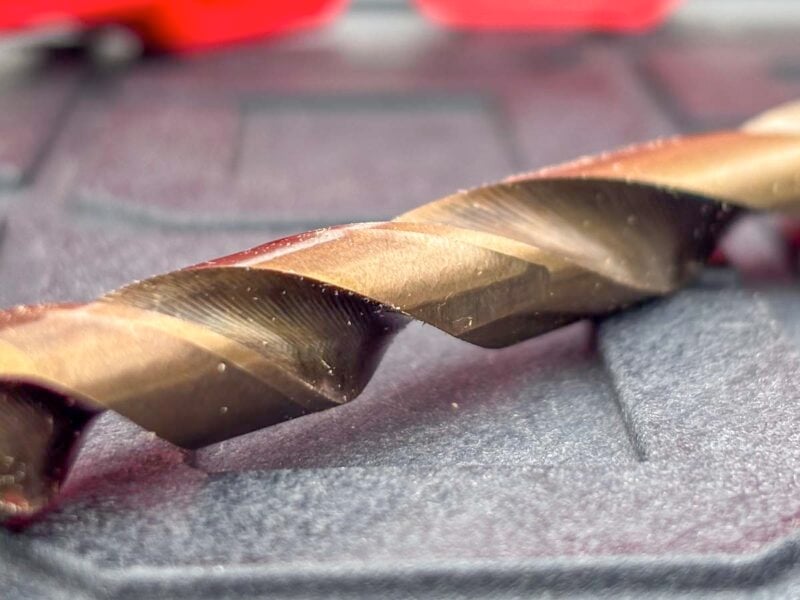
Flutes are the channels that spiral around a drill bit. As the bit’s cutting edge removes material, the debris moves along those channels until it reaches the top of the hole and escapes.
Step bits also have one or two flutes. Unlike twist bits, they can be straight or sometimes have a gentler spiral.
Shank
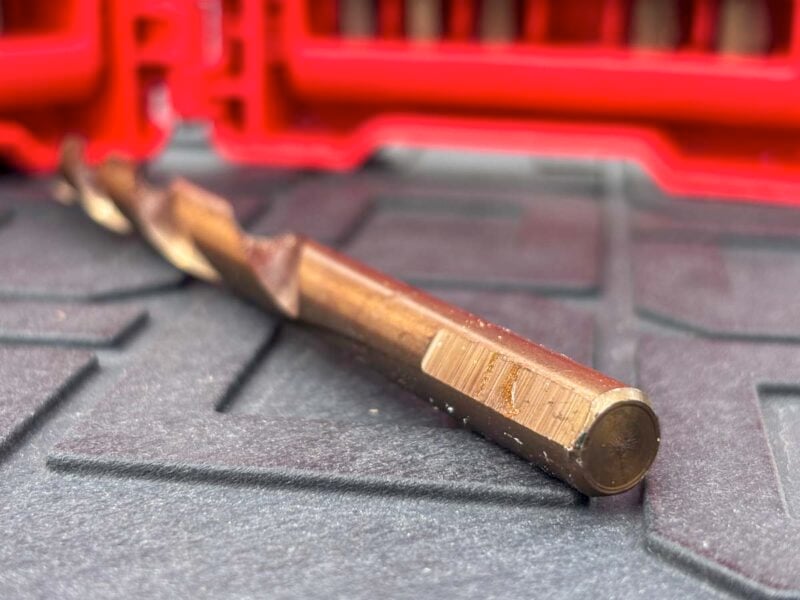
The shank is the top section of the bit where you connect it to your drill or drill press. Some designs leave the shank round, while others have a 3-flat grind. Grinding flats on the shank gives it three flat edges that the teeth of your drill’s chuck can hold more securely.
Having a 3-flat grind isn’t as big of a deal for use with a drill press since they typically have a keyed chuck. However, it’s very helpful for the keyless chucks on cordless drills.
You can also find metal drill bits with a 1/4-inch hex shank. These fit in both drills and impact drivers
Web
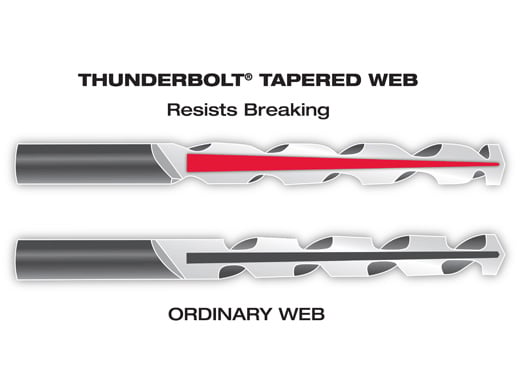
Underneath the exterior of a drill bit is a core material called a web. Piercing into the bit with a narrow V shape that tapers down to the tip, it forms the chisel at the very center and strengthens the bit, making it harder to snap.
Hole Saw
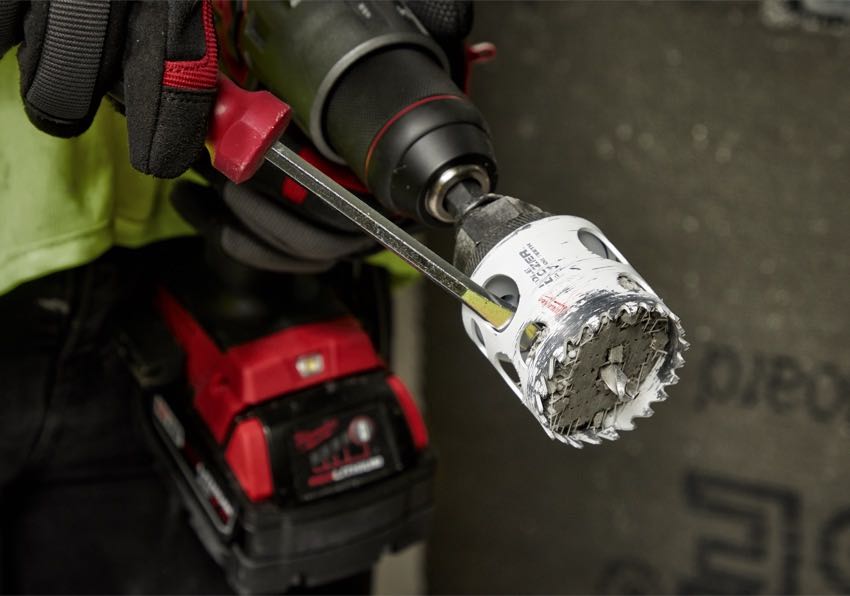
When you need to drill a large hole in metal, twist bits are impractical, and a hole saw is the better tool. As its name suggests, it’s a type of saw that cuts a hole. The saw’s teeth surround the edge of a metal cup and cut into the material as your drill spins it.
Unlike a twist bit that removes all the material as it makes a hole, hole saws cut out a core that’s left inside the saw’s cup that you have to dig out. It’s a little bit of a pain, but when you consider that twist bits can only drill up to ~1/2 an inch in metal, and a hole saw can drill up to a 6-inch hole, it certainly has its place.
The advantage of using a hole saw is price. The cost to make a drill bit that removes all the material requires a much more robust build and longer cutting edges that would be prohibitively expensive.
Step Bit
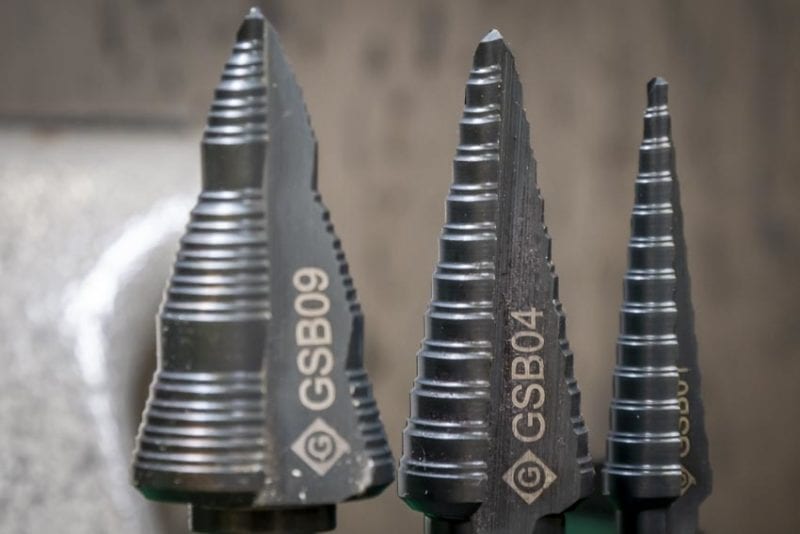
A step bit is a common tool electricians, HVAC techs, and plumbers use to cut through thin metal. They can also be helpful in some wood and PVC applications.
They get their name because they progressively cut a wider hole in steps. Once the tip starts the hole, each step after that continues to widen it.
What’s nice is that each step has a specific measurement, so you’re able to cut multiple hole sizes with one bit. You just have to know which step to stop at if you need a precise hole size.
Best Types of Drill Bits for Metal
There are many types of drill bits made with a diverse number of coatings and compositions. Complicating things, not all bits of the same type are equal. Small differences in the composition of titanium coatings or cobalt blends affect how bits drill through metal. When it comes to the best, however, there are some general principles that can keep you on the right track.
Avoid These Types of Bits for Drilling Steel
Perhaps the best place to start a discussion about drill bits for metal is to highlight what not to use.
Avoid any low-carbon steel blends. While inexpensive, they don’t hold a sharp edge for long against metal.
Generic and cheap high-carbon steel bits are on our no-go list as well. Upgraded materials might make these better than low-carbon steel, but impurities in the blend quickly degrade the cutting edges when drilling metal or, worse, make them break more easily.
Black oxide bits are popular and inexpensive, but they’re best left to wood and plastic drilling. While the coating provides some corrosion and heat resistance, drilling into metal quickly dulls the cutters.
Finally, avoid drill bits with brad points. Their relatively tall, sharp points are great for starting a hole in wood, plastic, and other soft materials. However, they quickly wear down or break off on harder metals.
High-Speed Steel (HSS)
High-Speed Steel (HSS) drill bits present an upgrade over older carbon steel bits. Able to hold up better to excessive heat and wear, they make up the majority of drill bits sold on the mass market.
You can use these bits for just about anything, serving as a jack-of-all-trades for both wood and metal applications. HSS can be temperamental, losing performance and dulling if you use them at the wrong speed for the metal you’re drilling into. With the speed properly set and using some drilling oil, they’re an excellent choice to pair with your drill press. Plus, you can sharpen the cutting edes and bring them back to life when the time comes.
Titanium Coated Drill Bits (TiN or TiCN)
Drill bits made with a Titanium nitride coating resist corrosion and friction. It beats black oxide because it increases surface hardness and does a better job of reducing heat while drilling through metal. If you’re drilling in metal, we recommend titanium as the bare minimum.
With titanium nitride bits, remember it’s a coated bit. As the coating wears off the cutting edges, you lose the advantages. It’s possible to sharpen them, but you only have the benefit of the core steel since the titanium no longer covers the edges.
When you’re drilling metal, these bits do their best work in softer blends like aluminum and mild steel. While you can use them for drilling hardened steel or stainless, they won’t last as long.
Mach-Blue or Titanium Nitride and Aluminum (TiAlN) Coated Bits
Spyder uses a proprietary Mach-Blue plating on its drill bits. Likely a form of Titanium Nitride and Aluminum (TiAlN) coating (the actual chemistry is a secret), it helps retain sharp cutting edges and reduce heat build-up. According to Spyder, the coating achieves faster cuts and significantly extends the bit’s life compared to standard titanium coatings.
Spyder uses heat-treated M-Series tool steel underneath its Mach Blue coatings, and they’re Made in the USA.
Cobalt Steel Blend
Cobalt drill bits are our go-to for drilling hard metal. As an additive, cobalt strengthens the steel blend so that it’s able to hold up to drilling hardened and stainless steels. Plus, it’s a blend, so you can sharpen these bits and have the full benefit of the chemistry.
There are some differences in cobalt blends, though. It starts with the quality of the core materials and extends to the percentage of cobalt the blend uses.
M35 vs M42 Cobalt
Our choice when it comes to Cobalt drill bits is made from a blend of 8% cobalt (M42). Other popular options use a 5% cobalt blend (M35).
M42 cobalt bits are harder, so they’re able to cut through hard materials more effectively. However, they’re more brittle and easier to break, especially with smaller sizes.
M35 cobalt bits aren’t quite as hard but are still capable of drilling hard metals. Since they’re not as brittle, they’re the go-to choice for use in handheld drills. They’re also less expensive than M42 bits.
Need a drill bit sharpener? Check out our review of the Drill Doctor 750X drill bit sharpener.
Drilling Into Hardened Steel
When we talk about drilling in hardened steel, we mean medium or high carbon steels typically made using a heat-treatment and tempering process. Hardened steels are durable and can be wear-resistant, corrosion-resistant, and abrasion-resistant. Many of the steel materials we see in mechanical engineering, energy generation, and transportation are some form of hardened steel.
When you’re drilling into hardened steel, we recommend using high-quality cobalt bits. Go with M42 if you’re using a drill press or M35 if a handheld drill is your tool of choice.
Drilling Into Stainless Steel
Stainless steels are steel alloys consisting of at least 10.5% chromium and there are different grades. As a low-carbon steel, stainless steel has a natural hardness that comes without traditional hardening techniques. Because of rust and stain resistance, good luster, and low maintenance, it has many commercial uses including cookware, cutlery, home appliances, construction fasteners, and surgical instruments.
This type of steel can actually harden as it heats, so when you drill through stainless steel, go slow to get through the material more efficiently. Use cutting oil as you drill and apply only enough pressure to see a steady removal of material.
Like hardened steel, stainless steel is quite difficult to drill into, and our bit recommendation is the same. Use a drill press with an M42 cobalt bit for the best results, or go with an M35 cobalt bit if you’re using a handheld drill.
Disagree With Our Choices?
That’s okay! We know personal preferences take a front seat in determining the best drill bit, and every Pro is different. Do Pro Tool Nation a favor and tell us what your top pick is and why you love it in the comments below!
Why You Can Trust Pro Tool Reviews
Ever check out a “review” site and can’t tell if they actually test tools or if they’re just “recommending” the Amazon top sellers? That’s not us. We won’t recommend anything unless we’d use it ourselves, and we don’t care who the primary retailer is. It’s all about giving you a legitimate recommendation and our honest opinion of each product.
We’ve been in business since 2008, covering tools, writing reviews, and reporting on industry news in the construction, automotive, and lawn care industries. Our Pro reviewers work in the trades and have the skills and experience to know whether tools can perform well in the field.
Each year, we bring in and review more than 250 individual products. Our team will put our hands on hundreds of additional tools at media events and trade shows throughout the year.
We consult with innovators in the technology and design of tools to gain a broader grasp of where these products fit and how they work.
We work with more than two dozen professional contractors around the United States who review products for us on real job sites and consult with us on testing methods, categories, and weighting.
We’ll provide more than 500 pieces of new content this year, absolutely free for our readers—including objective evaluations of individual tools and products.
The end result is information you can trust because of the editorial, scientific, and real-world professional experience we collectively utilize each and every time we pick up and test a tool.